



The United Nations’ Independent International Fact-Finding Mission for Sudan has warned that expanding drone attacks and a crackdown on civil liberties in El Obeid are putting civilians at increasing risk as Sudan’s war intensifies.
In a report released on Wednesday, the mission said drone strikes attributed to the paramilitary Rapid Support Forces (RSF) had killed and injured civilians, damaged schools and displacement sites, and disrupted access to healthcare, electricity and water in the North Kordofan state capital.
The report, titled Sudan’s Unrelenting War: Civilian Devastation and Deepening Insecurity in El Obeid, said the city remained partially encircled by the RSF, leaving residents exposed to continuing violence and severe shortages.
At the same time, security forces affiliated with the Sudanese Armed Forces (SAF) had intensified surveillance and arbitrary arrests, contributing to a climate of fear, the mission said.
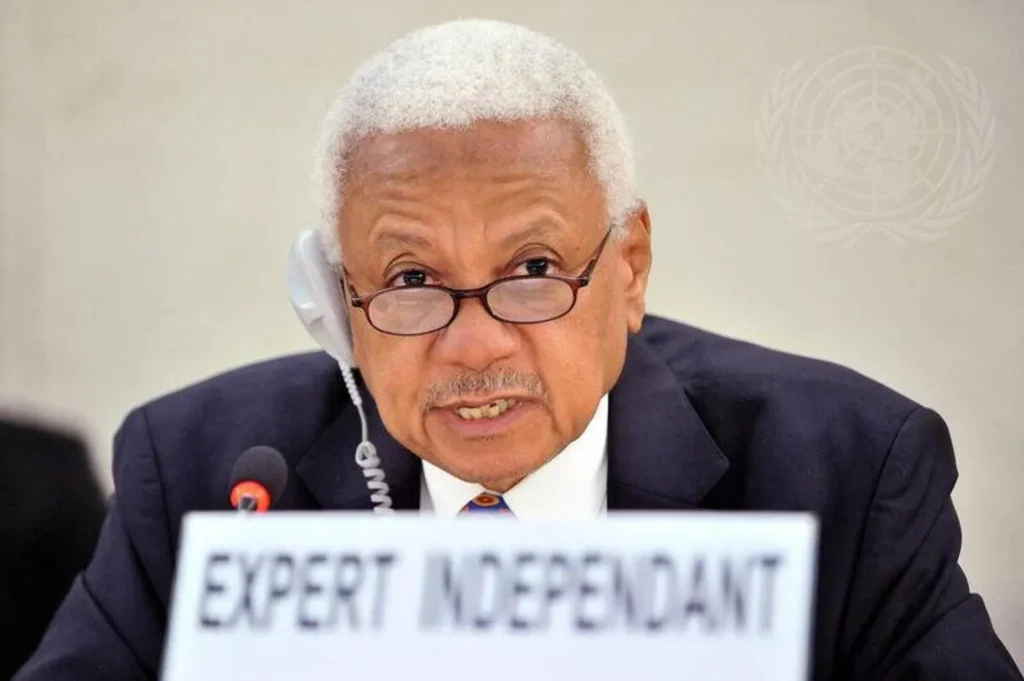
“The situation in and around El-Obeid remains grave and the risk of atrocities are high,” said Mohamed Chande Othman, chair of the fact-finding mission.
Attacks reported in Blue Nile state, a drone strike in Abyei that killed scores of civilians, and assaults near the Sudan-Egypt border that killed dozens of artisanal miners reflect a widening pattern of violence, Othman said. The mission said it was investigating those incidents.
“The conflict is becoming more geographically extensive, more technologically sophisticated and increasingly dangerous for civilians,” he said.
Civilian infrastructure
The report highlighted repeated RSF drone attacks affecting residential neighbourhoods, schools, displacement sites and infrastructure essential to civilian life, warning that such attacks could amount to war crimes.
It also said the deployment of SAF personnel and allied forces in residential neighbourhoods had increased the foreseeable risk of civilians being harmed in attacks.
Humanitarian operations have been constrained by both the SAF and the RSF, as well as their allies, through attacks, bureaucratic obstacles, militarisation and restrictions on access to people in need, the mission said.
The findings come a year after the RSF and allied forces took control of El Fasher and surrounding areas in North Darfur. The mission previously said violations committed during and after the assault, including attacks on civilians and targeted ethnic communities, bore the hallmarks of genocide.
A year later, accountability remained lacking, survivors were still displaced and affected communities continued to face the consequences of the destruction, the report said.
Although the circumstances in El Obeid differ from those in El Fasher, the mission warned that the pattern of attacks and growing insecurity posed serious risks to civilians.
Arrests and torture
The report also documented what it described as a shrinking civic space in El Obeid, a city with an estimated population of 600,000.
Human rights defenders, humanitarian workers, lawyers, trade unionists, community leaders and civilians perceived as critical of the authorities face surveillance, threats, intimidation and arbitrary detention, the mission said.
It said it had received credible accounts of incommunicado detention, torture, ill-treatment and deaths in custody, as well as allegations of sexual violence against female detainees. Some of the reported acts could amount to war crimes, it added.
“Thousands have been arrested by the SAF’s security cells and detained and tortured in unofficial locations as well as in the El Obeid Central Prison under appalling conditions,” said Mona Rishmawi, an expert member of the mission.
Residents live in fear not only of RSF drone attacks but also of the militarisation of the city and arrests targeting people suspected of disloyalty to the SAF or involvement in civic activities, including human rights and peace initiatives, she said.
“These practices must stop immediately and independent bodies that monitor detention must be granted access,” Rishmawi said.
The mission warned that restrictions on civic freedoms weakened civilian protection, undermined accountability and threatened prospects for meaningful and inclusive dialogue to end the conflict.
Foreign support
The mission said the SAF and the RSF bore primary responsibility for the devastation and atrocities in Sudan, while external actors had fuelled the conflict and benefited from it.
Its latest findings build on a September report, Fuelling Sudan’s Conflict: Weapons, Fighters and External Support Networks, which documented external support to both sides and its role in sustaining military operations.
That report described transnational networks involved in supplying weapons, military equipment, drone-related technology, logistical support and foreign personnel to support RSF operations, contributing to the continuation and escalation of the war.
“Attacks on electricity networks, water facilities, hospitals, schools and displacement sites demonstrate how damage to critical civilian infrastructure can reverberate through entire communities long after an attack has occurred,” said Joy Ngozi Ezeilo, another expert member of the mission.
Sudan’s war erupted on April 15, 2023, between the SAF and the RSF following a power struggle between the two forces. The conflict has devastated communities, displaced millions and triggered a severe humanitarian crisis.
The fact-finding mission called on all parties to respect international human rights and humanitarian law, protect civilians and civilian infrastructure, allow rapid and unimpeded humanitarian access, and end arbitrary detention, torture and reprisals.
It also urged all states to take meaningful steps to prevent the transfer of weapons, fighters and other forms of support that could contribute to violations and international crimes in Sudan.

 and then