



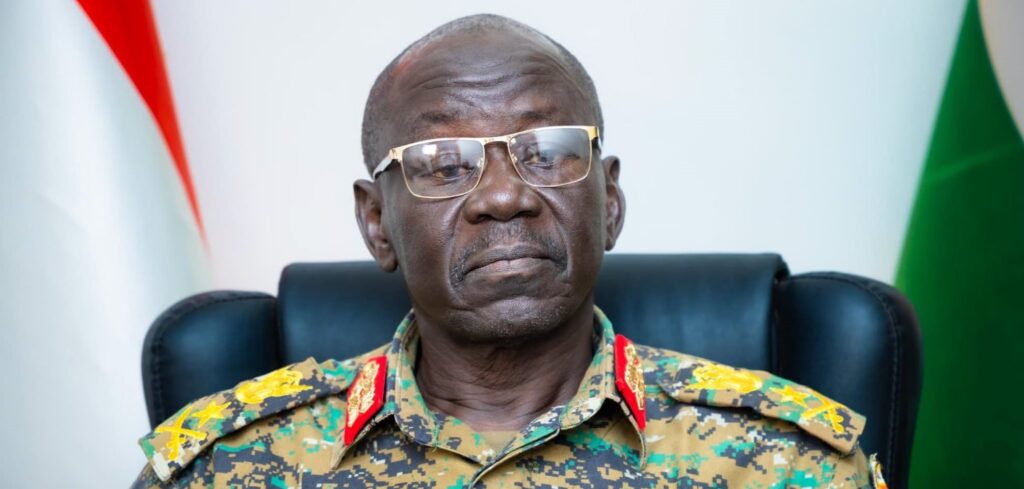
Sudan’s defence minister has accused more than 20 countries of supporting the paramilitary Rapid Support Forces (RSF) with funding, drones, logistical assistance and foreign fighters, but did not identify the countries apart from allegations previously levelled against the United Arab Emirates and Ethiopia by the army-aligned government.
Hassan Daoud Kabroun made the allegations in an interview with the state-run Sudan News Agency (SUNA) published on Wednesday, saying Sudan’s war had become an international conflict rather than an internal struggle.
The army-aligned government has repeatedly accused the UAE of supplying weapons and other support to the RSF and has also accused neighbouring Ethiopia of providing territory for RSF training and military operations. The UAE has denied supporting the paramilitary force. Kabroun did not name the other countries he accused of involvement in the war or provide evidence for his latest allegations.
The Sudanese army and the RSF have been fighting since April 2023, when tensions over plans to integrate the paramilitary force into the regular military escalated into war.
“What is happening is not a civil war or a struggle for power between two forces, but a comprehensive war against the Sudanese people,” Kabroun said, alleging that the conflict aimed to destroy Sudan, plunder its resources and change its demographic composition.
He said one of the government’s main challenges is persuading neighbouring countries that foreign actors are involved in the conflict, including through logistical support and the movement of fighters and weapons across borders.
Kabroun also accused political and military groups opposed to the government of working together to undermine Sudan, referring to the RSF and the political groupings Somoud and Tasis.
Red Sea security
Kabroun said Sudan is seeking to join a regional arrangement for the collective protection of the Red Sea, which he described as strategically important to the country because of its coastline of more than 800 km.
He said the government wants support from friendly countries to establish a specialised coastguard force responsible for maritime security, surveillance and coordination among the police, security services and customs authorities.
The force would help combat piracy, arms smuggling, human trafficking and other cross-border crimes, he said.
Kabroun also called for renewed defence cooperation with neighbouring countries, saying the war had disrupted joint security arrangements involving Sudan and Libya, Chad, the Central African Republic and Ethiopia.
He said Sudan wants to revive existing agreements, establish joint forces to protect borders and natural resources, and strengthen regional cooperation to prevent illegal trafficking.
Defense industry
The minister said the government is seeking to expand domestic defence production and reduce dependence on foreign supplies after years of economic restrictions and the disruption caused by the war.
He said a new law on national industries had been introduced to expand domestic production and support the armed forces, including through military equipment manufacturing and the construction of military facilities and roads.
Kabroun also outlined plans to distribute industrial investment more evenly across Sudan’s states rather than concentrating economic activity in Khartoum.
He cited gum Arabic production in Darfur and Kordofan as an example, arguing that processing, packaging and storage facilities should be located closer to production areas to create jobs and strengthen local economies.
Similar investment should be directed towards gold and sesame processing near the areas where the commodities are produced, he said.
Political transition
On domestic politics, Kabroun said Sudan had more than 100 political parties and called for them to consolidate into three or four larger parties.
He said the government sought to build a modern democratic state based on transparency and accountability, adding that no one should govern Sudan without elections and a constitutional mandate.
The minister also said the government intends to bring all armed formations under the regular army and official security institutions, ruling out a continued role for unauthorised armed groups and militias.
Kabroun called for the return of foreign nationals and refugees whose reasons for displacement had ended. He alleged that some undocumented foreigners were involved in mercenary activities and drug trafficking but provided no evidence to support the claims.
He said Sudan’s recovery would depend on restoring security, increasing domestic production and promoting reconciliation and social cohesion after the war.

 and then