



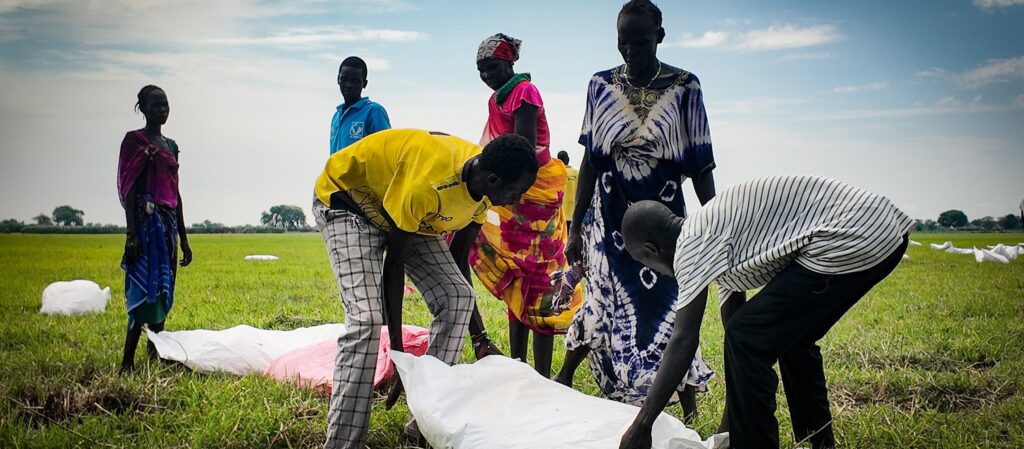
The United Nations World Food Programme (WFP) said on Friday it had scaled up emergency food and nutrition assistance in Akobo County of Jonglei State, where worsening conflict, displacement and malnutrition have pushed parts of the area into catastrophic hunger levels.
WFP said parts of Akobo County were classified under IPC Phase 5 (Catastrophe), the highest level of food insecurity before famine, according to the latest Integrated Food Security Phase Classification assessment. The agency warned that the area remained at risk of famine if conditions deteriorate further.
An estimated 12,000 people are expected to face catastrophic hunger through July, while about 85,000 are projected to be in IPC Phase 4 (Emergency) and 97,000 in IPC Phase 3 (Crisis), WFP said.
“The situation is critical and demands immediate attention to save lives of people who desperately need assistance,” WFP South Sudan Country Director Mutinta Chimuka said in a statement.
The agency said acute malnutrition in the area had worsened to IPC Acute Malnutrition Phase 5, driven by displacement, disruption of health and nutrition services, disease outbreaks and the collapse of livelihoods.
More than 142,000 people have been displaced from Akobo County and surrounding areas by ongoing violence, with about 100,000 fleeing across the border into Ethiopia, WFP said.
Since launching an emergency response three weeks ago, WFP said it had reached more than 60,000 people in Akobo with food and nutrition assistance, including emergency food rations, high-energy biscuits and specialised nutritious foods for children and breastfeeding and pregnant women.
The agency said it had also screened around 15,000 children for malnutrition and enrolled about 3,000 children suffering from moderate acute malnutrition into treatment programmes.
WFP said it had transported more than 300 metric tons of food and nutrition supplies into Akobo by air, while a 33-truck convoy carrying over 200 metric tons of aid was expected to arrive this week before heavy seasonal rains render roads impassable.
The agency added that more than 60 humanitarian flights had delivered 430 metric tons of aid and transported over 200 aid workers into and out of the area.
WFP warned that insecurity continued to hamper humanitarian access, forcing aid agencies to rely heavily on costly air operations.
“The risk of renewed fighting is real. We need hostilities to end and humanitarians must have continued secure access to ensure civilians can safely receive vital assistance,” the agency said.
WFP said it urgently required $266 million to sustain food assistance, nutrition programmes and humanitarian logistics operations across South Sudan for the remainder of 2026.

 and then