



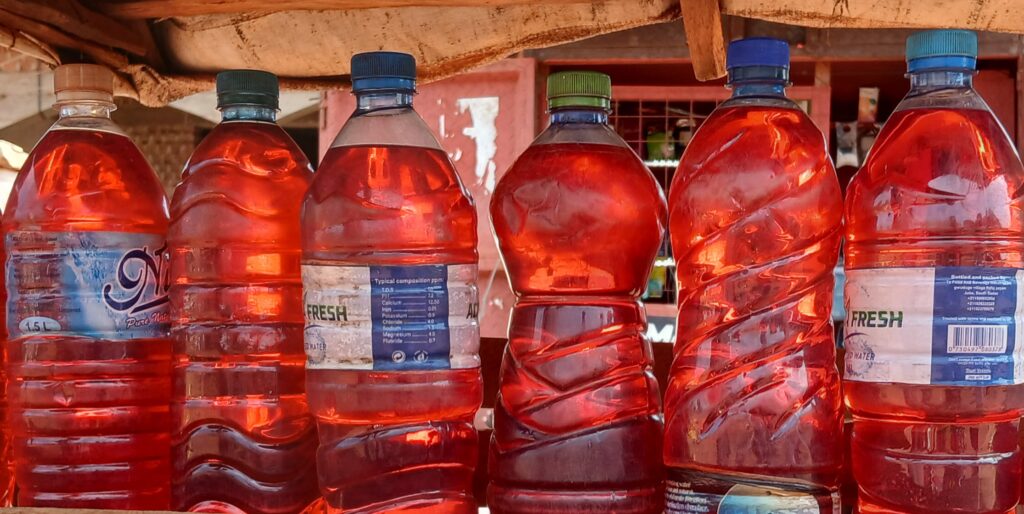
Residents, commercial motorcycle taxi operators known as boda-boda riders, and farmers in Western Equatoria State have raised concerns over a sharp rise in fuel prices, warning that higher transport costs are worsening economic hardship.
In Yambio County, the price of petrol rose on Tuesday to 20,000 South Sudanese pounds (SSP) per litre from 14,000 SSP, while a 1.5-litre bottle of fuel was selling for 30,000 SSP, according to Alfred Badumoyosa, chairperson of the Yambio Boda-Boda Association.
Boda-boda motorcycle taxis are a major mode of transport in the state, where many residents rely on them for daily travel and access to markets and services.
“This is a big challenge for everyone. When we increase transport fares, customers complain and refuse to pay. But if we reduce the fares, we make no profit. The government should intervene and find a lasting solution,” Badumoyosa told Radio Tamazuj.
He called on the Western Equatoria State government and national authorities to review taxes and other factors contributing to rising fuel prices, saying poor households were bearing the greatest impact.
In neighbouring Tambura County, resident Siki Renzi said the price of a 1.5-litre bottle of fuel had increased to 30,000 SSP from 24,000 SSP.
“The high fuel prices have made it difficult for us to travel to our villages and farms. Some boda-boda riders have stopped working because they cannot afford fuel,” Renzi said, urging authorities to intervene to prevent disruptions to education, access to markets and essential services.
Justin Mibie, a farmer from Nakiri in Yambio County, said rising fuel costs were making it increasingly difficult to transport agricultural produce to markets.
“Life is already hard. I may have to start using my bicycle because I cannot afford fuel. But with a bicycle, I can only carry a small amount of goods instead of transporting enough produce to earn a living,” Mibie said.
He said higher transport costs were reducing farmers’ earnings and making it harder for families to meet their daily needs.
The Western Equatoria State government could not immediately be reached for comment.
The fuel price increases come amid wider economic challenges in South Sudan, including a weakening local currency and rising costs of basic commodities.
On Wednesday, residents in Juba and other parts of the country reported that the parallel-market exchange rate had surpassed 750,000 SSP per $100, with some states recording higher rates. Diesel prices also rose to 18,500 SSP per litre from about 14,500 SSP within 24 hours, prompting some commuters to walk because they could no longer afford transport fares.
Edmund Yakani, executive director of the Community Empowerment for Progress Organization (CEPO), said rising fuel prices and the cost of essential goods were putting significant pressure on South Sudanese households, particularly civil servants, security personnel and low-income families.
“The continuous increase in fuel prices is making life unbearable for many citizens. If taxes are contributing to the problem, the government should review them. Authorities should also ensure that traders do not exploit consumers through unjustified price increases,” Yakani said.
He urged the government to take urgent measures to stabilise prices and protect citizens from worsening economic conditions.

 and then