



Few questions in political development have generated as much debate as whether fragile states should prioritize building strong institutions before pursuing full democratic consolidation. For countries emerging from conflict, weak governance, and economic hardship, the sequencing of reforms remains one of the most consequential policy choices. For South Sudan, this debate is not merely academic; it is central to the country’s long-term stability, unity, and development.
Political development is often viewed through the lens of Western liberal democracy, characterized by competitive elections, political pluralism, separation of powers, and constitutional governance. While these principles have contributed to prosperity and stability in many established democracies, experiences from global south suggests that democratic institutions are most effective when supported by capable state structures. Elections, by themselves, do not automatically create effective governance, national cohesion, or economic transformation.
For instance, political scientist Samuel P. Huntington argued that the primary challenge facing developing countries is often not a lack of democracy but the weakness of political institutions. When political mobilization expands faster than the state’s capacity to manage competing interests, the result can be instability, violence, and ineffective governance rather than democratic consolidation. His central argument remains relevant today: political order and institutional strength are often prerequisites for sustainable democracy.
Similarly, a renown American Political Scientist, Francis Fukuyama has emphasized that effective states require institutions capable of maintaining security, enforcing the rule of law, collecting revenues, delivering public services, and implementing policy. Without these foundations, even well-designed democratic systems may struggle to meet citizens’ expectations and maintain public confidence.
The experiences of several successful states offer important lessons. Our neighboring African states, Rwanda, Ethiopia and Uganda while in Asia, Taiwan, South Korea and Singapore devoted considerable effort to building competent bureaucracies, investing in human capital, strengthening public administration, and promoting economic transformation before embarking on higher levels of democratic competition. China has followed a different path, prioritizing economic development and state capacity under a centralized political system. Although their political models differ significantly, these cases share one common lesson: strong institutions often precede sustainable national development.
By contrast, some countries have introduced competitive political systems before establishing capable institutions, only to experience recurrent political crises, governance paralysis, weak service delivery, and social fragmentation. In such contexts, elections have sometimes intensified divisions rather than strengthened national unity.
Nonetheless, this does not mean that democracy and development are mutually exclusive. On the contrary, countries such as Botswana, Mauritius, and Ghana demonstrate that democratic governance can coexist with economic growth, political stability, and effective institutions. However, these successes were built on foundations of public trust, strong administrative systems, rule of law, and relatively effective state capacity.
For us in South Sudan, therefore, the question should not be whether democracy is desirable. Democracy remains an important national aspiration and a legitimate long-term objective. The more urgent question is whether the country has first established the institutional foundations necessary for democracy to function effectively and peacefully.
At this stage of nation-building, South Sudan’s priorities should focus on strengthening state capacity. This includes professionalizing the civil service, enhancing public financial management, combating corruption, strengthening security institutions, expanding infrastructure, improving healthcare and education, promoting agricultural productivity, creating economic opportunities for the youth, and ensuring equal access to justice. These are the practical pillars of a functioning state and the foundation upon which democratic governance can eventually flourish.
Equally important is the task of nation-building. South Sudan continues to remain engulfed in vicious cycle of conflict and political division. Building a shared national identity, promoting reconciliation, strengthening social cohesion, and fostering trust in public institutions are essential for creating a political environment in which democratic competition can occur without threatening national stability.
The lesson from many emerging states mentioned earlier is not that democracy should be abandoned. Rather, it is that institution-building should come first. A state that cannot deliver security, provide services, enforce laws, or manage public resources effectively will struggle to sustain democratic gains. In fragile environments, premature political competition may deepen existing divisions and undermine state-building efforts. This could be attested by the outcome of 2010 general elections in the then Southern Sudan which resulted to unnecessary hatred among the electorates at the grassroots and formation of numerous rebel outfits.
South Sudan’s leaders and international community members should therefore resist the temptation to measure progress solely through electoral milestones. The true measure of national progress is the state’s ability to improve the daily lives of its citizens, maintain peace, provide opportunities, and earn public trust. Strong institutions create the conditions under which democracy becomes meaningful, resilient, and sustainable.
Ultimately, South Sudan does not face a choice between state-building and democratization. It faces the challenge of sequencing them wisely. The experience of from world’s emerging states suggests that lasting peace, prosperity, and democratic resilience are most likely when a country first invests in building a capable, inclusive, and effective state. Democracy is strongest not when it is rushed, but when it is built upon firm institutional foundations.
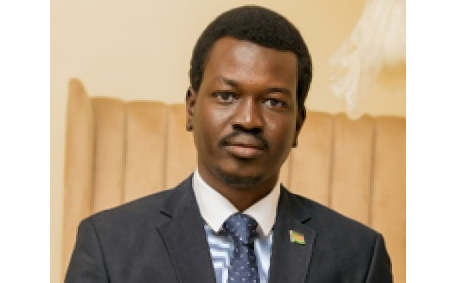
The writer, Lual Jiel Mangok, is a South Sudanese development practitioner and researcher whose work focuses on state-building, governance, food security, and economic development in fragile and post-conflict societies. He is also a researcher on sustainable development at the University of Sussex. He can be reached at L.Mangok@sussex.ac.uk
The views expressed in ‘opinion’ articles published by Radio Tamazuj are solely those of the writer. The veracity of any claims made is the responsibility of the author, not Radio Tamazuj.

 and then