



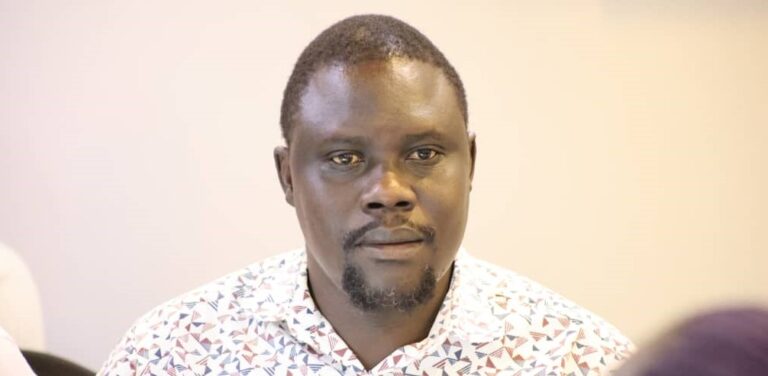
A South Sudanese policy analyst has said parliamentary approval of amendments to the country’s 2018 peace agreement does not provide the constitutional and legal basis needed to hold credible elections, warning that critical reforms remain unresolved.
Boboya James Edimond, executive director of the Institute of Social Policy Research, said the amendments passed by the Transitional National Legislative Assembly risk undermining the Revitalised Agreement on the Resolution of the Conflict in South Sudan (R-ARCSS) and leave fundamental questions over governance and electoral arrangements unanswered.
“The Parliament has approved amendments to the agreement to pave the way for elections, and this move is viewed as a violation of the agreement itself, but it does not even provide the framework for conducting elections,” Boboya told Radio Tamazuj.
He said the R-ARCSS had been incorporated into the Transitional Constitution of 2011 through previous amendments, and that substantial constitutional revisions would be required before elections could be held under a new political arrangement.
“So right now we have the revitalised agreement integrated into the 2011 Constitution as amended. For them to use that constitution, it’s fundamentally required that they have to deal with some significant provisions to be removed from that constitution,” Boboya said.
He said those provisions include the composition of the executive, the size of parliament and the Council of States, the number of ministers and deputy ministers, the structure of state governments, and electoral representation.
“We still don’t know what type of constitution we will end up with, what size of government we will have, and what power structures will be embedded in that constitution,” he said.
Boboya also questioned whether the existing Electoral Act would remain applicable once constitutional amendments are completed, saying major legal changes could require a complete restructuring of the country’s electoral management bodies.
“Once they’ve amended the constitution, then they’ll go and amend the Electoral Act. We don’t know how the Electoral Act is going to look,” he said.
He argued that if constitutional reforms significantly alter the electoral system, the National Elections Commission and other election-related institutions may also need to be reconstituted to ensure political neutrality.
“If they’re going to go into a neutral, independent Electoral Commission, that means the current structure of the Electoral Commission will then have to be dealt with because they have to recruit people who are not partisan,” he said.
Such reforms would have a direct bearing on preparations for the planned December elections, Boboya said.
“That will substantially impact the structure of the electoral-related institutions and how they will steer elections. It has a significant impact even on the way the December election will take place,” he said.
Boboya said his organisation was therefore advocating for postponing the polls until necessary constitutional, legal and institutional reforms are completed.
“That’s why we’re advocating for postponing these elections and putting these legal mechanisms, political mechanisms and structural mechanisms in place so that we can see deeply rooted constitutionalism guiding a democratic electoral process in South Sudan,” he said.
He warned that proceeding with elections without addressing those issues could jeopardise gains made under the 2018 peace agreement.
“Without those things, we are creating a foundation of constitutional disorder and political manoeuvring that is more detrimental to the current gains that we have actually had as part of the peace agreement,” he said.
The National Parliament earlier this month approved amendments to the revitalised peace agreement, delinking the conduct of elections in December with the permanent constitution-making process and population census – a move criticised by the opposition and several foreign missions in the country.

 and then