



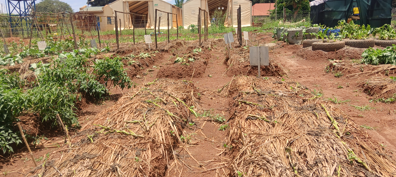
Farmers and agriculture officials in Western Equatoria State are warning of poor harvests and possible food shortages following prolonged dry spells and unpredictable rainfall in several parts of the state.
Speaking to the media on Monday, Western Equatoria State Minister of Agriculture, Forestry and Environment Nagomoro Bridget Philemon said the government is still assessing the causes of poor agricultural production during the first farming season.
The minister, herself a farmer, said rainfall was recorded from March to May, but some areas experienced dry conditions from June through July and into August.
She said some farmers recorded good harvests, including groundnuts, but many others did not achieve the yields they expected.
The minister cited drought and changing weather patterns as factors affecting production and also raised concerns about increasing deforestation in the state.
“Government goes slowly, but when we pick up, don’t blame us,” Nagomoro warned, urging people to stop uncontrolled tree cutting. We are saying: stop cutting the trees.”
Meanwhile, Noah Isa, a community member from Mundri East County, said prolonged dry spells have severely affected the agricultural season and raised concerns about food security.
He said many crops planted during the second season have dried up because of insufficient rainfall. He also expressed concern about communities in Mvolo, where farmers mainly depend on one agricultural season and cultivate sorghum.
“Some farmers may have to replant their fields, but this could result in further losses because newly planted crops would take several months to mature,” he said. “The government and agricultural partners should assess the damage and provide support, including fast-growing and climate-suitable crops that can mature within three to four months.”
Isa said such crops could allow farmers to recover some losses and reduce the risk of food shortages next year.
In Mvolo County, church leader John Abraham said communities were affected by flooding last year and are now facing prolonged dry conditions. He said the area went for about two months without rain before receiving rainfall recently.
“We are only praying to God. No rain and no food. Sesame, groundnuts, maize and everything have dried up,” Abraham said.
In Yambio County, agricultural expert Peter Ajak Atem, a technical officer with East-West Knowledge Transfer/SNV based at the Ministry of Agriculture’s Central Demonstration Farm, said unpredictable rainfall and prolonged dry spells are affecting farmers.
He said farmers in Gangura and Bazungua have reported losses affecting crops including watermelon, pumpkin, cabbage, maize and groundnuts.
“Some maize was drying, and groundnuts have been highly affected by climate change,” he said.
Ajak encouraged farmers to adopt climate-smart practices, including mulching, establishing alternative water sources and using drought-tolerant crop varieties.
Agricultural officials and partners are calling for increased support to affected farmers as concerns grow over declining production and possible food insecurity in Western Equatoria.

 and then