



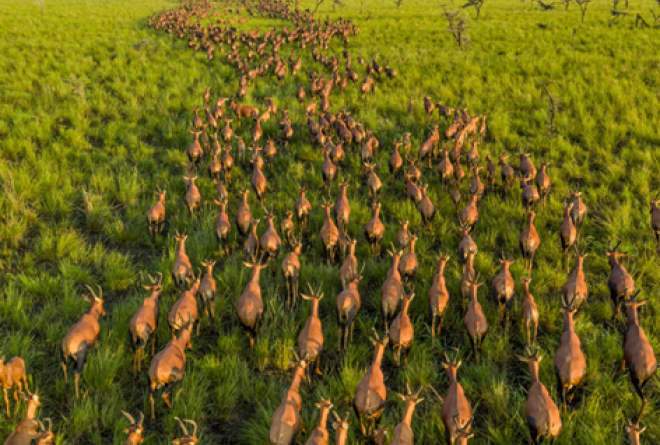
South Sudan’s Boma-Badingilo Migratory Landscape has been inscribed on UNESCO’s World Heritage List, becoming the country’s first World Heritage Site and placing one of Africa’s largest wildlife migrations under international recognition.
Culture, Museums and National Heritage Minister Sarah Nyanath Elijah Yong announced the inscription last Tuesday after returning from the 48th Session of the UNESCO World Heritage Committee in Busan, South Korea, where member states approved South Sudan’s nomination.
“The Boma-Badingilo Migratory Landscape has been officially inscribed. This is the first World Heritage property for the Republic of South Sudan and a defining milestone in our nation’s history,” Nyanath told journalists at Juba International Airport.
The minister said the listing recognises the landscape’s wildlife migration, biodiversity and cultural value. She said it would create opportunities for scientific research, tourism, investment and jobs while strengthening South Sudan’s engagement with international conservation efforts.
She added that the recognition also places new responsibilities on the country to protect the site.
“Our work does not end with this inscription. Today marks the beginning of greater responsibility,” Nyanath said, calling on South Sudanese to protect the landscape from poaching, illegal settlements and the destruction of forests.
Meanwhile, Peter Fearnhead, chief executive of African Parks, said the inscription was an important step for South Sudan and cited results from a 2025 aerial survey showing the landscape still supports about six million migratory antelope.
“The 2025 aerial survey has produced a result that the migratory landscape still holds six million migratory antelope species,” he said.
The Boma-Badingilo landscape covers Boma and Badingilo National Parks in eastern South Sudan. It supports one of the world’s largest terrestrial mammal migrations, with millions of white-eared kob, tiang and Mongalla gazelle moving across the ecosystem each year alongside elephants, giraffes, lions and other wildlife.
The inscription follows years of work by South Sudan’s ministries responsible for culture and wildlife, African Parks, UNESCO experts and other partners to prepare the nomination. Yong said Japan, France and Egypt were among the countries that supported South Sudan’s bid during discussions at the World Heritage Committee.
South Sudan, which gained independence in 2011, had not previously had a site on UNESCO’s World Heritage List. The listing gives the country its first internationally recognised World Heritage property and commits it to conserving the landscape’s natural value for future generations.

 and then