



The case centered on an attempt to transport a military shipment through the UAE to Port Sudan, where the authorities aligned with the Sudanese army are based.
The Federal Court of Appeal in Abu Dhabi has sentenced eight defendants to life imprisonment in a case involving the smuggling of weapons and ammunition to the Sudanese army, moving the case from the investigation and accusation stage to judicial verdicts and revealing details of a network that Emirati authorities said used companies, bank accounts and forged documents to facilitate military deals linked to the war in Sudan, The Arab Weekly reported on Friday.
The court also handed down three-year prison sentences to several defendants for offences connected to the case, acquitted two others and imposed fines on the six companies accused. It ordered the confiscation of funds and equipment linked to the operations, including ammunition, mobile phones and communications devices used in the offences. Those convicted are to be deported after serving their sentences.
The case centered on an attempt to transport a military shipment through the UAE to Port Sudan, where the authorities aligned with the Sudanese Armed Forces (SAF) are based.
On April 30, the UAE Public Prosecution announced that 13 people and six companies registered in the Emirates had been referred to the State Security Court on charges of illegal trading in military equipment, forging official documents and money laundering.
The case involved two linked transactions, according to details of the investigation released by the Emirati authorities and reports by The National.
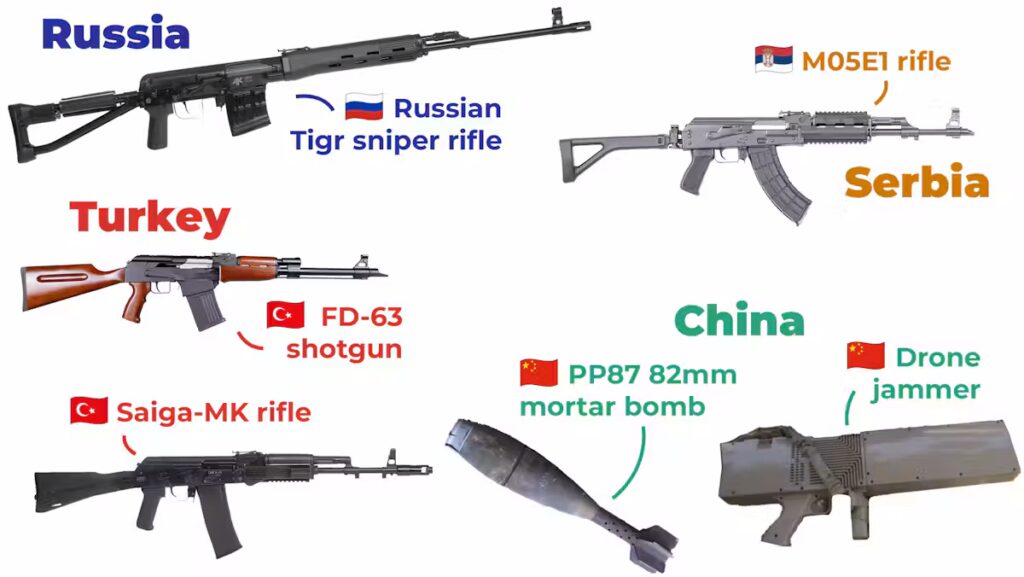
The first concerned an agreement to purchase weapons and military equipment, including Kalashnikov rifles, machine guns and grenades, for a declared value of $13 million. Investigators said the actual value did not exceed $10 million, with the remaining $3 million allocated to illicit commissions distributed among individuals involved in facilitating the deal.
In the second transaction, more than $2 million from the proceeds of the first deal was used to purchase an additional shipment of ammunition. Authorities said part of the shipment was brought into the UAE aboard a private aircraft, using documents that described the cargo as humanitarian aid or medical supplies, before it was to be transported to Port Sudan.
The investigation extended beyond the shipment that was intercepted. The prosecution said it had uncovered plans to smuggle an additional five million rounds of Goryunov machine-gun ammunition through six further operations. It added that preventing the first operation had also stopped those deals from being carried out.
The evidence announced by the authorities included financial and commercial records, bank transfers, correspondence and recordings, as well as confessions that the prosecution said had been made by some of the defendants. Prosecutors presented the material during the trial to establish that a network had used companies and commercial fronts to conceal the nature of the deals and the movement of funds.
The case has political sensitivity because some of the names mentioned in the indictment were linked to Sudanese officials and figures associated with the military and security establishment.
The UAE prosecution said the arrangements to purchase the equipment were connected to an arms committee affiliated with the authorities in Port Sudan, headed by Sudanese army chief Abdel Fattah al-Burhan and his deputy, Yasser al-Atta. It said other individuals had been assigned coordination roles, including Salah Abdullah Mohamed Saleh, known as Salah Gosh, the former head of Sudan’s National Intelligence and Security Service.
The names cited by the authorities also included businessmen, intermediaries and former officials accused of helping arrange the deals, facilitate payments or provide commercial cover for the operations. The prosecution said Sudanese businessman Rashid Omar Abdelqader Ali had played a central role in connecting the parties and managing the companies used in the transactions.
The court’s findings against those convicted should be distinguished from the wider political allegations surrounding the war in Sudan. The case concerned specific transactions that Emirati authorities said were intended for the Sudanese army. It did not, in itself, constitute a ruling on separate allegations that the UAE had supplied weapons to the Rapid Support Forces (RSF).
The case first came to public attention in April 2025, when the UAE announced that it had foiled an attempt to smuggle weapons and military equipment to Port Sudan.
The Sudanese armed forces rejected the Emirati account at the time, describing it as fabricated and accusing Abu Dhabi of supporting the RSF, allegations that the UAE denies.
The case unfolded amid a wider dispute between Khartoum and Abu Dhabi over the war that broke out in April 2023 between the Sudanese army and the RSF.
The new verdicts carry additional significance because they provide a judicial outcome in a case that had remained under investigation amid reciprocal accusations for more than a year and a half. Their implications, however, should be considered within the scope of the proceedings: a specific network and particular transactions, rather than a comprehensive ruling on all external arms supply routes into Sudan.
With the war continuing and supply routes crossing national borders, the challenge remains to halt the flow of weapons and ammunition to the warring parties and prevent cross-border commercial and financial networks from becoming channels that enable the fighting to continue and prolong the humanitarian crisis.

 and then