



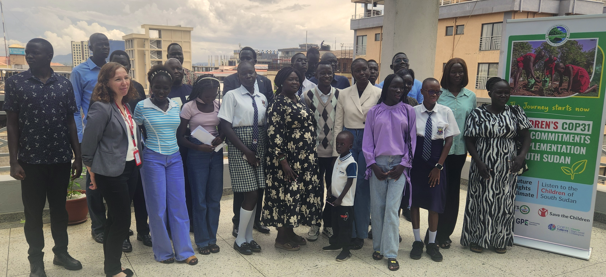
Children have called on the Government of South Sudan and world leaders to move beyond climate pledges and invest in measures that protect children’s education, health and livelihoods from the effects of flooding, drought and extreme heat.
In a declaration adopted during a children’s climate consultation in Juba on Thursday, the young participants demanded climate-resilient schools, accessible early warning systems, emergency shelters and predictable funding for community-based adaptation programmes ahead of the COP31 climate conference in Türkiye.
They described climate change as a child-rights crisis, warning that climate-related disasters threaten children’s access to education, nutritious food, clean water and healthcare, particularly in displaced and other vulnerable communities.
“COP31 must deliver more than promises. It must deliver climate justice and climate action to every child in South Sudan, in Africa, and in the world,” the declaration stated.
The demands come as children across South Sudan face disruptions to their education and daily lives from climate-related hazards. Floodwaters can make journeys to school difficult or damage learning facilities, while extreme heat can force temporary school closures. Drought can also undermine agricultural production and household food security.
For 17-year-old climate advocate Siama Santino, these challenges are not merely concerns raised in international climate discussions but experiences that have affected his education.
She said heat waves in 2024 and 2025 disrupted learning, while flooding in Bor, where he previously studied, made it difficult to travel to school.
“Every morning when you wake up, you have to think of how much you’re going to move in water or first remove your shoes to reach school,” she stated.
Santino urged the government to prioritize adaptation measures that help families prepare for climate-related emergencies and provide assistance to those displaced from affected areas.
“I would love to tell the world leaders that as we go for the COP31, it would be very important that we focus on issues that will lead to something that is an action,” she said.
Climate crisis threatens children’s rights
The children’s concerns extend beyond disrupted lessons. During the consultation, participants described how climate-related shocks can damage homes and crops, worsen food insecurity and expose families to health risks.
One child advocate said some families in his community were eating only once a day because crops could not grow reliably or had been washed away by flooding.
The children called for greater investment in climate education, safer schools, access to clean water and nutritious food, and emergency services that respond to the specific needs of children.
They also urged decision-makers to consider the heightened risks facing children with disabilities, displaced children and those living in remote or conflict-affected communities.
Eva Hegedus, Director of Strategic Partnerships and Influence at Save the Children South Sudan, said climate-related disasters affected children’s education not only by damaging schools but also by undermining their health, nutrition and psychological well-being.
She said climate resilience should be integrated into national adaptation plans, school preparedness strategies, infrastructure and the national curriculum.
Schools also need to be prepared for disasters so that children can continue learning in a safe environment, she added.
Save the Children is finalising an assessment documenting climate-related loss and damage across several states, with a focus on the effects of flooding on children.
The organisation also plans to support continued engagement between children, government ministries, donors and humanitarian partners to ensure that their concerns inform climate policies and programmes.
Five South Sudanese children, including two boys and three girls, are expected to participate in COP31, where they will engage with the country’s delegation and other international representatives.
Government seeks climate adaptation funding
The Ministry of Environment and Forestry says South Sudan is seeking increased international financing to help vulnerable communities cope with climate change.
Payai Manyok John, Director for Climate Change and the UNFCCC National Focal Person at the ministry, said the country’s priorities ahead of COP31 included securing more climate finance for adaptation and ensuring that support reaches communities most affected by climate-related disasters.
He said the government was pursuing a proposal worth 25 million US dollars with the United Nations Development Programme, alongside plans for a further 15 million dollars to support small-scale farmers.
The ministry has also been developing climate initiatives involving nature-based solutions and recovery in flood-affected areas of Jonglei and Unity states.
Payai said the government wanted international climate negotiations to translate into practical projects supporting agriculture, water resources and pastoralist communities.
He also highlighted early warning systems and the dissemination of information through media, government institutions and other stakeholders as part of efforts to prepare communities for flooding.
The funding figures cited by the official relate to proposals and planned financing; they do not establish that the money has already been secured or disbursed.
From promises to practical action
The children want their demands reflected in national climate and development plans, with funding directed towards measures that address the immediate risks they face.
Their declaration called on wealthier, high-emitting countries to reduce emissions and increase support for adaptation and loss and damage. It also urged donors, financial institutions, United Nations agencies and humanitarian organisations to finance practical solutions for vulnerable children.
For the young advocates, climate action must include measures that help children remain in school, protect their health and ensure that families can withstand environmental shocks.
Their message to decision-makers is that participation in climate discussions should lead to tangible changes in the communities where children live.
As South Sudan prepares for COP31, the declaration sets out what the children want from the process: not simply commitments made at international meetings, but practical measures that protect their rights and prepare their communities for a changing climate.

 and then