



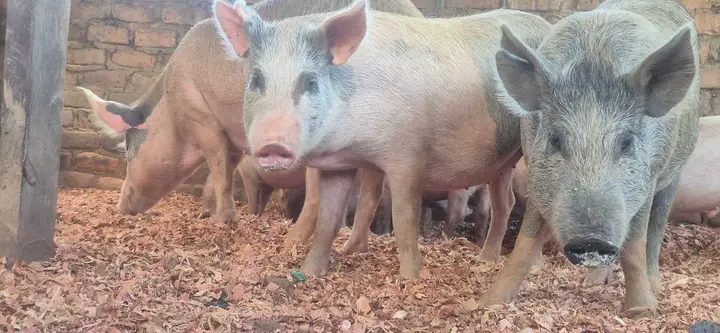
Pig farmers in Yambio County, Western Equatoria State, are appealing for urgent government and humanitarian support after a suspected outbreak of African swine fever killed at least 148 pigs, threatening the livelihoods of affected households.
Jacob Ginaba, a farmer and sub-chief of Kuze Area, told Radio Tamazuj on Monday that he lost all 31 of his pigs within a week, depriving his family of its main source of income.
“Four to five pigs were dying every day until I lost all 31 pigs. My children depend on these pigs for school fees and family needs. Now we have nothing left,” Ginaba told reporters.
He appealed to the government and aid agencies to help affected families restock their herds with breeding pigs to rebuild their livelihoods.
Another farmer, Gbodoro Elia, said he also lost all his pigs and was unable to identify the cause of the deaths.
“I only saw my pigs dying without any clear signs of illness. We are shocked and do not know what caused it,” he said.
Elia urged the government and development partners to determine the cause of the outbreak and assist pig farmers across Yambio County.
Samuel Simon Zigizo, Western Equatoria state’s minister of animal resources and fisheries, said authorities were aware of the outbreak and had recorded about 140 pig deaths on seven farms, including three in Yambio and four in Gangura.
Zigizo said veterinary officers were deployed immediately to investigate the outbreak with technical support from the U.N. Food and Agriculture Organization (FAO).
He said investigators had submitted their report to Juba, while samples collected from affected pigs would be tested at the Central Veterinary Laboratory to confirm the disease.
Although laboratory results are pending, Zigizo said clinical signs observed in the field strongly suggest African swine fever, a highly contagious viral disease.
African swine fever affects domestic and wild pigs but does not infect humans. The disease has no approved vaccine or cure, and outbreaks can cause heavy economic losses because infected animals often die and control measures rely on quarantine and culling.
Zigizo urged farmers to isolate pigs showing signs of illness immediately to help contain the spread of the disease.
“We encourage farmers to quarantine sick animals as soon as they notice abnormal signs. Early isolation is the best way to reduce the spread of the disease,” Zigizo said.
He said containing the outbreak would require cooperation between the government, livestock farmers and development partners.
Zigizo also urged organizations distributing livestock to source pigs from disease-free areas to prevent further spread of the suspected infection.

 and then