



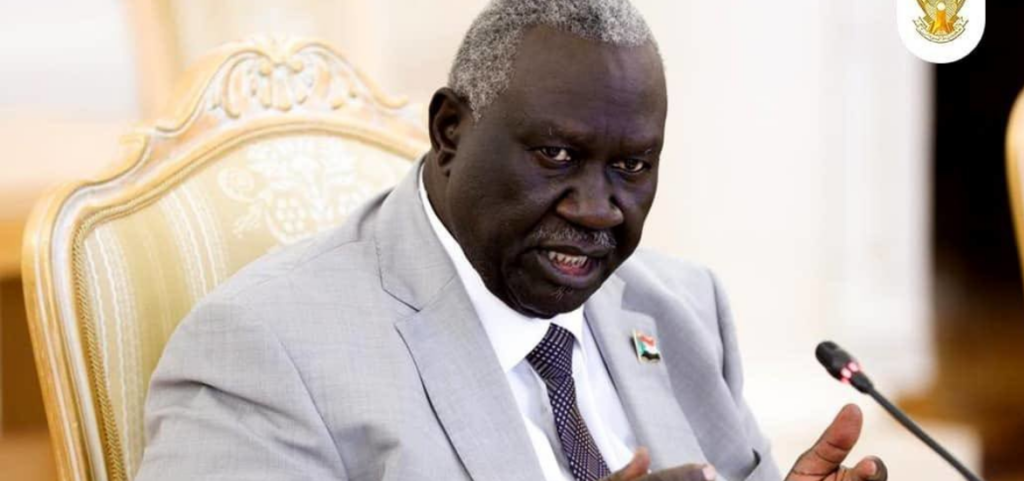
Sudan does not want to go to war with neighbouring Ethiopia despite what it describes as an increasingly hostile position from Addis Ababa, Sudan’s deputy head of the Sovereignty Council, Gen. Malik Agar, has said.
“We do not want to get involved in a war with Ethiopia,” Agar told journalists attending a media forum in Khartoum on Wednesday.
His comments come amid growing tensions along the Sudan-Ethiopia border and allegations by Sudanese military officials that Ethiopia has allowed the paramilitary Rapid Support Forces (RSF) and its allied forces to operate drones from its territory.
Ethiopia has rejected previous accusations by Sudan that it was involved in drone attacks, describing them as baseless.
On Monday, Sudan’s army chief of staff, Lt. Gen. Yasser al-Atta, accused Ethiopia of exploiting Sudan’s war to seize border territory and allowing RSF drones to be launched from Ethiopian territory. The accusations came as drone attacks hit Sudan’s Blue Nile state, which borders Ethiopia.
The latest accusations add to longstanding tensions between the two countries over their border, including the disputed al-Fashaga agricultural area.
Regional concerns
Sudan has been at war since April 2023, when fighting broke out between the army and the RSF. The conflict has increasingly drawn in neighbouring countries and other external actors.
The Blue Nile region has become one of the areas of concern because of its proximity to Ethiopia and the presence of armed groups involved in the wider conflict.
Agar said Sudan doesn’t want a wider regional war and stressed the importance of preserving the country’s territorial integrity.
“Sudan needs the state, the unity of the state and the cohesion of its institutions,” he said, adding that Sudan’s unity is a “red line”.
He also said the military situation in Blue Nile, Darfur and Kordofan is “reassuring”.
Agar said Sudan’s war needs to be addressed through political as well as military means.
“We are not fighting a militia, we are fighting a state,” he said, without specifying which state he was referring to.
One army
Agar also reiterated the army-aligned government’s position that Sudan should have a single national army.
He said armed movements that signed the 2020 Juba peace agreement would eventually integrate their forces into the Sudanese Armed Forces.
“We have integrated all our forces into the army, and currently I do not have a single soldier outside the armed forces,” he said.
Agar said the signatories to the peace agreement would participate in a planned Sudanese-Sudanese national dialogue in the country.
He also described his relationship with army chief and Sovereignty Council Chairman Abdel Fattah al-Burhan as “excellent”, saying they work together as a team.
Agar said Sudan’s armed forces, other security agencies, allied armed groups and popular resistance groups had made sacrifices to preserve the country and its sovereignty.
Sudan’s conflict has killed and displaced large numbers of people and created one of the world’s largest humanitarian crises. The United Nations has warned that foreign military support is intensifying the war.

 and then