



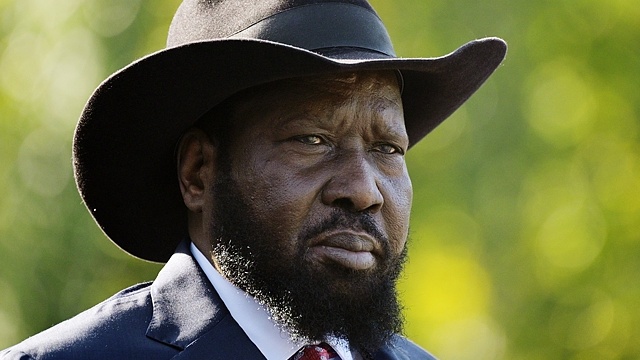
South Sudan’s 2018 peace deal is being systematically dismantled in what a United Nations human rights commission described on Tuesday as a “constitutional coup”, warning that President Salva Kiir’s concentration of power risks renewed conflict ahead of elections scheduled for December.
The UN Commission on Human Rights in South Sudan called on member states and regional and international partners to take urgent action to prevent renewed conflict and secure lasting peace, irrespective of the electoral timetable.
The commission warned that the political settlement established in 2018 to prevent another war is being undermined, putting civilians and the country’s fragile transition at grave risk.
“A negotiated settlement has been displaced under cover of elections. This amounts to a constitutional coup through legislative reforms: the unilateral dismantling of the inclusive power-sharing settlement and concentration of all authority in the President,” Yasmin Sooka, chair of the commission, told the UN General Assembly’s Third Committee.
South Sudanese people have a fundamental right to choose their leaders, but they must be able to do so freely and without fear, Sooka said, adding that elections cannot justify abandoning safeguards under the 2018 Revitalised Agreement on the Resolution of the Conflict in South Sudan (R-ARCSS).
These include inclusive governance, free political competition and participation, power-sharing and institutional oversight.
“The international community must look beyond 22 December. Whether elections take place or not, South Sudan will still need an inclusive political settlement, protection for civilians and institutions capable of preventing further violence,” Sooka said.
“Expressions of concern have not deterred those driving this crisis. Member States must attach consequences to violations and measurable commitments to diplomacy,” she added.
Power concentration
The commission said that, following unilateral constitutional and electoral amendments, Kiir dissolved the transitional government, the national parliament and state legislatures on September 22, removed the first vice-president and other vice-presidents, and appointed a caretaker administration answerable only to him.
Kiir is overseeing an election in which he is expected to be the ruling party’s candidate, while First Vice-President Riek Machar remains detained and on trial, and his party and other opposition actors remain excluded from the electoral process.
The commission’s warning comes as South Sudan prepares for elections scheduled for December 22, amid concerns about the erosion of the power-sharing arrangements established by the peace agreement.
“South Sudan’s biggest political challenge is not whether a vote takes place on a particular date; rather, what the country most needs is a credible political process that addresses unresolved grievances, manages political differences peacefully, and commands general confidence of citizens,” commissioner Barney Afako told the General Assembly.
“But the current political trajectory eschews inclusion and promotes exclusion, and risks engendering disaffection and destruction,” he said.
South Sudan’s short history showed the consequences of exclusionary politics and governance, Afako said, calling for dialogue, a ceasefire and implementation of the peace agreement’s core provisions.
Risk of renewed war
The commission warned that ongoing fighting, tens of thousands of fighters remaining outside a unified command, and persistent impunity are increasing the risk of renewed conflict.
It raised particular concern about aerial bombardments and ground offensives in Upper Nile and Jonglei states, attacks on civilian infrastructure, conflict-related sexual violence and the recruitment of children by armed actors.
Civilians continue to bear the consequences, with displaced communities struggling to access protection and essential services, it said.
The commission urged the African Union to take concrete steps towards establishing the Hybrid Court for South Sudan, alongside support for credible domestic justice processes, evidence preservation and witness protection.
It also called on member states to address the resources sustaining the conflict, including arms transfers, conflict financing and the diversion of public revenue, through targeted and evidence-based action.
“Impunity is not only entrenched in South Sudan; it is rewarded. Serious violations continue without effective accountability, while individuals implicated in them continue to occupy senior military and political positions,” commissioner Carlos Castresana Fernández said.
Corruption and the diversion of public resources deprived people of essential services and weakened the institutions needed to protect them, he said.
“Sustainable peace requires political agreements, credible accountability, functioning justice institutions and transparent management of public resources. The Hybrid Court must be established, and concrete steps must be taken now to ensure that those responsible for serious crimes can be held to account,” he added.
Call for action
The commission called for the activation of a joint African Union, Intergovernmental Authority on Development (IGAD) and UN task force requested by the AU C5 Plus Summit on September 29.
It said the task force should have a clear mandate, timelines, public benchmarks and coordinated political backing to restore inclusive governance under the peace agreement.
The commission also called for an immediate cessation of hostilities, an end to unlawful attacks against civilians and safe, unimpeded humanitarian access.
It urged member states to ensure that the UN Mission in South Sudan (UNMISS) had the resources and freedom of movement necessary to protect civilians, strengthen early warning and support reconciliation.
It called for sustained humanitarian assistance, survivor services and independent human rights monitoring, warning that reducing these capacities as risks increased would leave civilians more exposed.
The commission further urged member states to insist on independently assessed electoral safeguards, civic freedoms, credible voter registration, participation by refugees and internally displaced people, and impartial mechanisms for resolving electoral disputes.
International support should advance these safeguards rather than confer legitimacy on their removal, it said.
The commission called on the General Assembly, the African Union, IGAD and the United Nations to work together to restore inclusive political dialogue, protect civilians, sustain humanitarian assistance and advance accountability.
“South Sudan’s people cannot afford another cycle of warnings followed by inaction. Member States and regional partners must act together, with urgency and determination, to keep the path to sustainable peace open,” Sooka said, warning that the opportunity to prevent wider atrocities was narrowing.
The commission’s independent members are in New York from October 26 to 30 to engage with member states, regional partners, civil society and other stakeholders on matters related to South Sudan.
The Commission on Human Rights in South Sudan is an independent body mandated by the UN Human Rights Council. It was first established in March 2016 and has been renewed annually since. Its commissioners are appointed by the president of the UN Human Rights Council, are not UN staff and do not receive salaries for their work. They are supported by a secretariat based in Juba.

 and then