



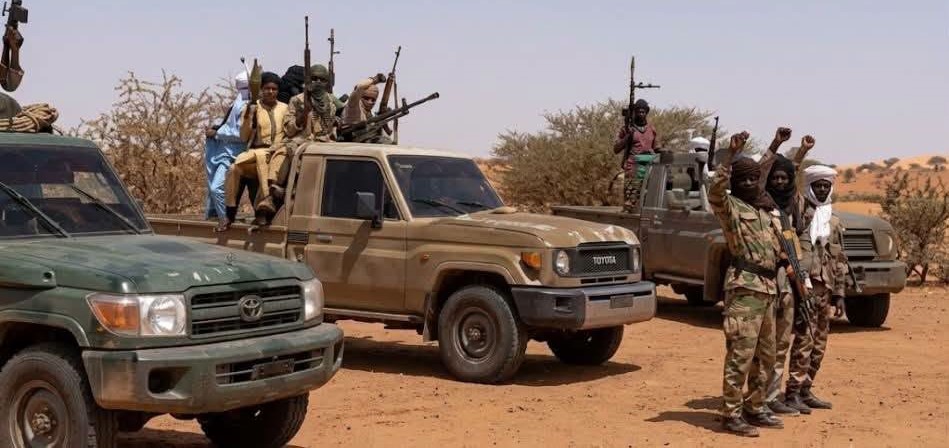
A unit of Sudan’s paramilitary Rapid Support Forces (RSF) has surrendered to the Sudanese army, handing over its personnel and military equipment in Omdurman, the state-run Sudan News Agency (SUNA) reported on Friday.
SUNA said the unit belonged to the RSF’s “Group 26” but did not disclose how many fighters surrendered or specify the weapons and equipment handed over.
According to the agency, the group was received by Al-Nour Ahmed Adam, known as Al-Nour al-Qubba, alongside senior officers from the Sudanese Armed Forces (SAF) and the General Intelligence Service.
Al-Nour al-Qubba, a founding member of the RSF, defected to the army in April after serving as one of the paramilitary’s senior commanders. He had previously participated in fighting around Al Fasher, the capital of North Darfur state, where the RSF has fought a prolonged campaign against the army.
He said the army had received the surrendering unit and that similar defections had continued in recent months, with other RSF fighters also joining the SAF.
Al-Nour al-Qubba accused the RSF of lacking “principles, a cause and a strategy” and said foreign support for the group would not alter the course of the conflict.
One of the surrendered fighters, Capt. Othman Al-Nour Hasab Khalil, said he and other members of the group joined the army after arriving from Bara in North Kordofan state.
He urged other RSF fighters to lay down their arms and join the army, saying the decision to defect was driven by what he described as the conflict’s “racial and regional character” and by feelings of marginalisation within the paramilitary.
The RSF did not immediately comment on the reported defections.
War erupted in Sudan in April 2023 following a power struggle between the Sudanese Armed Forces, led by General Abdel Fattah al-Burhan, and the RSF, commanded by Mohamed Hamdan Dagalo, widely known as Hemedti.
The conflict has killed tens of thousands of people, displaced more than 14 million and created what the United Nations describes as one of the world’s worst humanitarian crises. The army has regained control of much of central and eastern Sudan, while the RSF retains influence across large parts of the Darfur region and parts of Kordofan, with fighting continuing on multiple fronts.

 and then