



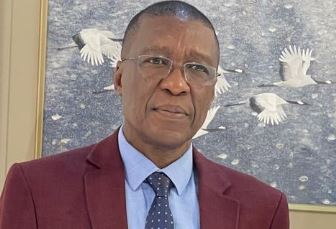
The Reconstituted Joint Monitoring and Evaluation Commission (RJMEC) on Wednesday released its latest Quarterly Report on the Status of Implementation of the Revitalised Agreement on the Resolution of the Conflict in the Republic of South Sudan (R-ARCSS), covering the period 1 April to 30 June 2026.
The report presents a comprehensive assessment of progress made in implementing the peace agreement, noting that while some institutions continue to function and limited advances have been recorded, it warns that the peace process remains under significant strain due to persistent political, security, humanitarian and economic challenges.
The report notes that the continued political and security impasse since March 2025 has weakened trust among the Parties to the Agreement, undermined responsibility-sharing arrangements and slowed implementation of key provisions of the R-ARCSS.
“One of the report’s principal concerns is the decision by the Revitalised Transitional Government of National Unity (RTGoNU) to submit proposed amendments to the R-ARCSS to the Transitional National Legislative Assembly without first obtaining the consent of RJMEC as required under Article 8.4 of the Agreement,” the statement reads in part. “Although the Government subsequently withdrew the proposed amendments to Articles 8.2 and 8.3 following the RJMEC’s recommendations, the report emphasizes that the prescribed legal procedure for amending the Agreement was not followed.”
With general elections scheduled for 22 December 2026, the report acknowledges progress made by the National Elections Commission in announcing the election date, advancing civic and voter education and strengthening institutional preparedness.
However, RJMEC cautions that major challenges remain unresolved, including incomplete Transitional Security Arrangements, unresolved legal and political issues, insecurity, restrictions on civic and political space, inadequate funding, and the continued displacement of millions of citizens. These challenges raise serious concerns regarding the prospects for credibility, inclusivity and peaceful conduct of the elections.
The report further highlights the deteriorating security situation across several parts of the country. Continued clashes between the South Sudan People’s Defence Forces (SSPDF) and SPLA-IO forces in Upper Nile, Jonglei, Unity and parts of Equatoria have resulted in continued ceasefire violations, while critical security mechanisms remain non-operational. Implementation of Phase II of the Necessary Unified Forces, the Disarmament, Demobilisation and Reintegration (DDR) programme and broader security sector reforms remain stalled.
The humanitarian situation also worsened during the reporting period, with more than 7.8 million people projected to face crisis or worse levels of food insecurity, while internal displacement exceeded 2.5 million people. Renewed violence, restrictions on humanitarian access and the continued influx of people fleeing the conflict in neighbouring Sudan have significantly increased humanitarian needs and present additional challenges to the implementation of the peace agreement and preparations for elections.
Meanwhile, the permanent constitution-making process registered encouraging progress with the National Constitutional Review Commission completing civic education and public consultations across all ten States and three Administrative Areas and commencing consultations with national institutions.
Against this backdrop, RJMEC reiterated the urgent need for an inclusive South Sudanese political dialogue, consistent with the AU C5 Plus Declaration of February, to restore trust among the Parties, resolve the prevailing political impasse and build consensus on the peaceful conclusion of the Transitional Period.
The report calls upon all Parties to immediately cease hostilities, recommit to full implementation of the R-ARCSS in both letter and spirit, complete the Transitional Security Arrangements, refrain from unilateral actions, and ensure meaningful participation of women, youth, displaced persons and other vulnerable groups in political and electoral processes.
RJMEC further urges the RTGoNU to restore confidence among the Parties, expedite implementation of outstanding provisions of the Agreement, adequately fund Agreement institutions, remove impediments to humanitarian access and accelerate preparations for peaceful, credible and inclusive elections.
As South Sudan enters the final months of the Transitional Period, the report underscores that renewed political commitment, adherence to the Peace Agreement and inclusive dialogue remain indispensable for safeguarding the gains achieved under the R-ARCSS and ensuring a peaceful democratic transition.
Finally, RJMEC reiterates its continued commitment to supporting the Parties to the R-ARCSS and accompanying the peace process in accordance with its mandate, and appeals to all peace stakeholders to work collectively towards lasting peace, stability, and successful completion of the transition in South Sudan.
Full report is attached HERE

 and then