



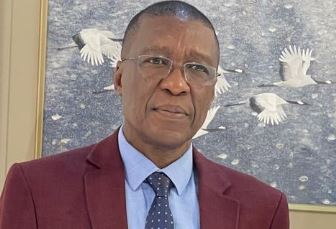
The Interim Chairperson of the Reconstituted Joint Monitoring and Evaluation Commission (R-JMEC), Ambassador Maj. Gen. George Aggrey Owinow, on Monday, warned that South Sudan risks sliding back into instability unless urgent action is taken to address ongoing political and security challenges.
Presenting their quarterly report for the period from 1 October 1 to 31 December 2025, before the Transitional National Legislative Assembly (TNLA), Gen. Owinow said the country’s peace process is facing serious setbacks due to continued violations and lack of progress in implementing the revitalized peace agreement.
“During the period in question, the political and security deterioration that I have previously reported to this assembly showed no signs of major improvements,” he said.
He noted that persistent clashes between the South Sudan People’s Defense Forces (SSPDF) and opposition forces, including the SPLA-IO, continued to undermine the permanent ceasefire.
“The renewed and continued confrontations have heightened fears of lapse to full-scale conflict and undermining ongoing efforts to consolidate peace and stability,” he added.
The R-JMEC chief further warned that the violence is eroding trust among the parties to the agreement and weakening confidence in the peace process.
In the political sphere, he cited the continued detention of senior opposition figures and the dismissal of opposition members from government positions as major concerns.
“Several opposition members have been dismissed from different portfolios in contravention of the responsibility-sharing arrangements of the air access,” he said. “Efforts to progress the dialogue beyond its preliminary stages face challenges and have resulted in its deferral to a later date.”
On the electoral process, Owinow warned that key conditions for credible elections scheduled for December 2026 have not yet been met.
“As the last quarter of 2025 drew to a close, the preconditions for the conduct of credible elections had not been met,” he said, citing delays in security arrangements, constitutional making, and institutional reforms.
He stressed that with less than a year remaining, critical tasks such as unification of forces and judicial reforms remain incomplete.
The report also highlighted a worsening humanitarian situation, with millions of people affected by conflict, flooding, and economic hardship.
“By the end of 2025, these overlapping humanitarian crises left over 10 million people needing assistance,” Owinow said.
He added that humanitarian access continues to be constrained by insecurity, bureaucratic obstacles, and environmental challenges.
The R-JMEC chairperson also raised concern over the rise in gender-based violence, particularly among displaced women and girls, who face increased risks of abuse and limited access to support services.
“Gender-based violence remained a concern during the reporting period as women and girls in displacement face increased risks of sexual violence, harassment, and exploitation,” he said.
Despite some progress in areas such as legislative activity and institutional reforms, Owinow said overall implementation of the peace agreement remains slow and uneven.
He emphasized the need for urgent and collective action by all parties to restore confidence in the peace process.
“The current trajectory of the peace process calls into serious question the commitment of the parties to implement the agreement and deliver the elections as scheduled,” he warned.
Owinow urged all signatories to cease hostilities, engage in inclusive dialogue, and fully adhere to the provisions of the agreement.
“Unless urgent measures are undertaken to restore inclusive dialogue, uphold the sanctity of the air access and ensure inclusivity, South Sudan risks sliding back into instability,” Gen. Owinow cautioned.
Following the presentation, the Speaker of the TNLA referred the report to the committees on peace and reconciliation, and legislation and justice for further scrutiny and recommendations.
Civil society activist Edmund Yakani welcomed the RJMEC briefing to the TNLA, saying it is essential that lawmakers are kept informed since they have a constitutional oversight obligation on the performance of the executive, which is primarily tasked with implementing the agreement.
“What is going on is a dragging of feet to genuinely and timely implement the R-ARCSS and is a result of a higher trust deficit among the leaders. The deficit was cultivated by the spoilers of peace and stability around the leaders,” he charged. “Secondly, it is an act of prioritizing personal interest over national interest. The violations of the R-ARCSS that were registered are all intentional and designed to undermine the genuine and timely transitioning from violence to peace.”
“War profiteers are more influential than promoters of peace around the leadership of the parties to R-ARCSS,” Yakani added.
He urged the lawmakers to demonstrate leadership and work for the genuine implementation of the peace agreement.
“Any attempt to amend the R-ARCSS must follow the agreed-upon procedures in Article 8.4 of the agreement,” he stated. “It is good that the RJMEC provided the right procedures for the amendment while briefing parliament.”

 and then