



As we celebrate our country’s 15th independence anniversary, this message is for every South Sudanese who has become hopeless, who has given up, or who believes there is no reason to celebrate our country’s Independence Day. To you, it may seem that there is nothing worth celebrating. But allow me to offer a different perspective.
Given the circumstances we find ourselves in, it is not always easy to separate our national identity from the challenges confronting our country. The mud is so deep that many struggle to see beyond it. Anyone trapped in such a situation naturally searches for any path that promises survival. That is the reality many South Sudanese face today.
When people become desperate, their judgment is often shaped by their pain. It is much like a young man or woman who is determined to marry at any cost. In such a state of desperation, advice rarely changes their mind because urgency overshadows reason. This is simply part of human nature.
Yet, despite the confusion and frustration, let me attempt to draw a clear line.
It is beyond dispute that our nation has endured conflict, economic hardship, insecurity, corruption, displacement, unemployment, and the tragic loss of countless innocent lives. Many families struggle every day simply to survive. These painful realities are undeniable, and they must neither be ignored nor downplayed.
But today, I remind you of one important truth: our disappointment with what has become of our country should never erase the significance of how our country came to exist.
Independence was not handed to us as a gift. It was earned through decades of sacrifice. Thousands of our fathers, mothers, brothers, sisters, and friends paid the ultimate price so that South Sudan could stand among the nations of the world as a free and sovereign State. Their sacrifice deserves our remembrance, regardless of our political differences or frustrations.
Celebrating Independence Day is not a celebration of failed leadership, corruption, or unfulfilled promises. It is a celebration of our identity, our sovereignty, and the courage of those who believed that South Sudan deserved the right to determine its own destiny.
Even though their histories are not identical to ours, one truth remains: nation-building has never been an easy journey. Literature tells us that many of the countries we often admire today spent decades wrestling with the very challenges we now lament in South Sudan.
Take Sudan. Since gaining independence in 1956, it has witnessed around 17 coup attempts, about six of which succeeded in changing the government. From Ibrahim Abboud’s military takeover in 1958, Jaafar Nimeiri’s coup in 1969, Abdel Rahman Swar al-Dahab’s transitional takeover in 1985, to Omar al-Bashir’s seizure of power in 1989, Sudan’s political history has been marked by recurring instability. Beyond coups, generations of Sudanese have endured devastating civil wars and armed conflicts – from the long war in southern Sudan before South Sudan’s independence, to Darfur, Blue Nile, Kordofan, and the ongoing conflict between the Sudanese Armed Forces and the Rapid Support Forces. The situation has been marked by recurring conflict, economic hardship, insecurity, corruption, displacement, unemployment, and the tragic loss of countless innocent lives.
Uganda’s path has been equally turbulent. Since attaining independence on 9 October 1962, it has experienced about eight coup attempts, five of which resulted in changes of government. Milton Obote dismantled the constitutional order in 1966. Idi Amin seized power in 1971, ushering in one of Africa’s darkest periods of dictatorship. His regime collapsed in 1979 following the Uganda–Tanzania War, only for political instability to continue with Tito Okello’s coup in 1985 and Yoweri Museveni’s ascent to power in 1986 after a five-year guerrilla war. The country also suffered prolonged insurgencies, most notably the Lord’s Resistance Army rebellion, which terrorized northern Uganda for decades.
The point is not to glorify instability or excuse our failures. It is to place South Sudan’s experience within the broader reality of history. Many nations that today enjoy relative peace and stability first passed through long seasons of coups, civil wars, economic hardship, and painful political transitions before finding firmer ground.
South Sudan is barely fifteen years old. We are still carrying the scars of a 21-year liberation struggle whose wounds cannot be expected to disappear overnight. Independence was never the finish line; it was the starting point of an even more demanding journey – the task of building institutions, healing divisions, restoring trust, and forging a common national identity.
Our impatience should never blind us to this reality. We must certainly hold our leaders accountable, reject corruption, violence, and poor governance, and demand better. But we must also recognize that nation-building is a marathon, not a sprint. Every enduring nation was shaped through perseverance, sacrifice, painful lessons, and an unwavering determination to rise after every setback.
History reminds us that while freedom can be won in a single day, building a peaceful, prosperous, and united nation takes generations. The responsibility now rests with us to ensure that the sacrifices which secured our independence become the foundation of a stronger South Sudan, not merely a memory of what might have been.
What we are going through are challenges of State building. For now, many cannot understand why it is happening on such a scale. Let us give it time; we will come to understand why we are in such a situation.
A nation can face difficult times without losing its reason to exist. Even in our darkest moments, our flag still represents hope. Our anthem still reminds us of our shared identity. Our Independence Day still reminds us that freedom was won at a great cost and that preserving and improving our nation is now our responsibility.
If we refuse to celebrate because our country is hurting, we risk allowing today’s disappointments to overshadow yesterday’s sacrifices and tomorrow’s possibilities. The least is to say, we regret why we broke away from Sudan.
I remind us of the second last stanza of our national anthem:
“Oh great patriots,
Let us stand up in silence and respect,
Saluting our martyrs whose blood
Cemented our national foundation,
We vow to protect our nation.”
The second last stanza of our national anthem is a solemn tribute to the sacrifices made during South Sudan’s long struggle for independence. It reminds citizens that the nation was not won easily, but through immense suffering, courage, and sacrifice. It calls on all South Sudanese to honor the martyrs by pausing in silent reflection, a symbol of profound respect and gratitude for those who gave their lives for the country’s freedom.
The phrase “whose blood cemented our national foundation” is a powerful metaphor, likening the martyrs’ sacrifices to the cement that binds a strong building. Their blood laid the foundation upon which the Republic of South Sudan was established.
The stanza also serves as a national pledge to protect South Sudan’s sovereignty, unity, peace, and independence from both external threats and internal challenges such as division, corruption, and violence. Ultimately, it urges every citizen to remember those who secured the nation’s freedom, recognize the immense price paid for independence, and remain committed to preserving and strengthening the country they helped build. It is both a tribute to the past and a promise for the future.
Let me use a simple analogy again to simplify the message.
When a woman is expecting a baby, the entire family eagerly anticipates the arrival of new life. There is joy, hope, and excitement as everyone looks forward to the day of birth.
But when the moment of delivery finally arrives, the atmosphere changes. Alongside hope comes fear and uncertainty. Family members begin to wonder whether both the mother and the baby will make it through safely. The expectant mother endures intense labor pains. Her water breaks, her body loses control, and she goes through a difficult and exhausting process. At that moment, all she can think about is surviving the pain and bringing forth new life.
Then, after what seems like an unbearable struggle, a baby’s first cry fills the room. The pain gives way to overwhelming joy. The tears of anxiety become tears of celebration, and the family rejoices because a new life has been safely delivered.
In many ways, this is the situation South Sudan finds itself in today. We are going through painful trials that test our patience and resilience. Yet pain is not the end of the story. Just as labor pains signal that new life is near, our present struggles should strengthen – not destroy – our hope.
It is only a matter of time. If we remain united, resilient, and committed to building our nation, our season of joy will also be delivered.
Instead, let this Independence Day be both a celebration and a solemn reflection. Let it remind us that true patriotism is not blind praise, nor is it endless criticism. True patriotism is loving your country enough to celebrate its existence, acknowledge its failures honestly, and work tirelessly to correct them. The cardinal question to challenge each South Sudanese now is: what are you doing personally to confront the current challenges?
South Sudan belongs to all of us – not only to those in government, not only to those in opposition, but to every citizen. The future of our nation will not be shaped by despair alone. It will be built by people who refuse to give up on the dream for which so many sacrificed.
As we mark this Independence Day, let us honor our heroes and heroines, comfort the bereaved, support one another, demand accountable leadership, and renew our commitment to peace, justice, unity, and development.
The challenges before us are great, but they are not greater than the resilience of the South Sudanese people.
Happy Independence Day, South Sudan. May our next chapter be worthy of the sacrifices that gave us our freedom.
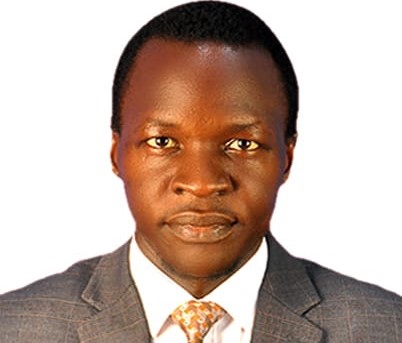
The writer, Waakhe Simon Wudu, is a senior South Sudanese journalist and a student of strategic security studies. He can be reached at wakemurye@gmail.com.
The views expressed in ‘opinion’ articles published by Radio Tamazuj are solely those of the writer. The veracity of any claims made is the responsibility of the author, not Radio Tamazuj.

 and then