



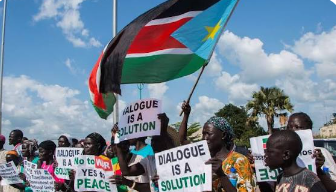
A nation is not measured by the day it wins its freedom, but by what it does with that freedom thereafter. Every year on July 9, the flag of the Republic of South Sudan rises proudly into the sky. Its black, red, green, blue, and golden colors remind us of a people who endured unimaginable suffering in pursuit of one dream: the right to determine their own destiny. For millions of South Sudanese, Independence Day is more than a national holiday—it is a sacred remembrance. It is a day when history speaks, and when the voices of those who never lived to witness freedom echo through every village, church, school, refugee camp, and family.
The independence of South Sudan on July 9, 2011, was not a gift. It was earned through sacrifices that few nations in modern history have endured. It was purchased with the blood of ordinary people—fathers, mothers, soldiers, civilians, teachers, and clergy—who believed that future generations deserved to live in dignity and peace. Today, we honor them.
The journey to independence did not begin in 2011; it began decades earlier, shaped by broken promises, political exclusion, and an unyielding determination for self-governance. The Torit Mutiny of 1955 marked the beginning of the First Sudanese Civil War. After seventeen years of conflict, the Addis Ababa Agreement of 1972 temporarily granted Southern Sudan regional autonomy.
That hope was shattered in 1983 when autonomy was revoked, deepening national divisions and causing conflict to resume. In response, the Sudan People’s Liberation Movement/Army (SPLM/A) emerged under the leadership of Dr. John Garang de Mabior, who envisioned a Sudan founded on justice, equality, and democratic transformation.
The Second Sudanese Civil War lasted more than two decades, becoming one of the longest and most devastating conflicts in modern African history. Millions were displaced, enduring hunger, disease, and the trauma of war. Entire generations grew up without schools, healthcare, or security. Yet, despite extraordinary hardship, the dream of freedom never died.
History shifted on January 9, 2005, when the Government of Sudan and the SPLM/A signed the Comprehensive Peace Agreement (CPA) in Nairobi. The CPA ended active hostilities and established a six-year interim period of self-governance, culminating in a January 2011 referendum. In one of the clearest democratic expressions of self-determination in modern history, an overwhelming majority voted for independence.
Then came July 9, 2011. The world watched as South Sudan became Africa’s newest nation and the 193rd Member State of the United Nations. There were tears, songs, prayers, and boundless hope. For one unforgettable day, the dreams of generations became reality.
Every Independence Day invites celebration, but true patriotism also requires honest reflection. As we commemorate fifteen years of independence, many South Sudanese continue to ask difficult questions—not out of despair, but because they love their country enough to hope for better.
Across our nation, families still lose loved ones to preventable illnesses because healthcare remains out of reach. Communities continue to experience insecurity that forces parents to flee their homes, farms, and schools. Millions face food insecurity despite living in a country blessed with fertile land, abundant water, and vast natural resources. Young people graduate with dreams but struggle to find opportunities, while teachers, medical professionals, and civil servants serve the nation with remarkable dedication despite enduring extended periods without regular salaries.
As elections approach, South Sudan stands at another historic crossroads. Our people desire peace, justice, accountable leadership, and institutions that serve the public with integrity. They desire a future where children inherit opportunity instead of conflict. These aspirations naturally give rise to painful questions of conscience: Was independence worth the sacrifice? Was the revolution worth fighting and dying for? These questions challenge us to look inward and ask whether we have truly honored the sacrifices that secured our freedom.
The heroes of our liberation did not fight merely so that a new flag would fly over Juba. They dreamed of a nation governed by justice rather than fear; a nation where public servants receive the salaries they have earned, and where diversity is our greatest strength rather than our deepest division. Their struggle was fundamentally about human dignity.
Freedom itself does not build nations—people do. The responsibility for building South Sudan belongs to all of us: political leaders who must govern with integrity, public servants who must serve faithfully, civil society speaking for the vulnerable, religious leaders promoting reconciliation, and youth whose innovation will shape the future.
Despite every challenge, South Sudan remains a nation of extraordinary resilience. We have survived wars many believed we could not survive, and we have rebuilt communities from ashes. Our resilience is our greatest national resource. It lives in the determination of ordinary citizens who choose hope over despair.
Independence was not the destination; it was the beginning. The revolution gave us political freedom, but our ongoing responsibility is to transform that freedom into peace, prosperity, quality education, accessible healthcare, and national reconciliation.
The greatest monument we can build for our martyrs is not a statue. It is a nation where no child dies from a preventable disease, where no family is displaced by violence, where civil servants receive fair and timely pay, and where elections strengthen democracy rather than divide communities.
As our flag rises once again, let it be a challenge to the present and a promise to the future. May we never lose the courage to confront our failures with honesty, and may we never surrender the hope that this nation can become what its founders dreamed it could be. The revolution was worth fighting for because it gave us the priceless right to determine our own future.
History has already judged the generation that won our freedom. It will one day judge the generation entrusted to preserve it. May that judgment find us faithful.
Stephen Dhieu Kuach, PhD, is a South Sudanese governance and public policy expert, researcher, environmental advocate, and author. His work focuses on climate change, environmental governance, sustainable development, humanitarian resilience, peacebuilding, and public policy in fragile and conflict-affected settings across East Africa. Contact: dr.stephen.dhieu@gmail.com
The views expressed in ‘opinion’ articles published by Radio Tamazuj are solely those of the writer. The veracity of any claims made is the responsibility of the author, not Radio Tamazuj.

 and then