



A growing strand of pro-establishment Dinka intellectual discourse has adopted a sophisticated political strategy: it criticises the regime without ever confronting the centre of power that sustains it.
This is not accidental. It is a deliberate exercise in narrative management.
Whenever South Sudan’s political, economic, and security failures become impossible to deny, a familiar script emerges. Blame is redirected toward ministers, security officials, presidential advisers, businessmen, generals, and increasingly even members of President Salva Kiir Mayardit’s family. The public is encouraged to believe that the crisis exists around him, but never because of him.
The objective is clear: preserve the throne by sacrificing those positioned around it.
In this political theatre, Kiir is repeatedly portrayed as a captive of corruption rather than its ultimate political beneficiary; a victim of poor advisers rather than the appointing authority; and a frustrated reformer rather than the longest-serving custodian of the system now under scrutiny.
This intellectual manoeuvre seeks to separate the ruler from the consequences of his rule.
Yet leadership does not function in that way.
A president who appoints governors, ministers, security chiefs, judges, military commanders and financial gatekeepers cannot simultaneously claim immunity from responsibility when those institutions fail. If every major failure is attributed to subordinates, the unavoidable question is: who appoints, protects, promotes and retains them over time?
The reality many of these intellectual arguments avoid is that South Sudan’s crisis is no longer merely about individuals. It is about a political order built on personalised power. The system reflects the nature of its centre.
Independent observers, human rights organisations and governance analysts have repeatedly linked institutional decay, corruption and democratic stagnation to the concentration of power within the presidency and the weakness of accountability mechanisms.
What makes this intellectual defence particularly striking is that it often disguises itself as criticism. It adopts the language of accountability while carefully shielding the highest office from accountability. It condemns the symptoms while insulating the source. It attacks the branches while protecting the root.
The pattern has become predictable:
When corruption is exposed, blame a minister.
When violence escalates, blame a commander.
When institutions fail, blame advisers.
When the economy deteriorates, blame technocrats.
When public anger rises, blame members of the president’s family.
But rarely is the deeper question asked: whether the concentration of power itself is the core problem.
South Sudan has witnessed repeated cycles of dismissals, reshuffles, arrests and political purges. Yet the underlying structure that produces failure remains intact. Officials change, but the system that empowers them endures. Analysts increasingly describe these cycles as political performances designed to manage pressure rather than deliver accountability.
The National Salvation Front National Salvation Front argues that genuine accountability cannot stop at the perimeter of power. No serious national conversation can rest on selective responsibility. A country cannot heal through narratives that protect individuals while obscuring the truth.
If South Sudan is to move beyond conflict, corruption, ethnic domination and institutional breakdown, it must reject intellectual frameworks that sanitise power. The question is not only who surrounds the president, but who has presided over the system that produced them.
History will not judge a leader by the excuses constructed in his defence. It will judge him by the condition of the country he leaves behind.
Attempts to recast President Salva Kiir Mayardit as a spectator of his own government are not analysis. They are political cover presented as scholarship. And they risk obscuring more than they reveal.
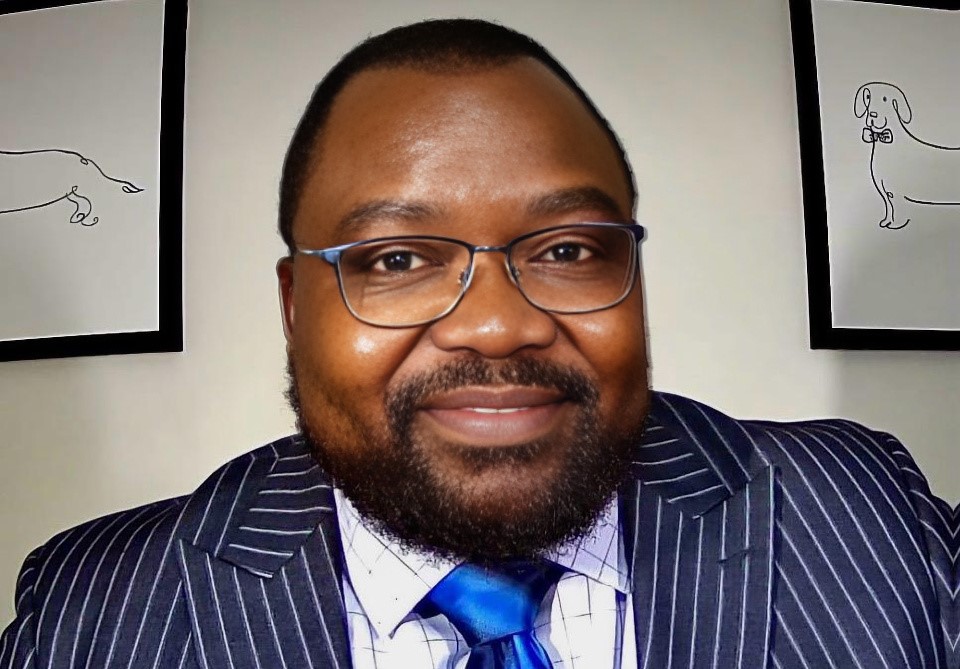
The writer, Daniel Lee, is the National Salvation Front Commissioner for Information, Mass Communications and Cultural Affairs (IMCCA). He be reached at imcca@proton.me.
The views expressed in ‘opinion’ articles published by Radio Tamazuj are solely those of the writer. The veracity of any claims made is the responsibility of the author, not Radio Tamazuj.

 and then