



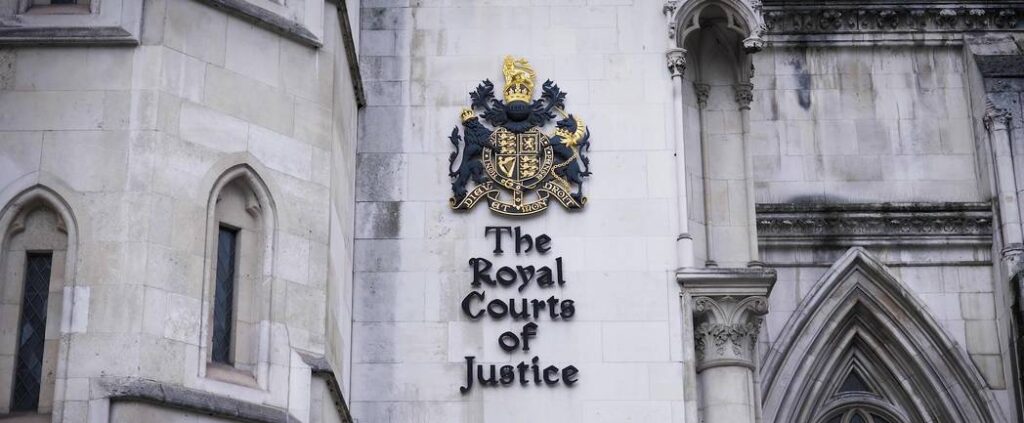
The recent injunction issued by a London court against the Republic of South Sudan is not simply a commercial ruling. It is a thunderous act of judicial imperialism disguised in procedural language and polished with corporate diplomacy. It is an alarming attempt by a foreign court to extend its authority over a sovereign African state and dictate its economic survival.
A court in London does not have constitutional superiority over the sovereignty of South Sudan. Britain does not govern South Sudan. The British judiciary is not a supra-national authority over African republics. South Sudan was not established to be an offshore department of foreign commodity traders and their legal system.
The ruling attempting to prevent South Sudan from entering into future oil pre-payment arrangements is politically dangerous, legally questionable, and morally excessive.
However, this truth must coexist with another uncomfortable truth: The Government of South Sudan has disastrously mishandled public finances, oil contracts, debt obligations, and national accountability. Corruption, opaque oil dealings, elite capture, reckless borrowing, and institutional decay have turned the country’s petroleum wealth into a leaking pipeline feeding political survival instead of national transformation.
A weak government is still protected by international law. An economically distressed state does not forfeit its independence to foreign judges. Poverty is not consent for external control.
The London injunction represents a troubling shift in international finance, where commercial disputes are increasingly used to exert economic control over fragile states. Today it is oil cargoes, tomorrow it could be budget approvals, sovereign borrowing, or direct interference in fiscal policy. The logic is colonial in nature, even when disguised as debt recovery.
Under international law, sovereign equality is a fundamental principle of the United Nations system. Article 2(1) of the UN Charter affirms the sovereign equality of all member states. Equally important is the doctrine of permanent sovereignty over natural resources, recognized through UN General Assembly resolutions and international legal practice. South Sudan’s oil belongs first to the people of South Sudan, not to foreign trading houses operating from marble towers in London, Geneva, or Dubai.
If disputes arise involving state obligations, there are internationally recognized legal mechanisms. States may be held accountable before regional judicial institutions, arbitration bodies voluntarily accepted by parties, or the International Court of Justice under the UN framework, where jurisdiction is lawfully established between sovereign entities. What is deeply concerning here is the attempt by a domestic court of one country to exert practical economic control over the strategic lifeline of another sovereign nation.
The language of the court order is alarming in its scope. It threatens asset seizures, contempt proceedings, and punishment against third parties who
facilitate oil-backed arrangements with South Sudan. These expansive warnings resemble financial siege tactics rather than fair adjudication. The courtroom begins to resemble an annex of global commodity enforcement rather than a chamber of law.
For years, commodity traders knowingly entered agreements with South Sudan despite civil conflict, institutional fragility, corruption risks, disrupted pipelines, and governance instability. These companies were not naive. They sought profit in a high-risk market because risk leads to high returns. African instability has been turned into a profitable business model by international financial actors.
Now, after benefiting from these agreements, foreign commercial interests seek to immobilize an entire sovereign state through external judicial pressure. This precedent is dangerous.
If every financially troubled African country can have its economic arteries restricted by courts in foreign capitals, then sovereignty becomes contingent on economic weakness. In this scenario, independence is only for the powerful, while fragile states remain permanently tied to external financial oversight.
South Sudan must reject this creeping normalization of extraterritorial economic control.
At the same time, Juba must address its own failures honestly. The government cannot continue to hide behind the flag while undermining the foundation beneath it. Sovereignty is not a shield for corruption. Patriotism cannot mask incompetence. Oil revenues vanished while hospitals crumbled, roads turned to mud, salaries disappeared, and communities relied on humanitarian aid in one of Africa’s richest oil-producing regions.
The political elite turned a national resource into a survival machine.
But even a wounded state retains its legal dignity. No London court has universal jurisdiction over South Sudan’s sovereign economic decisions. No foreign judge can become the unelected guardian of South Sudanese petroleum policy. The authority to shape the future of South Sudan ultimately belongs to its people, its constitutional institutions, regional legal mechanisms where applicable, and recognized international frameworks under the UN system, not to external commercial courts acting at the intersection of finance and geopolitical power.
Africa has seen this story before. Yesterday, the continent was governed through gunboats and colonial offices. Today, influence comes through debt instruments, injunctions, financial leverage, and legal intimidation disguised in elegant language. The costume has changed, but the appetite remains.
South Sudan must reform. South Sudan must restore accountability. South Sudan must stop treating its oil sector like a midnight gambling table for political elites. But London cannot become the shadow ministry of South Sudan’s sovereignty.
The writer is a South Sudanese governance expert, disability rights advocate, and senior SPLM member. He served as Director of Disability Affairs in the Ministry of Presidential Affairs and coordinated national programmes in the Office of the Vice President. He can be reached at dr.stephen.dhieu@gmail.com.
The views expressed in ‘opinion’ articles published by Radio Tamazuj are solely those of the writer. The veracity of any claims made is the responsibility of the author, not Radio Tamazuj.

 and then