



Introduction
South Sudan stands at a critical crossroads. Elections are scheduled for December 2026, but the real question is not whether a date has been announced. The real question is whether the political, security, legal, and social conditions exist for an election that citizens can trust and accept.
South Sudan should borrow two key concepts from the People’s Republic of China: Opening-up Reforms and Durable Stability. Once peace is secured, development becomes automatic, and citizens gain a clear vision for the future of their country.
An election cannot be decided by a small group of individuals in Juba whose ideas have run short, then presented to the wider population as a national democratic choice. Elections belong to the people, not to J1 [State House] associates. They must be organized through broad consultation, political inclusion, transparency, and conditions that allow citizens to participate without fear.
Any election must meet minimum democratic standards for the people to accept its outcome. History warns us: in 2010, in Jonglei State, late Gen. George Athor and Gen. David Yau Yau rebelled after alleging their votes were rigged by SPLM through Kuol Manyang’s contested governorship. Such narratives can easily repeat themselves in any part of South Sudan if elections are rushed without safeguards.
The Revitalized Agreement on the Resolution of the Conflict in the Republic of South Sudan (R ARCSS) was intended to provide a foundation for peace and a transition toward democratic governance. Yet many of the challenges that have troubled the country remain unresolved.
The Reconstituted Joint Monitoring and Evaluation Commission (RJMEC) has repeatedly emphasized the importance of completing transitional tasks, maintaining the peace agreement, and ensuring broad, inclusive consultation around electoral decisions. This is the only pathway to durable stability.
The government in Juba continues to push for elections in December 2026, with December 22 identified as the date. Yet the Catholic bishops of South Sudan recently called on political leaders and citizens to prioritize peace, dialogue, and constitutional order before rushing into an election that could be regrettable. Their message reflects a concern that should be shared nationwide: an election held without sufficient peace and public confidence could deepen, rather than resolve, South Sudan’s political crisis.
Can there be a national election without national security?
This is the question South Sudanese citizens must ask honestly. How can citizens freely campaign, attend political meetings, travel to polling stations, and vote when large parts of the country continue to experience insecurity and displacement?
The home of President Kiir is full of calamities, with intercommunal violence being the order of the day. South Sudan is full of leaders whose hearts are full of evil, not good deeds for the citizens. The situation in several states remains deeply troubling. Upper Nile, Jonglei, and Unity have experienced serious insecurity and humanitarian pressures, while Warrap State has also suffered repeated intercommunal violence. In July 2026, for example, at least 19 people were reported killed and 14 injured in clashes in Tonj South County, Warrap State. The violence was described as part of a wider cycle of attacks and reprisals that has affected communities since late 2025.
The United Nations has also warned about continuing insecurity and the difficult conditions facing civilians. More than 2.5 million people were internally displaced across South Sudan in 2026, according to the UN, demonstrating the enormous scale of the country’s humanitarian and security challenges.
These realities cannot simply be ignored because an election date is approaching.
An election is not only about printing ballot papers and establishing polling stations. It requires citizens to feel safe enough to participate. Opposition parties must be able to organize. Candidates must be able to campaign in different parts of the country. Journalists must be able to report freely. Voters must be able to make choices without intimidation. Communities must believe that their votes will be counted honestly and that the results will be accepted.
Without these conditions, an election risks becoming a political exercise rather than a genuine democratic process.
Can President Kiir campaign everywhere?
President Salva Kiir Mayardit is the head of state and one of the country’s most powerful political figures, but he remains in Juba. But the question that must be asked is whether any presidential candidate, including the incumbent, can campaign freely and safely across all parts of South Sudan. If a candidate can campaign in one part of the country but cannot safely reach another, that raises serious questions about the national character of the election.
Warrap State, which is associated with President Kiir’s political and personal background, cannot be treated as though it represents the security and political conditions of the entire country. South Sudan is much larger and more politically diverse. The experiences of citizens in Warrap are not necessarily the experiences of citizens in Upper Nile, Jonglei, Unity, Equatoria and other parts of the country.
A credible election must therefore be national in reality, not merely national on paper.
The government and the electoral authorities have a responsibility to demonstrate that candidates and voters from different political backgrounds can participate throughout the country. If some communities are too frightened to attend political gatherings, if people are displaced from their homes, or if competing political groups cannot operate freely, then the credibility of the process will inevitably be questioned.
Elections must belong to the people
There is a growing danger in treating elections as a timetable rather than a democratic process. South Sudanese citizens have waited for years for the opportunity to choose their leaders through a credible democratic system. They deserve an election that gives them confidence—not an election conducted simply because political leaders have agreed on a date.
The People of South Sudan- CSOs, youth, women, men, girls, international community should therefore not be reduced to spectators. Regional organizations, neighboring countries, the African Union, IGAD, the United Nations and other international partners have an important role in encouraging South Sudanese leaders to fulfill their commitments to peace and democratic transition. But international pressure alone cannot create a legitimate election. Ultimately, South Sudan’s political leaders must make the necessary compromises, and South Sudanese citizens must be allowed to participate meaningfully in decisions about their country’s future.
The Reconstituted Joint Monitoring and Evaluation Commission has specifically called for proposed changes affecting elections to be subjected to broad consultation involving the signatories, stakeholders, and guarantors of the peace agreement. That principle should guide the entire electoral process. No small group should have the power to determine the country’s political future without meaningful consultation with the wider population.
Peace before politics
South Sudan needs to remember a fundamental truth: democracy cannot survive where people are afraid. A voter who fears being killed cannot vote freely. A displaced citizen who has lost a home cannot easily participate in political life. A political candidate who fears traveling to another state cannot conduct a truly national campaign. A journalist who is afraid to report cannot help citizens make informed choices.
The country therefore needs to prioritize peace and security alongside preparations for elections.
This does not necessarily mean that elections must automatically be postponed permanently. Rather, it means that the government, opposition groups, civil society, traditional leaders, religious leaders and international partners must honestly assess whether the minimum conditions for a credible election exist.
If they do not, South Sudanese leaders should have the courage to address those problems rather than pretending they do not exist.
An extension, if genuinely necessary and agreed through the appropriate constitutional and peace-agreement mechanisms, should not be viewed simply as a failure. A poorly prepared election that produces disputed results, political violence, and another cycle of conflict could be far more damaging to South Sudan than a carefully negotiated adjustment of the timetable.
The cost of a failed election
Elections are expensive. They require money for electoral institutions, voter registration, civic education, security, transportation, ballot materials, polling stations, observers, and the counting and verification of results.
But the greatest cost of an election is not financial. The greatest cost would be an election that contributes to renewed violence.
South Sudan has already paid an enormous price for political conflict. Millions of people have been displaced, communities have been divided, and the country continues to face serious humanitarian
challenges. The United Nations has emphasized that peace and stability are foundations for recovery, development, and the safe return of displaced people.
South Sudan cannot afford to repeat the mistakes of the past.
Conclusion: The people must decide
The December 2026 elections should not be the project of a few individuals in Juba. They must be a national project belonging to the people of South Sudan.
The question should not be, “Can the government hold an election?” The more important question is, “Can South Sudan hold an election that its people will recognize as free, credible, inclusive and legitimate?”
That requires peace. It requires security. It requires political inclusion. It requires freedom of movement and campaigning. It requires independent civic participation and credible electoral institutions. And, above all, it requires the consent and confidence of the South Sudanese people.
South Sudanese citizens should not be asked to choose between peace and democracy. They deserve both.
If the country is not ready for a credible election, political leaders must put the national interest above personal political survival and work together to create the conditions necessary for a genuine democratic transition. If the election is held, it must be an election in which citizens across Warrap, Upper Nile, Jonglei, Unity, Equatoria and every other part of South Sudan can participate without fear.
An election is not legitimate merely because a date is announced. An election is legitimate when the people are free to participate, free to choose, and confident that their voices will be respected.
South Sudan’s future cannot be decided by a few individuals. It must be decided by its people.
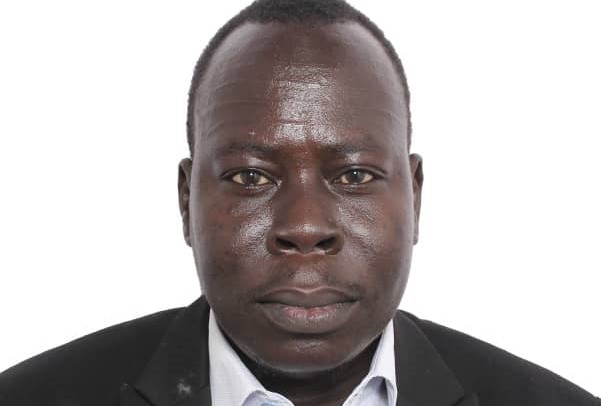
The writer is the chairman of the board of the Center for Peace and Advocacy (CPA), a gender expert, human rights defender, analyst, a consultant, and a father. He can be reached via WhatsApp/Signal at +211 924 538 137 or termanyang24@gmail.com/termanyang24@protonmail.com.
The views expressed in ‘opinion’ articles published by Radio Tamazuj are solely those of the writer. The veracity of any claims made is the responsibility of the author, not Radio Tamazuj.

 and then