



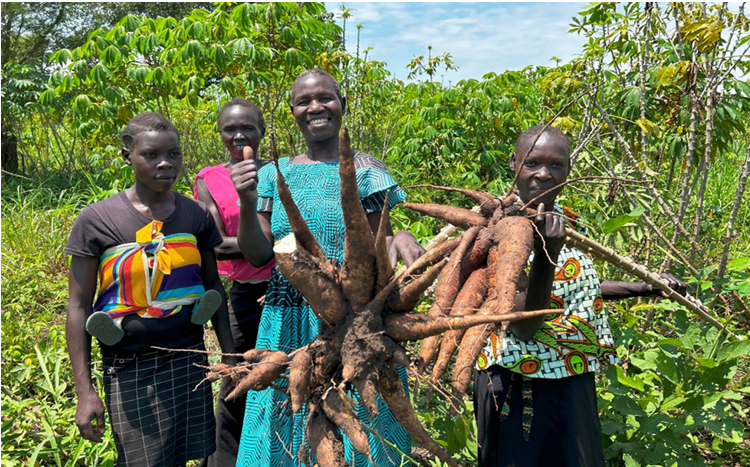
For farmers in Eastern Equatoria State’s Magwi County, growing food has not always been the hardest part of agriculture. Getting their harvests from farms to markets has often been difficult, with poor road conditions making transportation costly, slow, and unpredictable.
In some farming areas, vehicles have struggled to reach gardens, while farmers have faced difficulties moving their produce to main roads and eventually markets. The challenges have affected their ability to sell harvests, earn income, and make the most of their agricultural work.
Now, residents in parts of Magwi County say improved access roads are beginning to improve movement, raising hopes that the ongoing rehabilitation of roads will strengthen agricultural trade and improve livelihoods.
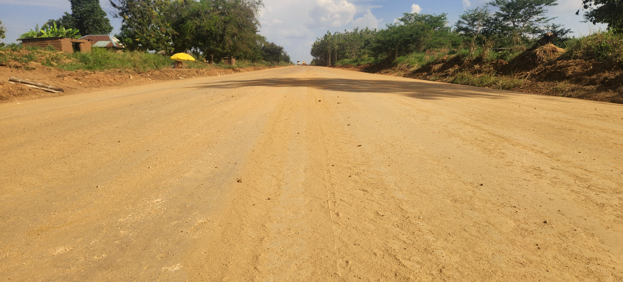
For Olaraga Simon Ogenga, a 35-year-old farmer, the difference is already noticeable following the opening of a community access road connecting farming areas to the main route.
“Before this road, movement was so difficult for us,” he said. “The vehicle could go from here to the farm, but when loaded with produce, we would get stuck on the way.”
He said the rehabilitated roads had made it easier for vehicles to reach farms and transport agricultural produce to markets without getting stuck along the way.
For farming communities that depend on selling their harvests, reliable access roads can determine whether produce reaches buyers fresh in good condition and whether farmers can earn from their labour.
Ogenga said the community had been motivated to open the road partly because of the difficulties farmers faced transporting goods from farms to markets. He added that the work also provided an opportunity for people without jobs to earn some money to support themselves.
The road-opening exercise brought together different groups within the community, including women, young people and other residents who took part in the work.
Among them was Aloyo Josephine, a 32-year-old mother of four and farmer, who said the community had been encouraged to participate because of the difficulties they faced moving produce from their gardens to markets and homes.
She said local leaders mobilised residents and organised them into groups that included youth, widows, persons with disabilities, women and men before work began.
Opening the road was not easy, particularly when residents had to clear trees and other obstacles. Aloyo said many of those involved in the labour were women, who worked for several hours despite the physical demands.
She also raised concerns about the payment, saying the amount received did not adequately reflect the effort and time spent on the work.
“Our payment was not good because we worked very hard for three to four hours, but our payment was little,” Aloyo stated.
Despite the difficulties, she said opening the access road had improved movement between farming areas, markets and homes, even before the work was fully completed.
She said the improved connection was particularly important for farmers who depend on produce from Palotaka, an area known for agricultural production.
According to Aloyo, residents in Magwi benefit from food produced in Palotaka, but transporting it to town had previously been difficult because of poor road conditions.
She said the rehabilitation of the Magwi–Palotaka Road, together with the community access roads connecting farms to the main route, would make it easier for farmers to bring their produce to markets and improve links between agricultural communities and consumers.
The rehabilitation of the feeder road and the construction or improvement of community access roads form part of a wider effort by the government and development partners to address transportation challenges facing farming communities in Magwi.
Karlo Andrew Akwo, caretaker Minister of Agriculture in Eastern Equatoria State, said poor roads had long prevented farmers from getting the full value of their harvests, with high transportation costs and spoiled produce affecting household incomes.
“Our hard-working farmers have been producing abundant crops, yet getting those harvests to the market has been challenging due to road conditions, leading to high transport costs, spoiled produce and loss of income for families who depend on the land,” he stated.
According to Akwo, the feeder road will help lower transportation costs for agricultural inputs, including seeds and fertilisers, while making it easier for trucks and traders to reach farms and move harvested crops to markets in Magwi, Juba and other parts of South Sudan.
He added that improved access could boost household incomes and enable farmers to expand production and invest in their children’s education and healthcare.
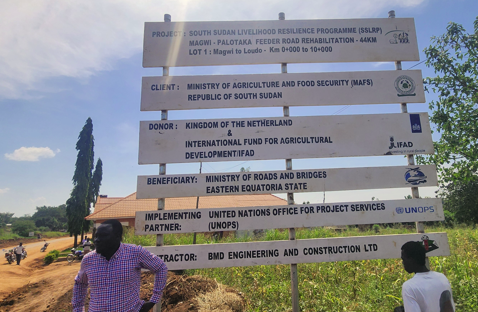
The road works are being implemented under the South Sudan Livelihoods Resilience Program, a government-led initiative supported by the International Fund for Agricultural Development (IFAD), with the United Nations Office for Project Services (UNOPS) providing implementation support.
The project is financed by IFAD and the Government of the Netherlands. Work on the 44-kilometre Magwi–Palotaka feeder road began in October 2026 and is expected to be completed in December 2026.
Caroline Mwongera, IFAD Country Director in South Sudan, said a recent visit to communities along the route had shown progress and some early benefits from improved road access.
She said residents had reported that the cost of transporting food from Lobone to Magwi had fallen by half, while women told the delegation that travelling to Magwi Hospital to deliver their children had become more comfortable.
Mwongera said rural roads were important because they connected farmers to markets, allowing them to transport produce, improve household incomes and strengthen rural livelihoods.
She also stressed the importance of maintaining the infrastructure after completion, saying local authorities and communities needed to work together to ensure the roads remained usable.
Petronella Halwiindi Kasaka, UNOPS Country Manager in South Sudan, said the rehabilitation formed part of broader investments in community infrastructure, agriculture and livelihoods under the programme, which is being implemented across eight counties.
She said the road investment was expected to reduce transportation constraints, improve farmers’ access to markets and connect rural communities to wider economic opportunities.
The programme targets 61,808 vulnerable households, representing about 370,848 people, through support for agriculture, cash-for-work activities and climate-resilient infrastructure.
For farmers in Magwi, however, the value of the roads will ultimately be measured by whether they can move their harvests more easily, reach buyers and earn better incomes from their work.
As rehabilitation continues, residents hope the improved connections between farms, feeder roads and markets will reduce some of the difficulties they have faced for years.
For Josephine and other farmers, the expectation is straightforward: that better roads will make it easier to move food from their gardens to the markets and allow farming communities to benefit more from what they produce.

 and then