



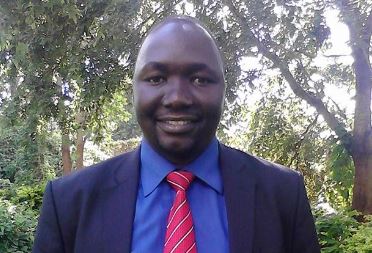
On the night of 30 March 2024 in Juba’s Hai Kuwait, men in numberless vehicles took former Mayor Kalisto Lado, now the Commissioner of Juba County, from his home. For five months, there was no charge, no court, no family visit. Rumors spread that he was dead. In Juba, silence was the message: This is what happens when you choose to serve the people.
Like much of the rest of Africa, Juba is not peculiar. What is lacking is not strong leaders, but a system that protects them. Kalisto happens to be both strong and in need of protection.
Over the years, the actions of our political leadership suggest that we are oceans apart. Our political leaders appear detached from the realities of the country, as evident in rhetoric such as “the economy is booming,” “there are many trees in South Sudan, go and hang yourself,” and “South Sudanese are resilient people” — said while salaries go unpaid for months.
Yet today, if you move around the tea joints of Juba, there appears to be a renewed bastion of hope. One man, one action, tells the story.
In just 50 days in office since 2 October 2026, Kalisto Lado has presented himself as the reincarnation of that hope. As Commissioner of Juba County, he did what most leaders refuse to do: he spoke and acted publicly against corruption and land grabbing, and vowed to serve the people.
A leader in the market, not in the office
His firsts are notable.
Cleaning campaign, inspection of markets, street lights
Making the city clean, opening up roads, and standing in the market, in the sun, with our mothers selling onions, tomatoes, and chapati, and asking the simple question: What will our women sell? What will our youth do?
Whether people agree with every policy or not, we heard a leader who is thinking about the ordinary South Sudanese first: the boda boda rider, the young graduate without a job, the mother trying to feed her children.
Thank you for the cleaning campaigns, for the inspection of markets, for pushing for solar street lights on Bilpam Road, and for insisting that government officials must be accessible to the people. You have shown that leadership is not sitting in an office. Leadership is walking in the market, listening, and acting.
Inspection of companies
The ongoing inspection of processing companies on a South Sudanese-first agenda is commendable. Advocating for fairer pay, a healthy product for consumers, warning that tax evasion is a crime, and pushing for corporate social responsibility is what we have all longed for.
Your exemplary leadership is not about power. It is about presence. You are present. You listen. You speak plainly. You do not hide behind big words.
Health and wellbeing
Many leaders would accept a bribe at the expense of a health threat from expired or substandard products flooding our markets. The ongoing crackdown on health-threatening products, the apprehension of culprits, and the arrest of gang members is an achievement worth celebrating. Our health is our wealth.
Suffice it to say, his achievement is not a building or a road. His achievement is that he refused to be a cowardly leader.
Lado’s achievement is not that he became famous. His achievement is that he exposed the truth: our political leadership is weak, fearful, and envious of courage because courage exposes their failure.
The weakness he exposed
a) Leaders who rule by fear, not by service. Many of our leaders do not lead by ideas. They lead by fear, by rank, by connection. Lado led by speaking for the people. That contrast exposed them.
For citizens, a lesson is learnt. Thank you for reminding us that we, the citizens, should not beg leaders for services, because it is our taxes that pay for those services. That one statement alone restored dignity to many of us. You told us we have a right to demand accountability, and you said leaders should be the ones begging the people to serve them well. That is the kind of leadership we have been thirsty for.
b) Leaders who are silent when it matters. When salaries are not paid? When our citizens are exploited by foreign companies in Juba? When land grabbing becomes the new normal? And when the outspoken are disappeared, how many senior leaders spoke? How many governors, MPs, and ministers publicly demanded that our citizens’ rights should be granted?
It showed that many leaders are more loyal to their interests than to justice.
c) Leaders who cannot tolerate a different voice. Strong leadership welcomes criticism. Weak leadership treats criticism as treason. Our politics has not yet learned the difference between an opponent and an enemy.
Many people celebrate what is happening in Juba. This exposes leaders elsewhere in the country who fail to deliver under the guise that the government is broke.
So while we celebrate, leaders envy.
Envy in South Sudanese politics is not about wealth. It is about relevance. A leader who has failed his people will always envy a leader the people still love. Many leaders walk around Juba with everything, but their names are already dead in the hearts of the people.
It is an open secret that South Sudan is tired. Youth are tired of excuses. Mothers in Juba, Bentiu, Malakal and Wau are tired of land being stolen and services lacking while their children have no school.
The primaries by the ruling SPLM party, where Kalisto Lado belongs, with the party’s big giants losing to little-known ones, are a referendum not only on the SPLM but on all political leadership. Citizens feel they listen, they see, and that one day they will speak again, as was the case with the SPLM.
For Kalisto Lado, an SPLM senior cadre himself, his being a maverick could be a bastion of hope in his party.
Here is a wake-up call: You cannot silence every voice. If you silence one, ten young activists will rise, and citizens will speak one of these days.
Misleadership is on notice. The choice for leaders now is clear: Reform or be exposed. Serve or be shamed by comparison.
Juba tried to silence Kalisto Lado, and failed. The real test is whether South Sudan will finally learn to listen.
The writer is a South Sudanese journalist.
The views expressed in ‘opinion’ articles published by Radio Tamazuj are solely those of the writer. The veracity of any claims made is the responsibility of the author, not Radio Tamazuj.

 and then