



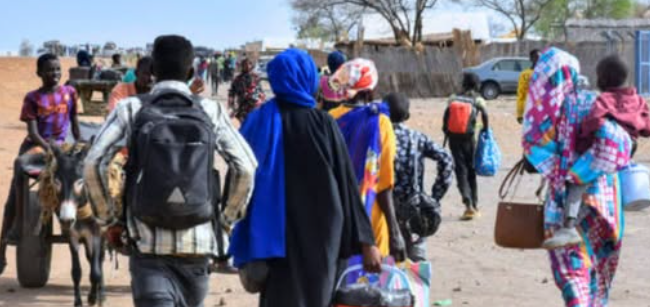
Transport fares from Damazin, the capital of Sudan’s Blue Nile Region, have surged amid a growing shortage of transport services and an increasing number of residents seeking to leave the city, as recent military clashes and security concerns continue to fuel public anxiety and uncertainty.
The mounting concerns come amid continued fighting between the SAF and allied forces on one side, and the Rapid Support Forces and the Sudan People’s Liberation Movement (SPLM), operating under the Tasis Alliance, on the other.
During a visit to Damazin’s Al-Shaabi Market, Radio Tamazuj found that long-distance bus fares to Khartoum ranged between 180,000 and 220,000 Sudanese pounds (SDG), while fares for private intercity taxis stood at approximately SDG 400,000 per passenger. Hiring an entire taxi costs as much as SDG 4 million.
Several residents reported a sharp increase in transport fares over the past few days, compounded by a decline in the availability of vehicles. The situation has resulted in overcrowding at transport terminals and mounting difficulties in securing tickets, particularly for families seeking to leave the city.
Rami Kamal, a resident of Damazin, said a bus ticket to Khartoum cost approximately SDG 180,000, while intercity taxi fares ranged between SDG 300,000 and SDG 400,000 per passenger.
“Despite the steep fares, others and I have been unable to secure tickets and are uncertain about what to do next,” he stated.
Meanwhile, the Government of Blue Nile State continues to issue messages of reassurance, urging residents not to be swayed by rumors and maintaining that the security situation across the region remains stable.
Saif Al-Nasr Minallah, the state government spokesperson, said the Sudanese Armed Forces (SAF) and allied forces were encircling opposing forces, who he claimed were retreating along several fronts.
“Advances by government forces are expanding areas of relative safety and reducing the threat of violence and intimidation,” he said. “Normal life is returning to Damazin.”
The spokesperson urged residents to go about their daily lives as usual, including attending schools and visiting shops and markets.
Amid growing concerns over security developments and the soaring cost of leaving Damazin, many residents face an increasingly difficult choice: remain in the city until the situation becomes clearer or leave despite financial constraints and the scarcity of transport.
Tariq Al-Tayyib, another resident, said thousands of families found themselves in an increasingly desperate predicament, unable to decide whether to stay or leave.
“Mounting security fears have made remaining in the city increasingly difficult, while prohibitive transport costs have left many families unable to afford to leave,” he said. “The rising prices and the escalating cost of travel have effectively trapped many families in Damazin, with those who could afford the fares managing to leave while those without sufficient financial means remained stranded in the city.”
He added that residents were grappling with uncertainty over whether to leave, particularly amid concerns about the safety of travel routes.
He questioned where residents could seek refuge when they appeared to have little choice but to remain in the city.
Al-Tayyib appealed to the relevant authorities to provide residents with clear assurances about the security situation and their safety amid the unfolding developments.
Hostilities continue across several parts of the Blue Nile Region, including Kurmuk, Geissan, Bau, and Wad Al-Mahi localities, amid reports that fighting is drawing closer to populated areas, including residential settlements 10, 11, and 12, as well as Dering and Maganza.

 and then