



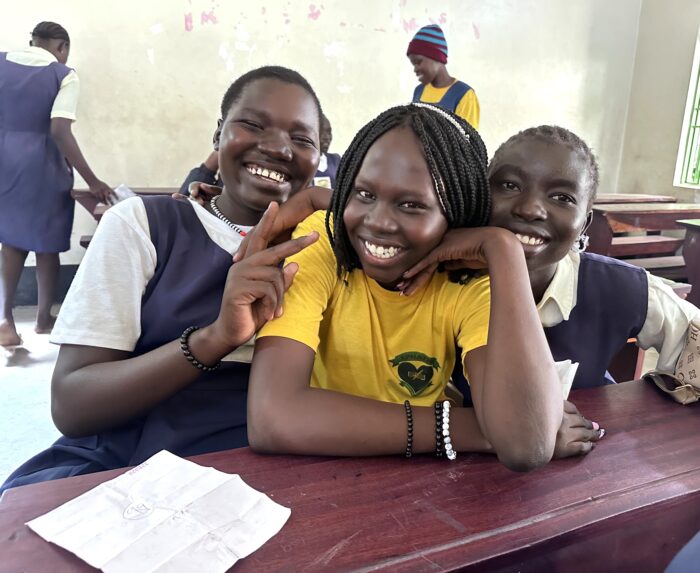
At 19, Nancy Modo dreams of becoming a pediatrician to save the lives of South Sudanese children. However, after completing Senior Four at New Apostolic Secondary School in Juba, she faces an uncertain future as financial hardship threatens to prevent her from continuing her education.
Rising living costs in Juba, school fees, expensive transport, and a lack of necessities are among the challenges Nancy says girls face as they struggle to stay in school and pursue their ambitions.
“My biggest challenge, first of all, is lack of school fees to continue with my university process,” Nancy told Radio Tamazuj. “And second is money for transport. With the crises in Juba, things are becoming more expensive and very hard. And managing transport is so hard.”
She says the financial burden extends beyond paying school fees. Girls who cannot afford transport may have to walk long distances to school, arrive late, or miss classes altogether, affecting their concentration and academic performance.
“Financial problems affect a lot, and at times if you do not have school fees, you are chased from school,” she laments. “When you do not have transport money, you have to walk a long distance, and you might arrive late. At times, you might be tired and skip school.”
Although she has completed Senior Four, Nancy is still helping her parents at home while trying to prepare for the next stage of her education. She hopes to continue studying despite the financial obstacles threatening to delay her plans.
Poverty exposes girls to exploitation
Beyond the cost of education, Nancy says poverty can leave schoolgirls vulnerable to exploitation by wealthy men who offer money, phones, and other gifts in exchange for relationships.
She says girls struggling to meet their needs may find it difficult to reject such offers, even when they understand the risks involved.
“Wealthy men take advantage of girls and give us gifts like phones and a lot of things just because you lack money,” she said. “Such pressures can destroy a girl’s life, and she can drop out of school, get pregnant, get diseases, and lose her self-esteem. Her safety is not secure, and her future dream, like mine of becoming a pediatrician, can be destroyed easily.”
Her concerns are echoed by Dorothy Ambrose Drabuga, executive director of Women Foundation for Humanity, a women-led organization that has supported young girls, including through the provision of sanitary pads.
Drabuga says the economic crisis has made it increasingly difficult for families to provide for their children, leaving some girls vulnerable to relationships with older men who offer financial assistance.
“In the context of South Sudan, schoolgirls face a lot of challenges due to the economic hardships, and they cannot meet their needs,” she said. “This causes some of the girls to start having affairs with old men. They sleep with the girls and give them money, which is not really right.”
She says these relationships can result in early pregnancy and dropping out of school. Some pregnant girls face rejection by their families, while the men involved may deny responsibility.
Drabuga also points to economic pressures within extended families, where limited resources can affect how educational opportunities are distributed between boys and girls.
“We have extended families, and in most cases priorities are given to boys, not girls,” she said.
She argues that parents and communities should protect girls and prioritize their education instead of viewing marriage as a solution to eradicating poverty.
Drabuga says Women Foundation for Humanity and other organizations have assisted vulnerable girls with, among other things, sanitary pads and scholastic materials. However, she stresses that protecting girls and keeping them in school requires collective responsibility from parents, schools, communities and authorities.
Teachers see the effects in classrooms
The financial and social pressures girls face are reflected in classrooms, where teachers say inadequate parental support, a lack of essential supplies and household responsibilities can undermine girls’ concentration and academic performance.
Joshua Bidal Joseph, a teacher at Bulluk Secondary School who also serves as a disciplinary teacher, says some girls struggle because their families cannot afford essential school materials and menstrual hygiene products. He says the lack of such support can affect girls’ emotional well-being and ability to concentrate during lessons.
“Once a girl does not have that support to have those sanitary pads and other things, she becomes mentally tortured,” he said. “And mentally she will not focus at school.”
Bidal says teachers sometimes observe signs of distress among girls dealing with difficulties outside the classroom, including depression, reduced concentration, and challenges engaging with their studies.
“When you are teaching girls, some of them are in class, but their mind is somewhere else,” he says. “Due to things on their minds, the girls always lose focus at school.”
He adds that some girls face pressure at home, particularly those living with relatives rather than their biological parents. Household responsibilities can leave them with little time to study, while a lack of parental support may make them more vulnerable to dropping out.
The teacher says some schools try to assist struggling girls through guidance and counselling, discussions with parents and, where possible, scholarships or free education.
However, he says teachers face challenges in supporting vulnerable girls, including limited resources, insufficient time for counselling and the risk of being misunderstood when they provide individual assistance.
He urges the government to identify girls facing financial difficulties and provide sanitary pads and scholastic materials. He also calls on parents to give girls enough time to study and on teachers to continue offering guidance.
Social pressure adds to education challenges
Nancy says poverty is not the only obstacle schoolgirls face in Juba. Social media, peer pressure, parties, nightclubs, and negative friendships can also distract students from their studies.
She warns that girls may also be exposed to people who promise jobs or assistance but have harmful intentions.
“If a girl is not strong, she can lose focus on her education,” she said.
Despite these pressures, Nancy credits her family and friends for encouraging her to remain focused on her ambitions.
“My family is the biggest of all the best encouragements I have ever had. They always tell me to keep focused on my education because it is my future,” she said. “My good friends also support me, and we advise each other. When the community supports girls’ education, it gives us more courage to stay in school.”
Nancy is calling for scholarships for students who have completed Senior Four, alongside support for school materials, sanitary pads, safe transport, mentorship and counselling services in schools.
She also wants greater awareness among men and communities about the need to protect schoolgirls from exploitation and help them continue their education.
Her appeal comes as she tries to turn her childhood ambition into reality despite the financial uncertainty surrounding her next step in education.
For now, Nancy remains determined to pursue her dream of becoming a pediatrician, a profession she hopes will allow her to contribute to the well-being of children in her country.
“My dream is to become a pediatrician so I can treat and save children in South Sudan,” she said. “My message to all girls facing challenges is not to give up. I know it is hard, especially after senior four when there is no money, but your education is your future.”
“Say no to anything that will destroy your dream; stay focused, be strong, and believe that you can make it. If I, Nancy, can dream of becoming a pediatrician, you can also dream and work to realize it,” Nancy advised.

 and then