



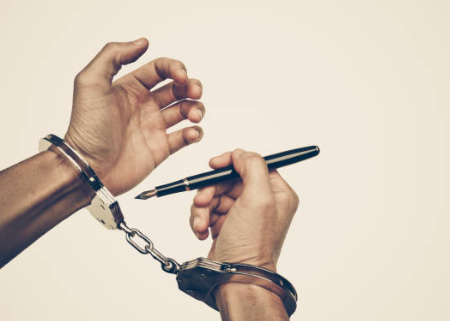
Every year on 3 May, the world pauses to commemorate World Press Freedom Day. Diplomats release polished statements. Governments issue ceremonial promises. Conferences boom with slogans about democracy, accountability, and human rights. This year’s theme, “Shaping a Future at Peace: Promoting Press Freedom for Human Rights, Development, and Security,” sounds noble enough to be engraved on marble. But in South Sudan, rosy speeches often stand beside collapsing institutions.
And here lies the contradiction at the heart of the republic: A government that fears questions cannot genuinely claim to love peace.
A state that trembles before journalists cannot honestly speak the language of democracy. And a nation cannot build freedom while treating truth like contraband smuggled across a border at midnight.
South Sudan today is attempting the impossible: building peace with censored microphones, frightened reporters, intimidated civil society, and a political culture that frequently mistakes criticism for betrayal.
The result is a country where silence has become state policy, fear has become administrative culture, and propaganda often walks dressed as patriotism.
A republic built on promises but governed by suspicion
The Transitional Constitution of South Sudan, 2011, guarantees freedom of expression and access to information under Article 24. The language is strong, elegant, and democratic. On paper, South Sudan appears committed to liberty. But paper is patient. Citizens are not.
The distance between constitutional promise and political reality in South Sudan is now so vast that it resembles two separate countries living under the same flag. One exists in legal documents and international speeches. The other exists in newsrooms where editors lower their voices before mentioning powerful names. Journalists in South Sudan do not merely report news. They navigate survival. They work in an atmosphere where:
• Detention can arrive without explanation
• Security intimidation can emerge without accountability
• Unwritten red lines shift like desert sand
• Access to public information depends less on the law and more on the political mood
The danger is not only physical. It is psychological. A frightened press eventually begins censoring itself before the state even needs to intervene. Fear becomes internalized. Reporters learn which questions invite danger. Editors learn which headlines may attract unwanted visitors. Citizens learn which truths are safer whispered than spoken aloud. This is how authoritarian cultures mature, not always through dramatic decrees, but through the slow normalization of silence.
And silence, once normalized, becomes addictive to power.
The government wants stability without transparency
History says that never lasts. The ruling establishment often frames press criticism as destabilizing, inflammatory, or unpatriotic. But history offers a brutal lesson: governments rarely collapse because journalists exposed corruption. They collapsed because corruption was allowed to rot unchecked until the foundations gave way. South Sudan’s political elite frequently speaks the language of peace while fearing the mechanisms that sustain it, because genuine peace requires:
• Transparency
• Accountability
• Institutional trust
• Public participation
• Open criticism
Without these pillars, “peace” becomes little more than a temporary ceasefire between crises. The state’s relationship with information often resembles a man trying to hold water in a clenched fist: the tighter the grip, the faster everything escapes. Information delayed creates rumors. Information hidden creates suspicion. Information that is manipulated creates anger. And in fragile societies, anger spreads faster than wildfire in dry grasslands.
Corruption thrives best in darkness
The public domain is where democracy breathes. It includes budgets, procurement contracts, public spending records, oil revenue reports, court decisions, policy debates, and investigative journalism. When citizens cannot access these things freely, corruption ceases to be an exception. It becomes infrastructure.
In South Sudan, opacity has become one of the silent architects of national suffering. Billions disappear while hospitals collapse. Luxury convoys glide past communities without medicine. Political elites negotiate power-sharing agreements while ordinary citizens negotiate survival itself. The tragedy is not merely economic. It is moral. A state that cannot consistently provide salaries, medicine, clean water, functioning schools, or security somehow still finds the capacity to finance political patronage, elite lifestyles, and expanding bureaucracies.
This contradiction is impossible to sustain indefinitely without suppressing scrutiny. That is why the press matters. Journalists are often the final witnesses standing between corruption and complete invisibility. To weaken the press in such an environment is not merely anti-democratic. It is nationally dangerous.
The press is not the enemy; the fear of truth is
Governments frequently portray critical journalism as hostile. But journalism is not sabotage. Journalism is diagnosis. A doctor who identifies an infection is not attacking the patient. A journalist who exposes failure is not destroying the nation. In reality, a free press performs functions the state itself often cannot:
• It exposes corruption before it metastasizes
• It identifies security failures before they repeat
• It amplifies neglected communities
• It challenges abuse before it becomes normalized
• It documents history before propaganda rewrites it
When governments suppress these functions, they do not eliminate problems. They merely blindfold themselves before walking toward the cliff. South Sudan does not suffer from “too much criticism.” It suffers from too little accountability. And accountability cannot survive where journalism is feared.
Peace built on fear is architecturally weak
There is a dangerous illusion in many fragile states: the belief that suppressing criticism creates stability. It does not. It creates stillness, the kind that exists before storms. A society where citizens fear speaking openly eventually develops underground anger. Public frustration retreats into whispers, private conversations, anonymous platforms, ethnic tensions, and political cynicism. The silence appears calm from the presidential podium. Beneath the surface, pressure accumulates.
This is one of the great tragedies of South Sudan’s political trajectory.
The country won independence with extraordinary hope, immense sacrifice, and historic international sympathy. Yet years later, many citizens feel trapped inside a republic where liberation from external oppression gradually transformed into internal suffocation. The liberation struggle defeated foreign domination. But democracy requires defeating domestic intolerance too.
A country cannot wear democracy like ceremonial clothing
Too often, democratic language in South Sudan functions as diplomatic decoration rather than governing philosophy. Elections are discussed while civic space shrinks. Constitutions are praised while institutions weaken. Peace agreements are signed while journalists remain vulnerable. National unity is preached while dissent is treated suspiciously. Democracy is not a costume worn for international conferences.
It is measured by how a government behaves when criticized. The true test of leadership is not how loudly it celebrates itself, but how calmly it tolerates scrutiny. Strong governments do not fear journalists.
Weak governments do.
What must happen before the republic becomes permanently numb?
South Sudan does not need symbolic reforms. It needs structural courage. The government must:
• Fully enforce constitutional protections for freedom of expression
• End arbitrary arrests, intimidation, and harassment of journalists
• Guarantee public access to information through enforceable mechanisms
• Protect media institutions from political interference
• Ensure security agencies operate within constitutional limits
The private sector must:
• Invest in independent journalism free from political patronage
• Support journalist safety and legal defense structures
• Fund credible digital media infrastructure
• Reject financially coercive advertising systems designed to manipulate editorial content
Civil society and international partners must:
• Expand legal aid for media practitioners
• Strengthen investigative journalism training
• Support rural and community-based media
• Protect journalists facing threats and intimidation
• Pressure institutions to respect constitutional freedoms consistently, not selectively
The international community must stop rewarding performance politics
International actors also carry responsibility. For years, South Sudan’s leadership has mastered the art of diplomatic theater: saying the correct words abroad while resisting meaningful reform at home.
The world applauds peace agreements. Citizens continue burying accountability. Foreign governments and international organizations must stop treating press freedom as a secondary issue. It is not secondary. It is central to governance, anti-corruption, development, security, and peacebuilding itself.
A country without a free press becomes difficult to govern honestly because reality itself becomes distorted. When leaders hear only praise, they eventually govern inside an echo chamber. And echo chambers are dangerous places to make national decisions.
Final Word: The Real Threat to South Sudan Is Not Journalism
South Sudan faces a historic choice. One road leads toward deeper censorship, controlled narratives, frightened institutions, and recurring cycles of instability disguised as temporary calm. The other leads toward transparency, criticism, institutional maturity, and the difficult but necessary work of democratic accountability.
Only one of those roads leads to durable peace. The press did not create corruption. The press did not create poverty. The press did not loot public institutions. The press did not weaponize tribal politics.
Journalists merely shine light into places where power would prefer to remain dark. And that is precisely why authoritarian tendencies fear them.
A nation is not protected by silencing truth. It is protected by confronting it before it becomes a catastrophe. If South Sudan truly seeks peace, then it must stop treating journalists as enemies of the state and begin recognizing them as guardians of public reality.
Because the gravest danger facing the republic is not what reporters reveal. It is what the nation becomes when nobody is allowed to reveal anything at all.
The writer is a South Sudanese governance expert, disability rights advocate, and senior SPLM member. He served as Director of Disability Affairs in the Ministry of Presidential Affairs and coordinated national programmes in the Office of the Vice President. He can be reached at dr.stephen.dhieu@gmail.com.
The views expressed in ‘opinion’ articles published by Radio Tamazuj are solely those of the writer. The veracity of any claims made is the responsibility of the author, not Radio Tamazuj.

 and then