



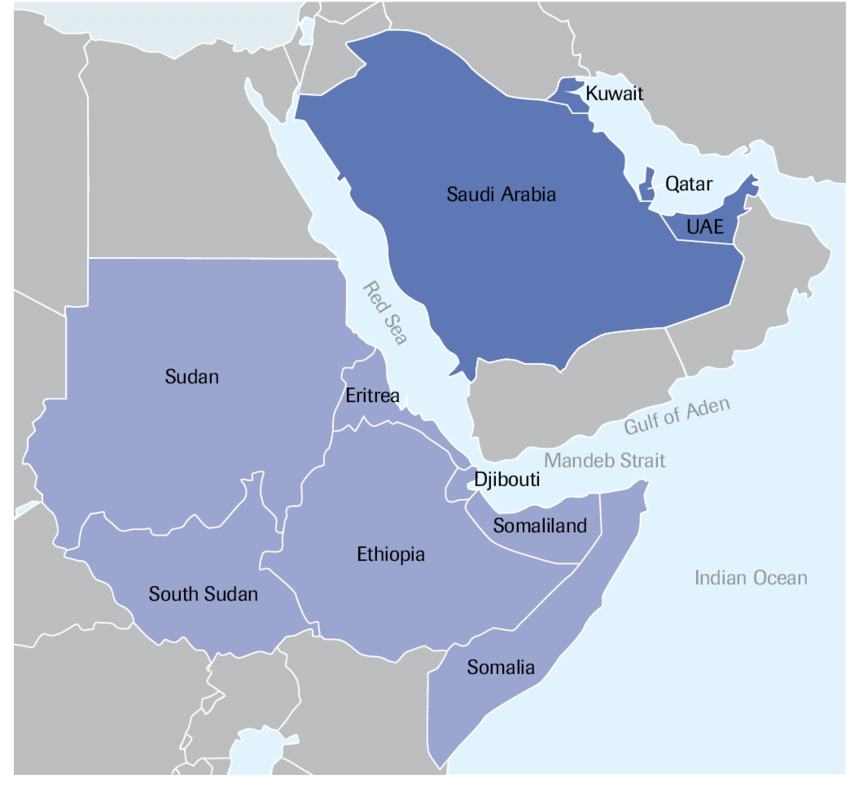
The struggle reshaping Northeast Africa is no longer confined to battlefields or diplomatic halls. It is unfolding through rivers, ports, rumors, scholarships, trade corridors, and intelligence networks.
There are moments in history when rumors reveal more than official statements ever could.
The recent claims surrounding an alleged Egyptian military presence in Pagak, South Sudan, whether fully true, partially true, exaggerated, or strategically amplified, matter less for what they conclusively prove than for what they reveal about the changing geopolitical realities of the Nile Valley and the Horn of Africa.
There is no publicly verified evidence confirming the existence of a formal Egyptian military base in Pagak. Yet the persistence and plausibility of such claims are themselves significant. A decade ago, the idea of Egypt projecting geopolitical influence deep into South Sudan near Ethiopia’s frontier would have sounded improbable. Today, many across the region consider it entirely believable.
That alone tells us how profoundly the regional landscape has changed.
For millennia, the Nile Valley linked Africa, the Mediterranean, the Red Sea, trade, empire, religion, and conquest. Today, that ancient corridor is being reorganized under modern geopolitical pressures.
The Nile Valley and the Horn are no longer separate geopolitical spaces. They are increasingly merging into one interconnected theater stretching from the Mediterranean through the Nile Basin, across the Red Sea, and into the western Indian Ocean toward East Africa.
What appears at first glance to be a water dispute has evolved into something far larger involving ports, logistics corridors, military influence, intelligence networks, maritime access, elite formation, fragile states, and competing visions of regional order.
At the center of this transformation sits the Grand Ethiopian Renaissance Dam.
For Ethiopia, GERD is not merely a hydroelectric project. It represents sovereignty, modernization, and the symbolic end of an old regional hierarchy in which upstream African states remained subordinate to downstream powers.
For Egypt, however, the Nile is not simply a river. It is the foundation of Egyptian state continuity itself. Cairo’s worldview has long rested on one core assumption: no upstream state should possess the ability to threaten Egypt’s water security.
GERD shattered that assumption permanently.
The dispute, therefore, became existential psychologically as much as materially. Egypt increasingly views the issue not simply as a technical disagreement over water management, but as a broader challenge to its historical position within Northeast Africa.
This helps explain Cairo’s expanding engagement across the region.
Over the past decade, Egypt has deepened its presence throughout Sudan, South Sudan, Uganda, Eritrea, Somalia, and wider Red Sea networks through military cooperation, diplomatic engagement, intelligence relationships, scholarships, infrastructure projects, religious diplomacy, and educational partnerships.
Numerous South Sudanese officers, civil servants, and security officials have studied in Egyptian military and security institutions. Others attended Egyptian universities through scholarship arrangements designed to cultivate long-term institutional relationships between Juba and Cairo.
This is neither unusual nor uniquely Egyptian. Great powers have always used military academies, universities, training programs, and elite networks as instruments of influence. Officers who study together often develop relationships that outlast formal agreements. Diplomatic and educational ties quietly become geopolitical infrastructure.
Egypt understands this deeply.
Yet Egypt is not the only power shaping elite networks in the region.
Ethiopia, despite its internal crises, remains one of Africa’s most influential diplomatic and intellectual centers. Addis Ababa hosts the African Union, continental negotiations, international organizations, and one of East Africa’s most important educational ecosystems.
Thousands from across the region, including South Sudanese politicians, officers, academics, refugees, diplomats, and businessmen, have passed through Ethiopia over the years. Many developed familiarity with Ethiopian institutions during decades of regional mediation, migration, trade, and conflict.
Ethiopia’s influence operates differently from Egypt’s.
Egypt’s model is centralized, security-oriented, institution-driven, and closely tied to state diplomacy and regional hierarchy.
Ethiopia’s model is shaped by geography, demographic scale, continental diplomacy, migration networks, institutional gravity, and regional integration.
This reveals the deeper reality underlying the entire dispute.
Egypt and Ethiopia are not merely competing states. They increasingly represent competing visions of regional order.
Egypt represents historical continuity, centralized state tradition, Nile dependency, and a Mediterranean Arab orientation rooted in centuries of geopolitical influence.
Ethiopia represents demographic expansion, upstream African assertion, continental scale, and the emergence of a new order less dependent on inherited postcolonial arrangements.
That deeper civilizational contrast is what gives the current geopolitical struggle its intensity.
The rivalry between Cairo and Addis Ababa is therefore no longer simply about water. It is increasingly about hierarchy, strategic autonomy, maritime access, elite influence, and the future political order of Northeast Africa.
That is why even rumors now carry geopolitical weight.
For years, conversations circulated in parts of South Sudan about unusual Egyptian-linked activity in areas such as Pochalla and the wider Upper Nile corridor. More recently, similar narratives emerged around Pagak near the Ethiopian frontier.
The persistence of such narratives, from Pochalla years earlier to Pagak more recently, suggests a broader regional perception that the Nile dispute is increasingly spilling into frontier politics and security calculations.
In Juba and Kampala, stories also spread about unusually organized Egyptian commercial networks selling electronics, cutlery, household goods, and low-cost imported products before disappearing abruptly. Many locals described these groups as disciplined, physically imposing, and highly networked.
Whether these observations reflected ordinary traders, informal commercial ecosystems, exaggerated local perceptions, or something more coordinated is difficult to verify conclusively.
But the persistence of such stories is revealing.
The Horn is becoming psychologically militarized. Populations increasingly interpret traders, infrastructure projects, telecom systems, scholarships, and foreign partnerships through the language of intelligence and geopolitical competition.
Commerce, logistics, telecommunications, education, diplomacy, and security relationships are becoming intertwined within public perception.
That psychological shift matters.
The region is entering an era where ambiguity itself becomes a strategic instrument. Rumors shape perceptions. Perceptions influence diplomacy. Narratives become part of geopolitical competition.
Information itself is increasingly becoming an instrument of regional power.
Sudan’s collapse accelerated this transformation dramatically.
The war between the Sudanese Armed Forces and the RSF did not simply destabilize Sudan. It fractured the traditional security architecture of the Nile Valley itself. Oil corridors became vulnerable. Refugee flows intensified. Proxy competition expanded. Intelligence operations multiplied. Fragile borderlands became increasingly exposed to external influence.
South Sudan now sits directly within this emerging fault line.
Its importance lies not only in geography but in its position at the intersection of Nile politics, Sudanese instability, Ethiopian frontier dynamics, oil infrastructure, and East African regional access routes.
That reality presents both danger and opportunity.
The greatest mistake South Sudan could make would be allowing itself to become merely a proxy arena for larger powers. The region is already crowded with competing actors, including Egypt, Ethiopia, the UAE, Turkey, Israel, Gulf networks, Western intelligence systems, and expanding Chinese infrastructure influence.
If Juba fails to manage this environment carefully, South Sudan risks becoming permanently trapped within external rivalries it cannot control.
South Sudan, therefore, requires a disciplined long-term doctrine built around balance, sovereignty, institutional development, and strategic neutrality.
Juba must avoid exclusive alignment with either Cairo or Addis Ababa. South Sudan’s interests are not identical to Egypt’s fears nor Ethiopia’s ambitions. Aligning completely with one side would inevitably transform South Sudan into a frontline state within a wider geopolitical confrontation.
At the same time, South Sudan should continue benefiting from educational, military, and technical partnerships with both Egypt and Ethiopia while preventing any single external actor from monopolizing elite formation or security structures. A balanced foreign policy requires balanced institutions.
South Sudan must also strengthen its own intelligence, diplomatic, and analytical capacity. A state surrounded by geopolitical competition cannot survive on improvisation. It requires professionals capable of understanding the long-term implications of military agreements, infrastructure deals, foreign investments, telecom systems, and security partnerships.
Most importantly, Juba should position itself not as a battleground, but as a bridge between the Nile Basin and the Horn. South Sudan’s geography gives it the potential to become a regional connector linking East Africa, Central Africa, and the Nile corridor through trade, energy, agriculture, transport, and diplomacy.
The true long-term defense of South Sudan will not come from foreign patrons alone. It will come from building a functioning state capable of surviving regional turbulence without surrendering autonomy.
For ordinary citizens across the region, these geopolitical struggles increasingly translate into inflation, militarization, displacement, insecurity, and uncertainty.
At the same time, the Red Sea has become one of the world’s most contested maritime corridors.
The United Arab Emirates, particularly under Mohammed bin Zayed’s maritime strategy, has aggressively expanded influence through ports, logistics infrastructure, and commercial corridors stretching from Aden and Socotra to Berbera, Bosaso, Port Sudan interests, and onward toward East Africa and the Indian Ocean.
This is not merely commercial expansion. It is maritime statecraft.
Control over ports, shipping lanes, logistics corridors, and maritime chokepoints increasingly translates directly into leverage.
Turkey has entrenched itself militarily and economically in Somalia. Israel views Red Sea security as increasingly inseparable from its own national security calculations following Houthi missile threats and maritime instability. China quietly deepens infrastructural dependence through railways, industrial projects, and debt-financed connectivity. The United States maintains military and intelligence dominance through Djibouti while monitoring regional competition closely.
No single actor controls the Horn. But all major powers now recognize its importance.
This is also why Ethiopia’s pursuit of maritime access has generated such regional anxiety.
A landlocked Ethiopia with more than 120 million people cannot indefinitely accept dependence on Djibouti alone. Addis Ababa’s moves toward Somaliland demonstrated that Ethiopia is no longer willing to remain geographically constrained.
Egypt immediately understood the implications.
An Ethiopia that controls the Nile headwaters, dominates the Horn demographically, and secures independent maritime access would emerge as an entirely different category of regional power.
This explains Cairo’s increasing sensitivity toward developments across the Nile Basin and the Red Sea corridor.
The deeper reality, however, is that the region’s transformation extends beyond any single dispute, state, or rumor.
The Nile Valley and the Horn are becoming one integrated arena where water security, maritime dominance, intelligence systems, logistics networks, education, military partnerships, fragile states, and infrastructure corridors are increasingly interconnected components of a wider contest.
What is unfolding increasingly resembles a twenty-first-century scramble for strategic corridors.
The danger is not necessarily conventional interstate war.
The greater danger is the emergence of a permanently securitized region defined by endless hybrid competition, proxy struggles, intelligence rivalries, militarized borders, disinformation campaigns, elite fragmentation, and chronic instability without formal peace or formal war.
The danger is not merely that external powers are competing more aggressively in the region. It is that weak states may gradually lose the ability to distinguish partnership from dependency, diplomacy from alignment, and strategic cooperation from long-term vulnerability.
GERD did not create this transformation alone. It accelerated forces already underway.
Pagak, therefore, matters not because it conclusively proves the existence of an Egyptian military base, but because it symbolizes a deeper truth.
The region has entered a new geopolitical age.
An age in which rivers, ports, military academies, trade corridors, educational institutions, intelligence networks, and maritime access are all becoming instruments of power in the emerging contest over the future order of the Nile Valley and the Horn of Africa.
The writer is a concerned South Sudanese citizen.
The views expressed in ‘opinion’ articles published by Radio Tamazuj are solely those of the writer. The veracity of any claims made is the responsibility of the author, not Radio Tamazuj.

 and then