


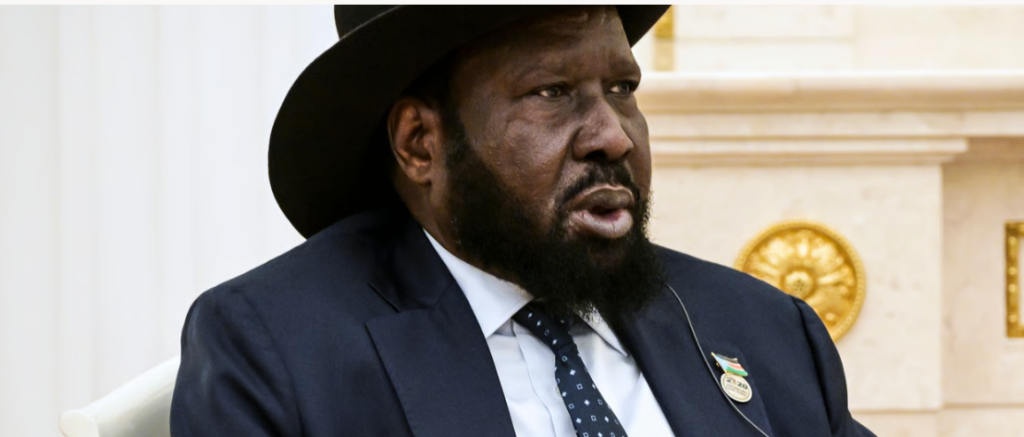
South Sudanese President Salva Kiir Mayardit on Wednesday ordered security forces and state authorities to guarantee freedom of movement for political candidates, campaign teams and citizens during the forthcoming election campaign, amid complaints by political parties about restrictions on their members.
In an order broadcast by state-owned South Sudan Broadcasting Corporation (SSBC), Kiir directed organised forces to facilitate and protect the movement of candidates and their campaign teams across all states, administrative areas and localities to enable them to conduct lawful campaign activities.
The directive prohibits security personnel and state authorities from arresting, harassing or intimidating candidates and their supporters for engaging in lawful political activities.
The order comes amid concerns over restrictions on movement, including limitations on domestic and international travel. Some political parties have recently complained that their members were being prevented from travelling during the election period, raising concerns about their ability to campaign freely.
The directive excludes the unauthorised possession or movement of unlicensed firearms, incitement to violence, hate speech and tribal mobilisation.
Under the revised timetable issued by the National Elections Commission (NEC), the official campaign period will run from December 27, 2026, to February 9, 2027. February 10 will be a campaign-free day ahead of polling on February 11.
Humanitarian movement
In a separate order, Kiir renewed a 2017 presidential directive guaranteeing the free movement of humanitarian convoys, diplomatic missions and official consignments across the country.
He reaffirmed the government’s commitment to facilitating humanitarian operations in all states and administrative areas and protecting the privileges and immunities of accredited diplomatic missions and international organisations.
The directive prohibits national, state and local authorities, as well as security personnel, from imposing arbitrary movement restrictions, setting up unauthorised checkpoints or collecting unauthorised fees that could delay or obstruct humanitarian convoys and relief supplies.
Kiir directed security forces and government authorities to protect humanitarian personnel, offices, vehicles and supplies and refrain from interfering with relief operations.
The order instructs the ministries of foreign affairs and humanitarian affairs, the Relief and Rehabilitation Commission (RRC) and state authorities to facilitate clearances, coordinate operations and resolve disputes that could disrupt humanitarian activities.
Diplomatic protection
Kiir also reaffirmed the freedom of movement of accredited diplomatic missions, diplomatic agents, consular officers and recognised international organisations in accordance with the 1961 Vienna Convention on Diplomatic Relations.
The directive protects diplomatic correspondence and officially marked diplomatic bags from arbitrary detention or delays at airports, border points and security checkpoints. It also prohibits authorities from arbitrarily impounding or withholding diplomatic consignments, requiring verification and protocol-related concerns to be handled through the Ministry of Foreign Affairs.
The order allows the inspection of diplomatic agents’ personal baggage where there are serious grounds to suspect it contains prohibited items, subject to the conditions set out in the Vienna Convention.
Kiir directed government ministries, state governors, chief administrators of administrative areas, local authorities and commanders of organised forces to ensure compliance.
Public officials and security personnel found obstructing humanitarian movements or imposing unauthorised charges will face disciplinary and legal action under applicable laws and service regulations, according to the order.
 and then