



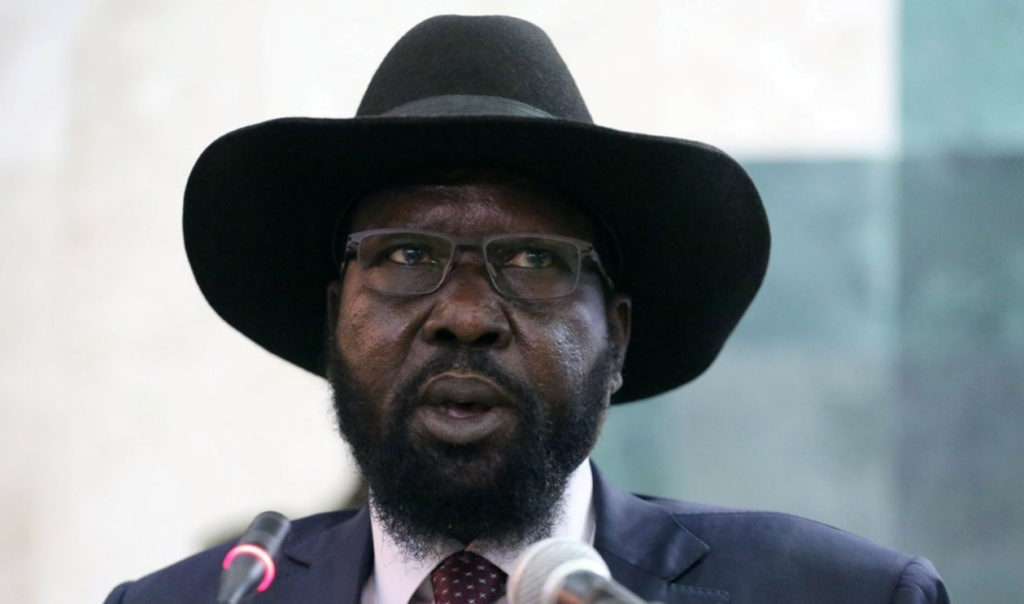
South Sudan President Salva Kiir Mayardit on Monday appointed four more caretaker national ministers, bringing the number of caretaker national ministers appointed since he dissolved the transitional government last week to 17.
The appointments were announced in a presidential decree read on state broadcaster SSBC.
Dr. John Gai Yoah was appointed caretaker minister of health, while Dr. Kuyok Abol Kuyok was named caretaker minister of general education and instruction.
Denay Jock Chagor was appointed caretaker minister of wildlife conservation and tourism, while Peter Mayen Majongdit was named caretaker minister of humanitarian affairs and disaster management.
The appointments are the second phase of caretaker ministerial appointments since Kiir dissolved the transitional government on Sept. 22.
Kiir appointed 13 caretaker ministers on the same day, shortly after dissolving the government formed under the 2018 peace agreement.
Kuyok and Chagor previously held the same portfolios in the transitional government.
Gai Yoah previously served as education minister in an earlier government, while Mayen Majongdit served as minister of humanitarian affairs and disaster management from 2020 until he was dismissed in November 2022.
The president also gives caretaker governors and chief administrators the authority to appoint caretaker state ministers, county commissioners and mayors. The appointments are to be submitted to the Office of the President within seven days.
At state level, caretaker administrations will have seven key ministerial portfolios covering finance, planning and investment; local government and law enforcement; information and communication; health; general education and instruction; roads, bridges and infrastructure; and agriculture and food security.
The order cites provisions of the Transitional Constitution of South Sudan and the National Elections Act as the legal basis for the caretaker arrangements.
The presidential order also directs all caretaker officials to act impartially and prohibits them from using public resources to gain an electoral advantage.
The National Elections Commission has scheduled elections for Dec. 22, 2026. A two-week inter-party dialogue is under way in the capital, Juba, to discuss election-related issues and preparations for the vote.
Under the National Elections Act 2012, as amended in 2026, Kiir remains in office with full constitutional powers during the electoral period until an elected president is sworn in.

 and then