



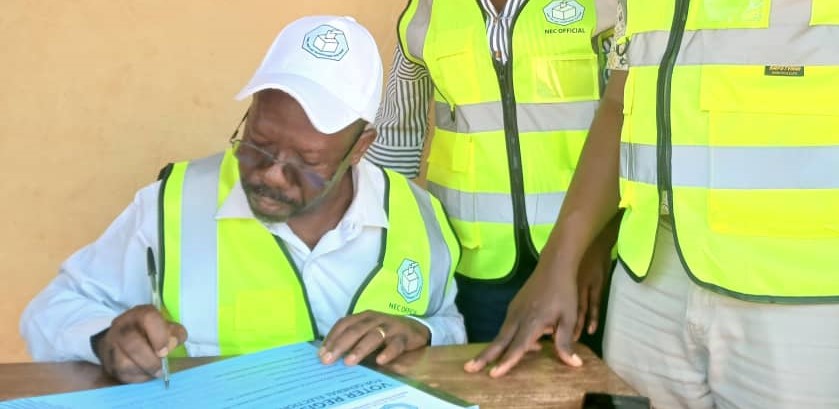
South Sudan began voter registration on Saturday ahead of general elections scheduled for Feb. 11, 2027, with the exercise facing logistical challenges and a tight timetable as authorities prepare for the country’s first national vote since independence in 2011.
The National Elections Commission (NEC) said registration would run from Nov. 14 to Nov. 28 across the country’s 10 states and three administrative areas, with 3,161 registration centres designated for the exercise.
The exercise is expected to test the commission’s ability to deliver election materials and personnel across the country within the two-week registration period, particularly in remote and conflict-affected areas.
In Malakal, Upper Nile State, Peter Mayom, chairman of the High Election Committee, told Radio Tamazuj that the committee had received the final consignment of voter registration materials on Saturday. Ballot boxes had also arrived in the town, he said.
Mayom said materials had yet to reach some remote areas but were expected to arrive within two to three days. He cited difficulties transporting heavy equipment as one of the reasons for the delays.
Registration had started in Malakal on Saturday, he said.
Upper Nile State has 237 designated registration centres, with 1,659 registration officials expected to be deployed across the state, Mayom said.
He described the limited preparation time as a major challenge, noting that the registration exercise had been announced only a day before it began.
He also cited logistical difficulties in transporting election materials to remote areas, including Longechuk and Maiwut counties.
In Yambio, Western Equatoria State, Radio Tamazuj observed low turnout and limited public attendance during the launch of registration at Centre No. 01, located at Nabima Centre within Yambio Primary School.
The low attendance raised questions about public awareness and mobilisation ahead of the exercise.
Speaking during the launch, Simon Bakama Mande, chairperson of the State High Elections Commission in Western Equatoria, urged eligible citizens to turn out to register in large numbers and exercise their constitutional right to vote.
Bakama said registration officials had taken up their positions across the state, although arrangements were still being finalised in some areas of Greater Western and Eastern Equatoria.
In Central Equatoria State, registration began on Saturday at the headquarters of the State High Elections Committee, where most of those present were government officials.
The chairperson of the National Elections Commission, Gabriel Bol Deng, urged eligible citizens to register within the announced period.
“Voter registration is the foundation of a credible electoral process. I therefore call upon every eligible citizen of the Republic of South Sudan to visit their designated registration centre and register within the period announced by the National Elections Commission,” he said.
The caretaker governor of Central Equatoria State, Augustino Jadalla Kamilo, called for inclusive participation and emphasised the role of elections in promoting peace and unity.
Some residents of Juba told Radio Tamazuj they did not know how many registration centres had been established in the capital or where they were located.
They said the commission needed to provide clear information about the number and locations of the centres to help eligible voters participate in the exercise.
In Western Bahr el Ghazal State, caretaker Governor Gen. Sharif Daniel Sharif was the first to register on Saturday morning at the Youth Centre in Wau.
Arkangelo Agany, chairperson of the State High Elections Commission, urged eligible residents to turn out and register, saying the exercise was essential to exercising their constitutional right to vote.
The NEC has designated 3,161 registration centres and prepared thousands of registration books for the nationwide exercise.
Registration is scheduled to close on Nov. 28, leaving the commission with limited time to complete the remaining electoral preparations before polling day.
South Sudan has not held a national general election since gaining independence in 2011. Elections have been repeatedly postponed during the country’s transitional period following the 2018 peace agreement.

 and then