



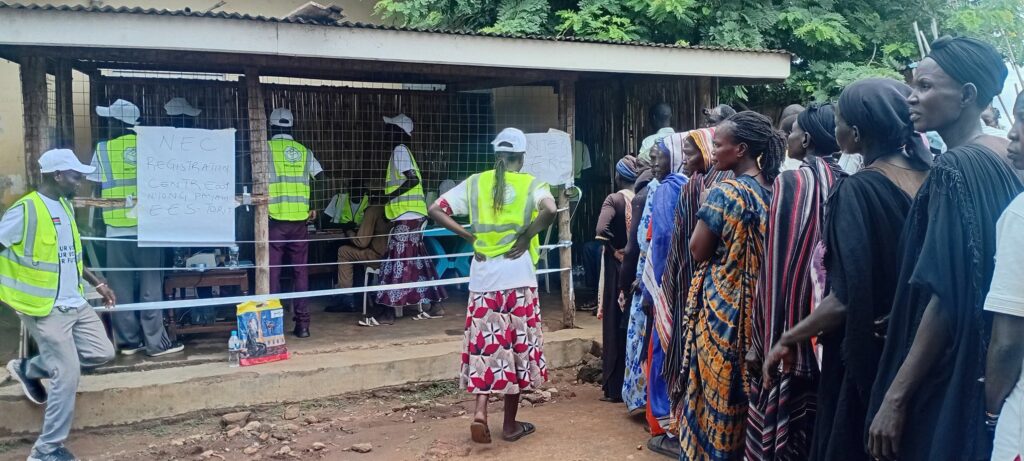
Electoral authorities in Eastern Equatoria State have begun voter registration in the state capital, Torit, but logistical delays and difficulties reaching remote communities could hamper efforts to register eligible voters across the state.
The exercise was launched at Nyong Primary Health Care Centre in Torit, with authorities planning to establish 460 registration centres across the state’s 11 geographical constituencies.
However, registration materials had not yet reached all designated centres, while the deployment of election officials was still underway, raising concerns about the pace of the rollout.
Oryema Emmanuel, deputy chairperson of the Eastern Equatoria State Election High Committee, said all registration materials were available at the state level but would be distributed to individual centres in phases.
“All the materials for registration are available at the state level now,” Emmanuel said.
He said authorities planned to deploy about 3,220 registration officials across the state but did not provide a timeline for completing the deployment.
Emmanuel said mobile registration teams would be sent to remote villages, cattle camps and other hard-to-reach areas to enable residents to register.
“Those categories of people will be handled by mobile registration teams,” he said.
He did not specify how many mobile teams would be deployed or when they would begin operating.
Access concerns
Civil society organisations warned that long distances to registration centres, limited public awareness and difficulties obtaining identification documents could prevent some eligible citizens from participating.
Wodcan Lazarous Saviour, executive director of SPIDO, said civil society groups had a responsibility to provide accurate information and counter misinformation and hate speech during the electoral process.
He said the distance to registration centres could discourage participation, particularly among residents of remote communities.
“If people have to travel long distances to reach these registration centres, some of them may end up not participating in the registration process,” Saviour said.
He also questioned whether citizens without national identity cards would have equal opportunities to register.
Emmanuel said applicants would be expected to present a South Sudanese national identity card, passport or other supporting documents to establish their citizenship. Local identification officers familiar with residents in their communities would help identify eligible applicants who lacked formal identification documents, he added.
Saviour urged authorities to ensure that the process is accessible to all eligible citizens and that no one faces intimidation or discrimination because of their ethnic or religious background.
“No one should be intimidated, and no one should be mistreated because of tribe, religion or any other differences,” he said.
South Sudan’s general elections are scheduled for Feb. 11, 2027, after repeated postponements. The elections will be the country’s first since it gained independence in 2011.

 and then