



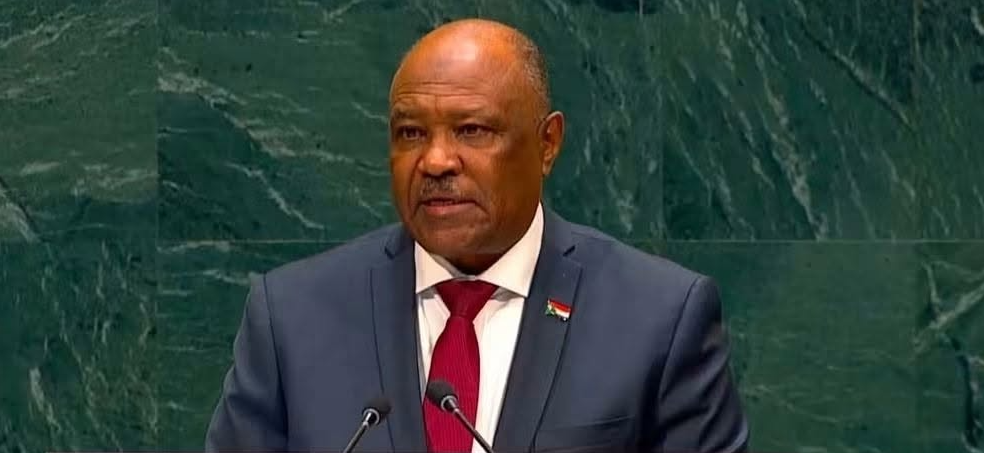
Sudan has called on the United Nations to take steps to uphold the 1947 Headquarters Agreement after the United States did not issue a visa to Sudanese military leader Gen. Abdel Fattah al-Burhan to attend the UN General Assembly in New York.
Foreign Minister Mohieddin Salem told the 81st session of the General Assembly that Gen. Burhan had been scheduled to address the gathering on behalf of Sudan’s government and people.
He said the failure to issue the visa had prevented Burhan from attending the high-level segment of the General Assembly.
Salem said Sudan regrets that the matter had remained unresolved despite efforts by the UN Secretariat and calls by Secretary-General António Guterres for the host country to issue the visa in line with its obligations under the 1947 Headquarters Agreement.
Guterres had expressed concern over the visa issue and said the UN Secretariat had raised the matter with US authorities.
Salem called on the secretary-general, the General Assembly and the UN Committee on Relations with the Host Country to take the necessary measures to safeguard the agreement.
He also called for the incident to be formally documented and considered through the relevant UN mechanisms responsible for the implementation of the agreement.
The United States has not publicly provided a detailed explanation for the visa decision. Reuters reported that the visa appeared to be linked to a US-backed proposal for a 90-day ceasefire in Sudan, citing a Sudanese diplomatic source and a Western analyst familiar with the matter. The US State Department did not immediately comment on the specific visa case.
Sudan is being represented at the General Assembly by Salem.
Sudan calls for reform of international system
Salem also called for comprehensive reform of the international system, saying global challenges require greater respect for international law and the peaceful settlement of disputes.
He called for political disputes to be addressed through dialogue and opposed the use or threat of force in international relations.
The minister also criticised the use of what he described as coercive sanctions to pursue political or economic objectives.
He said Sudan had been subject to sanctions under Chapter VII of the UN Charter for more than two decades, arguing that they had harmed the country’s economy and security and affected its sovereignty.
Salem also criticised what he described as interference in the internal affairs of states and warned that continued violations of the principles of the UN Charter could undermine confidence in the multilateral international system.
His remarks come as Sudan remains at war between the Sudanese Armed Forces and the paramilitary Rapid Support Forces. The conflict began in April 2023 and has caused a major humanitarian crisis, with millions of people displaced.
Permanent African seats on Security Council
Salem also called for reform of the UN Security Council, including greater representation for Africa.
He said Africa should be given two permanent seats on the council and called for changes to its working methods to reflect current international circumstances.
He also called for reform of the international financial system to promote equal access to financing and support efforts to achieve the Sustainable Development Goals and address climate change.

 and then