



South Sudan currently lacks the financial and technical capacity to implement the proposed Grand Fula hydropower project near Nimule, an international water management expert has said.
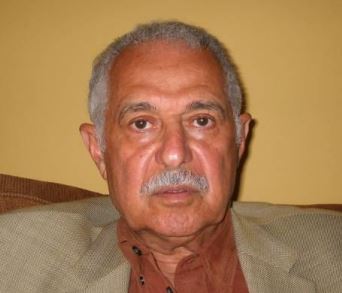
Professor Taj Elkhazin, an Associate Professor at the Norman Paterson School of International Affairs at Carleton University in Ottawa, Canada, said further studies are needed before the project could proceed.
He told Radio Tamazuj on Monday that plans for hydropower generation at Fula had been under consideration since before South Sudan gained independence in 2011.
The Fula site has been associated with different hydropower proposals, including the 42-megawatt Fula Rapids project and the much larger Grand Fula project. Previous studies have put the capacity of the larger project at about 890MW, although more recent estimates have varied, he said.
Professor Elkhazin said the larger project was estimated to cost about $2bn.
Facility study still needed
Professor Elkhazin said a company called Hydroarch had conducted a pre-feasibility study and that further feasibility work was required.
He referred to a visit by South Sudan’s Minister of Energy and Dams, Agok Makur Kur, and representatives of the European Union to the Fula site in April 2026.
According to Professor Elkhazin, the South Sudan-Uganda Power Interconnection Project remains an immediate priority, while the Fula Dam is part of the government’s longer-term energy strategy.
“This is long term,” Professor Elkhazin said.
Limited impact on Nile flow
Professor Elkhazin said a dam designed primarily for hydropower generation would have limited impact on the overall flow of the Nile.
He said there could be some additional evaporation because water would be stored in a reservoir, but argued that the effect on the river’s overall flow would otherwise be limited.
He said Egypt’s response to the Fula project appeared to reflect this distinction.
According to Professor Elkhazin, Egypt is more concerned about dams that retain water for irrigation than projects designed primarily to generate electricity.
He also said Egypt had established offices linked to its Ministry of Irrigation and Water Resources in South Sudan, describing Egyptian engagement in the country’s water sector as significant.
Other hydropower potential
Beyond Fula, Professor Elkhazin identified other areas that he said could have hydropower potential in South Sudan.
He pointed to the Baro and another tributary of the Sobat River, which originate in Ethiopia before flowing into South Sudan and joining to form the Sobat.
He estimated that projects involving the tributaries could generate up to 400MW, although he said a major dam would need to be built in Ethiopia because of the terrain.
He also identified the Sue and Buseri rivers in the Bahr al-Ghazal region as having hydropower potential.
Professor Elkhazin called for South Sudan to develop a national water strategy covering both irrigation and electricity generation.
He also referred to the Bibia substation, which forms part of the South Sudan-Uganda Power Interconnection Project. The project includes a 400kV transmission line between Juba and Uganda, with a new substation at Bibia in Uganda.
Financial and technical constraints
Professor Elkhazin said South Sudan currently lacks the financial resources required for a project of the scale of Grand Fula.
He also cited a shortage of technical expertise within government institutions, saying experienced water and energy specialists had left the country or moved to other jobs.
He said the country would need to rebuild its technical capacity to monitor studies and work effectively with international consultants.
Professor Elkhazin also questioned whether there was sufficient political will to pursue a project of this scale amid South Sudan’s wider political and economic challenges.
He said the country’s institutional structures were under severe strain and that this would make it difficult to manage a major infrastructure project.
Governance a key challenge
Professor Elkhazin said improving governance would be essential before South Sudan could successfully undertake major infrastructure projects.
He argued that stronger systems for monitoring public funds and managing projects were needed, alongside greater capacity within relevant government ministries.
He said potential international financiers, including the EU, United States and African Development Bank, would require South Sudan to have the institutional capacity to oversee major projects.
A full feasibility study, he said, would require the government to hire and work closely with qualified consultants while maintaining effective oversight of their work.
Call for stronger institutions
Professor Elkhazin urged the government to strengthen ministries responsible for water and energy and address the gap between experienced officials and younger professionals entering the sector.
He also stressed the importance of sound fiscal and financial management.
He said international donors or investors would not simply provide the full $2bn required for a major hydropower project and that South Sudan would be expected to contribute part of the cost.
“Right now that money is not there,” he said.
Professor Elkhazin said the proposed Fula Dam could therefore remain a long-term project unless South Sudan strengthened its government institutions, technical expertise and financial management.

 and then