



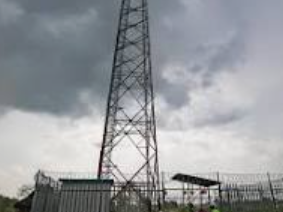
Leaders in Kauto Administrative Area in Eastern Equatoria State have renewed calls for the expansion of mobile telephone network services, warning that poor communication infrastructure is affecting governance, security coordination, humanitarian response, and the daily lives of thousands of residents.
The Member of Parliament representing Kauto Administrative Area in the National Legislative Assembly, Angelo Lokinga, says large parts of Kauto remain disconnected from the rest of South Sudan and the world, despite the area being one of the largest administrative areas bordering Boma, Greater Pibor, Ethiopia, and Kenya. He said the lack of communication networks has become one of the biggest challenges facing the area.
“Kauto is one of the biggest administrative areas bordering Boma, Greater Pibor, Ethiopia, and Kenya. The only place with some network is Kuron, but you cannot cover the whole area from there,” he said. “We need at least four network points at the moment: one in Lutimor, one in Nikauto or Nyanagachor, one in Moroakipi, and another area in southern Kauto.”
“This matter has been raised several times and for many years. I do not know whether it is political or what the reason behind the delay is,” Lokinga added.
He warned that without reliable communication networks, authorities cannot receive timely information about security incidents, emergencies, or developments affecting communities.
“When there is no connectivity, you cannot know what is happening, whether it is related to security, anger, conflict, or anything that affects the community,” he explained. “Sometimes information only comes through people travelling by road. During the rainy season, or when there is no fuel, getting information becomes a serious challenge.”
He explained that transporting fuel from Kapoeta to some parts of Kauto is extremely expensive.
“To take fuel from Kapoeta to Lutimor, for example, requires about 120 litres of fuel, costing more than two million South Sudanese pounds, without including transport costs,” Lokinga said.
He said the absence of communication infrastructure is negatively affecting community development and government operations.
Lokinga said previous discussions had been held with network operators to extend services to Kauto, but implementation has remained slow.
He recalled that he and other leaders, including the governor, previously met with network representatives who expressed willingness to expand coverage. He said some companies had concerns about whether they would generate enough revenue from the area.
“They were concerned about revenue collection, but today everyone has a phone,” he said. “Even people in villages have phones. They need the network.”
He urged the government and partners to work together with telecommunications companies to bring services to Kauto.
“Whether it is MTN, Zain, Digital, or any other provider, we need collective efforts to engage them and rescue the area from communication isolation,” he said.
The Chief Administrator of Kauto Administrative Area, Kevin Lomanat, confirmed that poor network coverage is severely affecting his ability to administer the area.
Speaking from Kapoeta, where he was attending official duties, he said most parts of Kauto have no mobile network coverage.
“The challenge of network coverage in Kauto is serious. In most parts of the administrative area, there is no network,” he said. “It affects my administration because I do not get information quickly. Sometimes it takes one or two weeks before I receive information from places like Lotimor, Namorupus, and Naodokpele.”
“If I want information, I must wait for someone who travelled from those areas to come to my office,” he explained.
Lomanat said delayed communication can affect emergency response, especially during security incidents.
“Sometimes incidents happen, and I only receive information when it is already late,” he said.
The administrator said residents are also suffering because they cannot communicate with relatives, businesses, government institutions, and other parts of the country.
“The community is affected because they cannot communicate with each other. They do not know what is taking place in Kapoeta, South Sudan, or anywhere in the world,” he said. “Many youths have phones, but they are only using them for music because they are not connected to the world.”
He said improved network coverage would support education, business, security reporting, and social communication.
Lomanat dismissed concerns that insecurity could prevent network companies from investing in Kauto. He said the administrative area is peaceful and safe for development activities.
“I want to assure network providers that Kauto is very peaceful. There are no fights, no rebellion, and no insecurity issues,” he said.
The administrator said he has already submitted reports to state authorities requesting intervention and is waiting for action.
He said he was previously informed that network expansion would reach parts of Kauto, including Lotimor, but the promised project has not yet materialized.
“Since February, I have been waiting; I have continued asking, but I do not know what is happening,” he stated.

 and then