



A Juba County Court has dismissed a criminal case against six leaders of the Moru Congregation after ruling that the Episcopal Diocese of Juba lacked the legal capacity to institute the proceedings, according to lawyers representing the congregation.
The ruling, delivered on 18 August 2026, brings a new turn to the long-running dispute between the Moru Congregation and the Juba Diocese over church administration, property, and the congregation’s claimed autonomy.
Advocate Ezekiel Eresto, who represents the Moru Congregation, told journalists in Juba on Saturday that the court dismissed criminal case number 4071 of 2025, which had been filed against six Moru Congregation members.
“The preliminary objection was well-founded and meritorious,” he explained. “All charges were dismissed, and all six accused persons were discharged forthwith.”
The six accused were identified as Samson Lazoro, Solomon Gismala, John Weasley, John Bismark, Stephen Lawrence, and Canon Rev O’neil Yosia Diama.
They had faced charges including insulting or inciting contempt of a religious creed, disturbing a religious assembly, and house trespass under the South Sudan Penal Code Act 2008.
According to Eresto, the case arose from a wider dispute over the administration and control of Moru Congregation churches and properties in Juba.
The Moru Congregation maintains that it has historically operated with administrative and financial autonomy, while the Juba Diocese has claimed overarching authority over Anglican parishes and properties.
Eresto said the defense challenged the diocese’s legal capacity to bring the criminal case, arguing that it was an unincorporated association without legal personality.
“We argued that the Episcopal Diocese of Juba is an unincorporated association, a collection of individuals without legal personality,” he said.
He added that the defense had investigated the diocese’s legal status and found no registration certificate or statutory instrument establishing it as a legal entity.
The advocate said the court agreed with the objection, holding that the diocese was neither created by statute nor registered as an entity and therefore lacked the procedural capacity to institute the criminal proceedings.
The ruling could have implications beyond the dispute between the two church groups, as the Moru lawyers argued that legal personality is important for religious organizations, NGOs, community groups and other associations seeking access to the courts.
Eresto called on the government to clarify the legal status of religious and community organizations and urged unregistered religious associations to regularize their status.
The court gave the diocese 15 days to appeal the decision.
Moru leaders call for dialogue.
Despite the legal victory, Moru Congregation leaders said they want the dispute with the Juba Diocese resolved through dialogue rather than continued litigation.
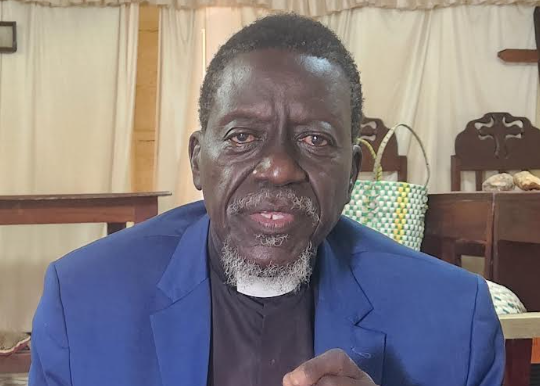
Canon Rev. Oneil Yosia Daima, leader of the Moru Congregation in Juba, said the court decision should provide an opportunity for the two sides to return to negotiations.
“Let Juba Diocese come back to the Bible and dialogue with us,” he said.
He referred to 1 Corinthians 6, which he said encourages Christians to resolve disputes among themselves, adding that the congregation’s “doors are open” for dialogue.
The congregation’s position comes amid a wider dispute over the ownership, administration and use of several churches in Juba, including the Nyokuran Moru Congregation Church.
Earlier this year, the congregation had publicly opposed the closure of the Nyokuron church and accused the Juba Diocese of attempting to take control of its properties. This publication previously reported that the Moru Congregation had called for dialogue and the reopening of the church.
Rev. Abraham John Natana, another member of the Moru Congregation, said the latest ruling was the second time the judiciary had ruled in the congregation’s favour in the dispute.
“This is the second time that the judiciary of South Sudan has ruled in favor of the Moru Congregation during this dispute,” he stated. “It is double standards to talk about reconciliation and peaceful resolution of issues by the church while they are absolutely refusing to dialogue with us.”
“We have to strive towards realization of unity in diversity, not only politically, but even religiously,” Natana added.
Property dispute remains unresolved.
While the dismissal of the criminal case represents a legal victory for the Moru Congregation, the underlying dispute over church property and administration remains unresolved.
Natana accused the Juba Diocese of attempting to take control of Moru churches and land and called for an end to what he described as harassment and legal actions against congregation members.
“Let them cease grabbing our churches and lands, let them cease filing frivolous and baseless cases against our members,” he said.
He also called for the order closing the Nyokuran Moru Congregation Church to be rescinded and urged the Diocese to engage in dialogue through an independent and neutral mechanism acceptable to both sides.
The Moru Congregation has previously said its dispute with the Juba Diocese dates back to a 2008 decision to dissolve its administrative structure. The congregation says it was established in 1937 and seeks restoration of its former administrative and financial autonomy rather than separation from the Episcopal Church of South Sudan.
“We are prepared for peace, but at the same time prepared to defend our rights by all necessary legal means,” Natana said.
The Moru Congregation is now awaiting the Diocese’s next move, with the possibility of an appeal within the 15 days granted by the court.
The Diocese of Juba is yet to respond.

 and then