



Veteran South Sudanese politician Lam Akol Ajawin on Monday questioned whether the general elections proposed for February 11, 2027, could be held as scheduled, citing outstanding technical and administrative requirements under the country’s electoral law.
Akol, chairman of the National Democratic Movement (NDM), said several key electoral activities remain incomplete, raising doubts about whether the National Elections Commission (NEC) had sufficient time to prepare for the polls, which were postponed from December 22.
He said the electoral timetable needs to accommodate voter registration, verification and correction of the voter register, candidate nominations and other procedures required before polling. He warned that compressing these activities could undermine the credibility of the electoral process.
“The technical part of it was very clear that it is not possible to happen in December,” Akol said, adding that the proposed February date also needs to be assessed against the requirements of the electoral law.
He said the electoral process involves several interconnected stages that require sufficient time, particularly the preparation and publication of the final voter register.
Akol said the provisional register must first be displayed publicly to allow citizens to identify and challenge errors, including misspelled names, the inclusion of underage voters and deceased people, before corrections are made and the final register published.
He questioned how candidates could proceed with nominations before the voter register is finalised, adding that the necessary nomination forms had yet to be prepared.
Under the electoral requirements he outlined, presidential candidates must collect 10,000 signatures from registered voters, while gubernatorial candidates must obtain 5,000 signatures. He said the process depends on the availability of an accurate and final voter register.
Akol said amendments to the election law had already shortened the time allocated for some electoral activities, further complicating preparations.
He said the period for preparing the voter register had been reduced from six months to three months before elections, while the campaign period had been shortened from 60 days to 45 days.
The period for collecting signatures required for candidate nominations had also been reduced from one month to 15 days, he said.
He argued that nominations cannot proceed effectively without a completed voter register, adding that preparing nomination forms and correcting voter information would require additional time.
“We are saying there are a lot of issues regarding this change of date,” Akol said, adding that his party is still discussing the electoral timetable with the NEC.
Akol said the NDM had previously opposed extending the transitional arrangements but had also considered the December 22 elections unfeasible. Instead, the party proposed an inclusive dialogue involving political parties both inside and outside the country.
He said the proposed dialogue would bring together parties that signed the 2018 peace agreement and those that remain outside it to seek a political arrangement capable of addressing the country’s challenges.
However, Akol said the NDM had not ruled out participating in the elections if the government proceeded without an inclusive dialogue. The party would consult other like-minded political groups before making a decision, he added.
Voter registration
Despite questioning the feasibility of the February elections and leaving his party’s participation undecided, Akol urged South Sudanese to register as voters, saying registration is essential to preserving their right to choose their leaders.
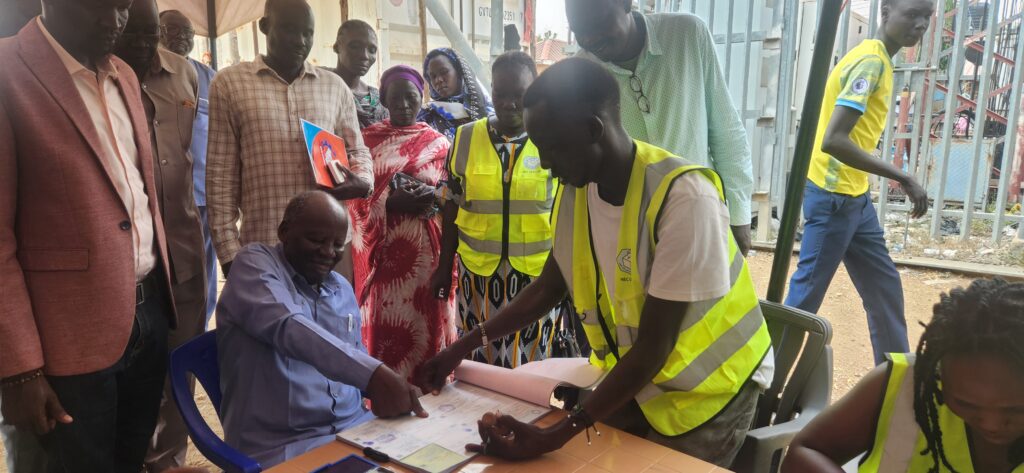
Akol made the appeal after registering at a voter registration centre in Juba, where he presented his voter registration card and encouraged other citizens to take part in the exercise.
He described voter registration as a national duty, saying those who fail to register risk losing the opportunity to participate in elections whenever they are held.
“Election is what gives people power. Your vote is your strength,” Akol said, urging citizens not to stay out of the electoral process.
He said voting allows citizens to elect leaders of their choice and reject those they don’t support, arguing that failure to register would limit their influence over the country’s political direction.
Akol also dismissed claims that voter registration is intended to benefit a particular political party, saying the exercise should be open to all eligible citizens regardless of their political affiliation.
Political freedoms
Beyond technical preparations, Akol said the credibility of the elections would depend on transparency, fairness and the conduct of the NEC, urging the commission to involve political parties throughout the process.
He expressed concern over the absence of political party representatives at voter registration centres, saying parties should be allowed to monitor registration, voter education and other electoral activities.
Akol said the NEC should provide political parties with a clear election timetable and ensure that all stages of the process were open to scrutiny, including through the deployment of domestic and international observers.
He said the commission must remain impartial and treat all political parties equally, adding that his party would assess the process before deciding whether to participate.
Akol also called for greater political freedoms ahead of the elections, including freedom of expression, movement, assembly and access to media platforms, arguing that political parties needed sufficient space to campaign and communicate their positions to voters.
He criticised restrictions requiring politicians to obtain presidential permission to travel, saying such limitations could prevent parties from reaching voters and campaigning freely.
The NDM chairman said his party would continue monitoring the electoral process and announce its position on participation after consultations with other political groups.

 and then