



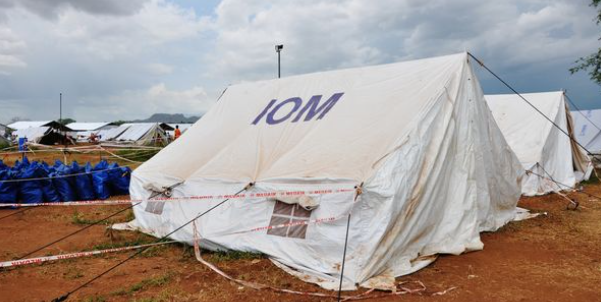
The International Organization for Migration (IOM) is appealing for USD 277 million to support the most vulnerable people affected by displacement and conflict in Sudan and neighbouring countries in 2026, as the crisis approaches its third year.
IOM Director General Amy Pope on Tuesday said that across Sudan and the region, families are being forced into impossible choices – whether to remain displaced without basic services, or return to communities shattered by conflict.
“They have lost homes, livelihoods, and loved ones, yet continue to hold on to hope,” she said. “They need sustained, urgent international support not only to survive, but to rebuild their lives with dignity and safety.”
A press release extended to Radio Tamazuj said the appeal prioritizes strengthening key systems needed to sustain and expand the humanitarian response. This includes strengthening data and mobility tracking systems, expanding humanitarian hubs and supply routes, enhancing cross-border operations, and greater localization of assistance to support recovery and solutions.
“A key priority is the expansion of cross-border assistance through the inter-agency humanitarian hub in Farchana, eastern Chad, which helps deliver aid into hard-to-reach areas of Darfur and Kordofan. The plan also reinforces data collection on mobility and solutions to improve targeting, anticipate movements, identify barriers to return, and guide operational planning,” the statement reads in part. “Alongside emergency response, IOM will scale up recovery and resilience programming, including restoring basic services, rebuilding livelihoods, and advancing durable solutions for displaced populations.”
According to IOM, since the conflict began in April 2023, violence has displaced more than 12 million people within Sudan at the peak of the conflict, with more than 9 million still currently internally displaced. Humanitarian needs continue to grow, with an estimated 33.7 million people in Sudan in need of assistance, the highest figure globally. This includes necessities such as food, clean water, healthcare, and shelter. At the same time, widespread protection risks and violations of international law continue to expose civilians to harm.
“The crisis is also affecting neighbouring countries and host communities, as refugees, migrants and returning nationals face risks along dangerous routes, including trafficking, exploitation, gender-based violence, family separation and limited access to services,” IOM said. “Chad, South Sudan, Libya, and Egypt have absorbed an unprecedented influx of people fleeing violence since the onset of the conflict. So far, more than 1.3 million people have arrived in South Sudan, and 1.2 million in Chad. Returning nationals constitute a significant number of those arriving – more than 900,000 in South Sudan and 389,000 in Chad.”
These returns come with increased needs as returning nationals arrive with little to no family ties, assets, or social networks to rely on, placing significant strain on already fragile local systems. Immediate, inclusive assistance to meet urgent needs for shelter, non‑food items, cash support, water, life-saving border reception, and onward transportation assistance is essential to prevent worsening humanitarian conditions and rising tensions between communities.
IOM said that in Sudan, while large-scale displacement continues in areas such as Darfur, Kordofan, and Blue Nile states, significant returns are also taking place. More than 3.8 million people have returned to areas including Gedaref, Khartoum, and River Nile states. Many returns are driven by perceptions of improved security, while others are motivated by economic pressures, family reunification, limited services in displacement areas, and challenges faced in host countries.
“However, returning nationals often arrive in fragile conditions. Many communities suffer as a result of damaged infrastructure, limited access to basic services and livelihoods, and inadequate water and sanitation systems. The presence of unexploded ordnance in some areas also poses serious risks,” the statement said. “IOM calls on the international community to increase support for the humanitarian response to ensure that people affected by the crisis receive the assistance they need. Without sustained funding and diplomatic efforts to end the conflict, millions of people in Sudan and across the region will remain at risk.”

 and then