



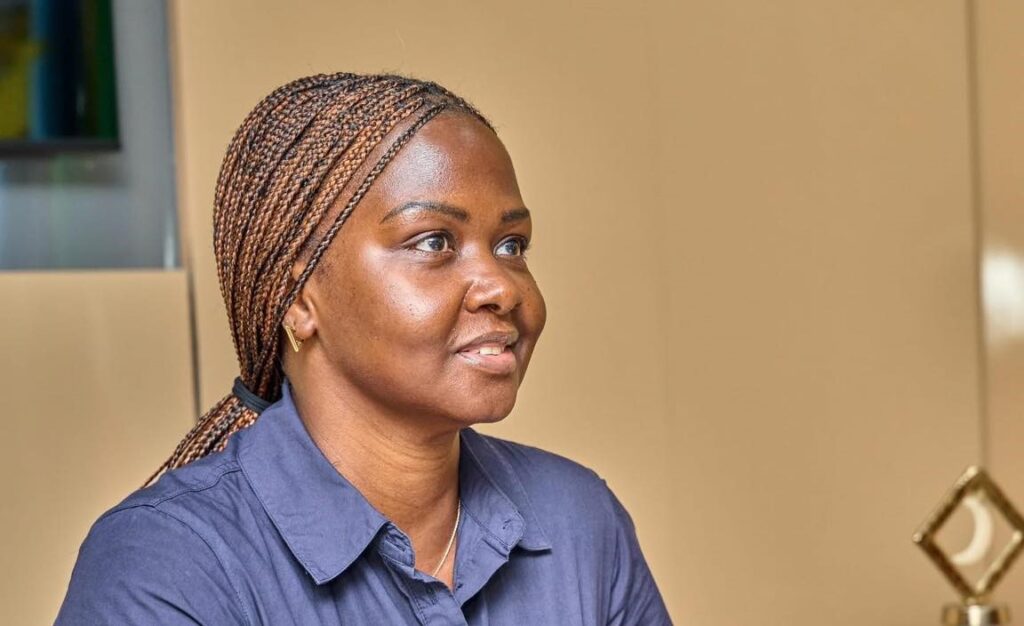
I woke up this morning to find social media flooded with photographs and video clips allegedly showing Presidential Envoy for Special Programs Adut Kiir Mayardit dancing during what appears to have been a private birthday celebration. The footage, reportedly shared online by United Kingdom based government critic Simon Dee, immediately became the centre of political discussion, public ridicule, and online controversy. But as I observed the reactions, I could not help asking myself a deeper question: how did we, as a society, move so quickly from discussing governance to obsessing over gossip?
According to claims circulating online, the video was recorded nearly two years ago during Adut Kiir’s birthday celebration. If that claim is true, then the footage predates her appointment as Presidential Envoy for Special Programs. That fact matters because it completely changes the context of the discussion. A private citizen attending a birthday celebration before entering public office cannot fairly be judged using standards attached to a position she did not yet hold.
But even beyond the issue of timing, I believe there is a larger principle at stake. Public office does not erase someone’s humanity. Becoming a government official should not mean surrendering the right to a private life. Leaders are still ordinary human beings. They celebrate birthdays, dance with friends, laugh, socialise, and enjoy personal moments just like everyone else. Unless their actions involve corruption, abuse of office, or violation of the law, I do not believe their private lives should become public spectacles for humiliation.
What concerns me most is not the video itself, but what the public reaction reveals about our political culture. Increasingly, our politics seems less focused on national issues and more consumed by personal attacks, online shaming, and character assassination. Instead of debating economic hardship, insecurity, corruption, healthcare, education, or the future of South Sudan, we now spend days arguing about private videos and social gatherings. To me, this represents a dangerous shift from governance to gossip.
Social media has amplified this culture dramatically. Today, political opponents often seek not to challenge ideas or policies, but to embarrass individuals personally. The goal is no longer simply criticism, it is humiliation. Private moments are transformed into political weapons, and public debate becomes entertainment rather than meaningful national discourse.
I believe this trend weakens democracy. A serious political culture should focus on leadership, accountability, and policy. Citizens should judge leaders based on their public service, competence, and contribution to society. If Adut Kiir has failed in her official responsibilities, then people have every right to question and criticise her performance. That is democracy. But dancing at a birthday celebration is not a crime, nor is it evidence of incompetence.
What also troubles me is the issue of privacy. South Sudan’s Constitution recognises the importance of personal dignity and protection from unlawful interference in private life. In the digital age, the unauthorised exposure and circulation of private content can have serious consequences for individuals and families. I believe we must begin taking these matters seriously as a society.
With the rise of cybercrime legislation and growing global concern over online abuse, there is an important legal conversation emerging here as well. If someone deliberately shares private material online to shame, damage, or harass another person, should there not be accountability? Since Simon Dee reportedly resides in the United Kingdom, any potential legal action would involve complex jurisdictional issues. However, I believe it is entirely reasonable to argue that individuals cannot simply hide behind social media platforms or foreign residence while targeting others online without consequence.
At the same time, I strongly believe that freedom of expression must remain protected. Political criticism is healthy and necessary in any democracy. Public officials should never be immune from scrutiny. But there is a difference between criticising someone’s governance and exposing their private life for public ridicule. One strengthens democracy, the other risks poisoning it.
I also cannot ignore the gender dimension of this controversy. Women in leadership are often judged far more harshly than men when it comes to their personal lives and social behaviour. A male politician attending a party may attract little attention, but a woman dancing at her own birthday celebration suddenly becomes a national controversy. To me, this reveals lingering double standards within our society.
Ultimately, I believe Adut Kiir should be judged by her public work, not by selectively circulated private moments. The South Sudanese people deserve leaders who are accountable, effective, and committed to national development. That is where public attention should remain focused.
Our country faces enormous challenges that require serious conversation: peacebuilding, economic recovery, youth unemployment, corruption, healthcare, education, and national unity. Yet too often, we allow ourselves to become distracted by scandals that contribute little to solving the problems ordinary citizens face every day.
The Adut Kiir video debate therefore reveals something larger about us as a nation. It reveals how quickly online platforms can transform private life into political spectacle. It reveals how easily gossip can overshadow governance. And most importantly, it reveals the urgent need for a more mature democratic culture, one that values accountability without abandoning human dignity.
As citizens, we must decide what kind of politics we want for South Sudan. Do we want a political culture built on ideas, policies, and national progress, or one driven by humiliation, outrage, and personal destruction?
For me, the answer is clear. A society that loses respect for privacy and dignity in pursuit of political entertainment risks damaging not only individuals, but the very quality of its democracy itself.
The writer, John Bith Aliap, is a South Sudanese political analyst and commentator on governance, leadership, and state building in post conflict societies. He can be reached at johnaliap2021@hotmail.com.
The views expressed in ‘opinion’ articles published by Radio Tamazuj are solely those of the writer. The veracity of any claims made is the responsibility of the author, not Radio Tamazuj.

 and then