



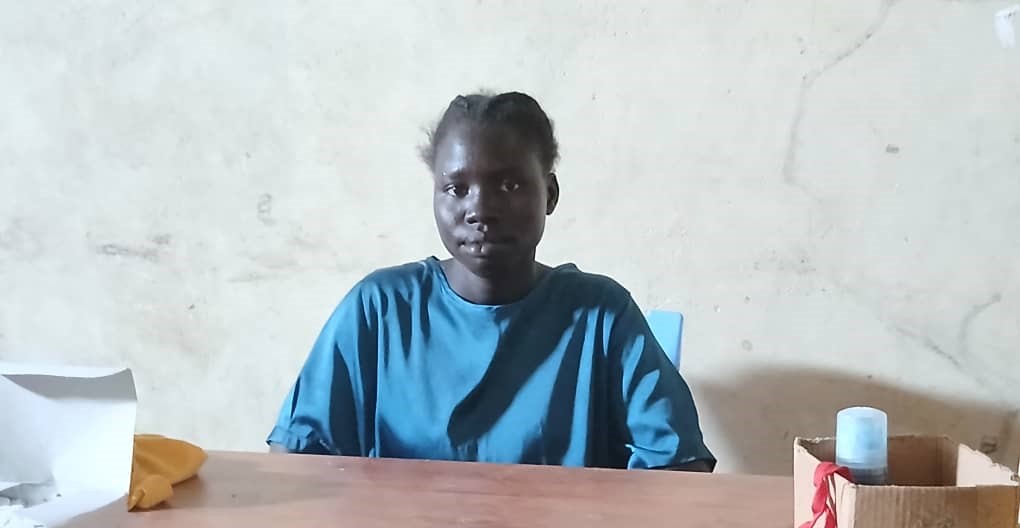
Every morning, Nyanbol Abiel Kiir makes her way to Dr. John Garang Girls Primary School in Malakal, Upper Nile State, hoping that another day of lessons will bring her closer to her dream of becoming a doctor.
But for the Primary Eight pupil, the challenges of growing up in a town shaped by years of conflict and displacement do not end when the school bell rings. At home, she must wash clothes, visit shops and perform household chores, while finding ways to raise money for her school fees.
With little financial support from her family, Nyanbol sometimes has to work to earn enough money to pay for her education and sit for examinations.
“My father is not there to pay my school fees. No one pays the money. When the time comes for school fees or examinations, I go and work, then I bring my own money to pay so that I can sit for the examinations,” she said.
Her father lives in Paloich but, according to Nyanbol, his financial difficulties prevent him from supporting her regularly. She said he often promises to send money when she asks for help, but the assistance rarely comes.
She also described difficult family circumstances, saying her brother struggles with alcohol abuse and cannot provide the support she needs.
“This is my life. It is not easy because I am paying my school fees alone, and no one is helping me,” she said.
During school breaks, Nyanbol enjoys playing football and volleyball with other pupils. These moments of recreation offer a brief escape from the responsibilities waiting for her at home.
Despite the pressures, she remains determined to complete her education, become a medical doctor and find employment in a hospital to support her family.
“If I get the opportunity to complete my education, my priority would be to improve the living conditions of my family. I would move them into a better home and make sure they are well cared for,” she said.
Her story reflects the difficulties facing children in Malakal, a town that has endured repeated waves of displacement and humanitarian hardship.
South Sudan’s civil war, which erupted in December 2013, devastated Malakal and forced thousands of civilians to flee their homes. Many sought refuge at a United Nations protection site established in the town.
More people have since arrived in Malakal, including South Sudanese returnees fleeing the war in neighbouring Sudan, which began in April 2023. Their arrival has added to the pressure on already limited services, including education.
For displaced school-age girls, rebuilding their lives often means adjusting to unfamiliar surroundings, interrupted schooling and families struggling to meet basic needs.
Displacement brings new challenges to classrooms
At Dr. John Garang Girls Primary School, the consequences of displacement are visible in the growing number of children seeking admission.
Achol Monykur Monydhot, a teacher and member of the school management, told Radio Tamazuj that the school had admitted children displaced from other areas, some of whom had missed substantial periods of learning.
She said the new pupils often struggled to catch up with classmates because of interruptions to their education.
“We do not want them to be left behind. We want them to be at the same level as the other learners who were already here,” Achol said.
Teachers have been giving some displaced pupils individual attention to help them adjust to the school environment and recover lost learning.
Between 85 and 87 displaced pupils had joined the school, from Primary One to Primary Five, she said.
Achol said teachers tried to handle the children patiently, recognising that some had experienced difficult circumstances before reaching the school.
“If we treat them according to the school rules without considering their situation, they may leave school and tell their parents that teachers are always punishing them. When they make mistakes, we call them and talk to them politely instead of punishing them,” she said.
Poverty pushes children out of school
For many vulnerable families, displacement is accompanied by financial hardship that makes education difficult to sustain.
Achol said some pupils, particularly those who had lost their parents or were living with relatives and other caregivers, lacked uniforms and money for basic school requirements.
She said some children stopped attending classes when they could not afford uniforms, instead seeking work in tea shops and other places to earn money.
“When the school administration talks about uniforms, some children go home and do not come back. Instead, they go to work in tea places or engage in other activities,” she said.
The school also faces shortages of teaching materials and inadequate classroom facilities. Achol said the lack of a proper nursery classroom forced younger children to study outdoors, exposing them to difficult weather conditions.
During the rainy season, some nursery pupils return home and fail to attend classes the following day.
She also raised concerns about the school’s location near the river, saying some pupils go to the riverside during breaks, where they sometimes bathe, exposing themselves to safety risks.
Teachers face financial difficulties of their own. Achol said inadequate salaries forced some to leave school early to seek alternative sources of income, affecting teaching and learning.
She warned that the combined effects of poverty, displacement and inadequate school facilities could discourage children from continuing their education.
A dream beyond displacement
Despite the difficulties facing her and other girls, Nyanbol has ambitions that extend beyond completing school and securing a job.
She wants to see a community where people live together peacefully and are accepted regardless of their ethnic, linguistic or cultural backgrounds.
“We are all human beings, and our differences should not divide us. Instead, they should bring us together and make our community stronger,” she said.
Achol appealed to humanitarian organisations, education partners and other stakeholders to support schools in Upper Nile State, particularly in Malakal, to help vulnerable and displaced girls remain in education.
“I beg you to support all girls in Upper Nile State, especially here in Malakal, so that our learners can continue with their education,” she said.
For Nyanbol, each school day is another effort to overcome the financial and family challenges standing between her and her ambitions. She hopes that education will eventually allow her to provide a better life for her family and contribute to a more peaceful society.
“We should learn to love, respect and accept one another. If we do that, we can build a united community where everyone feels they belong and has the opportunity to live and work in peace,” she said.
Note: This feature story is part of a series amplifying the voices of girls across South Sudan, sharing their personal experiences, challenges, hopes and aspirations, and highlighting the issues affecting their rights, safety and future.

 and then