



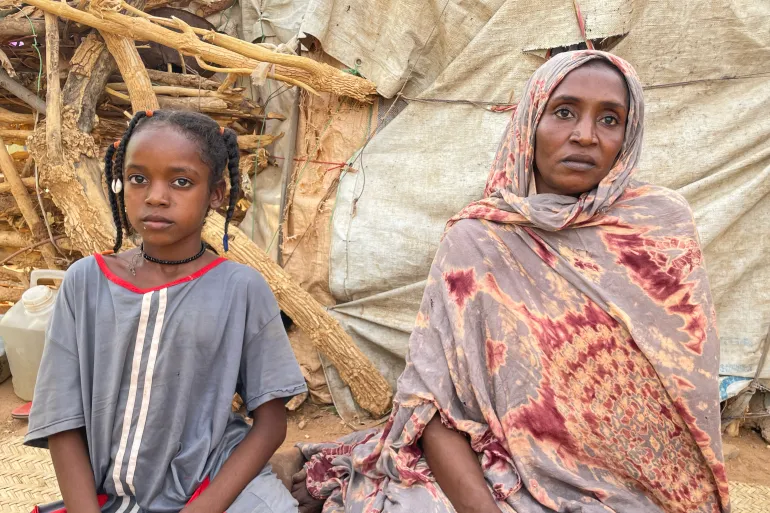
Residents of several western neighbourhoods in El Geneina, the capital of Sudan’s West Darfur State, have complained of worsening difficulties in accessing drinking water, as prolonged supply disruptions lasting several months and rising costs place an increasing burden on households, particularly displaced families.
A representative of the Emergency Response Rooms Coordination Council said the council was making concerted efforts to address the city’s water shortages, revealing that 22 solar-powered wells had been equipped to help improve access to water.
A resident of the Al-Jamarik neighborhood in El Geneina told Radio Tamazuj that households had previously received piped water once a week, but the situation had deteriorated progressively over recent months.
He explained that supplies had initially stopped for a period before resuming at intervals of approximately once a month. However, he said the water supply had now ceased altogether.
A significant number of international humanitarian organizations are involved in water provision in the city and hold weekly coordination meetings with the relevant authorities to address challenges affecting water services.
Meanwhile, a displaced woman living in one of El Geneina’s western neighbourhoods said she and other displaced families had initially expected their living conditions to improve upon arriving in the city, where water was readily available and affordable.
However, she said the situation deteriorated shortly afterwards, with water supplies becoming increasingly erratic.
According to the displaced woman, water sometimes reached their neighbourhood once a week, while interruptions could last two weeks or, in some cases, an entire month.
Displaced residents also alleged that individuals they identified as members of neighborhood committees had been collecting 10,000 Sudanese pounds from households in exchange for water services.
They said water supplies were briefly restored to their area on Thursday morning after an interruption lasting approximately three months, following the introduction of a 20,000 Sudanese pound charge for the service.
However, the water flowed for only about three hours before the supply was cut off again.
At the Al-Musharradin complex, displaced residents said a humanitarian organization had previously supplied water through a tanker service, but the project had since been discontinued.
The suspension has forced families to purchase water from alternative sources, with a barrel costing between 6,000 and 7,000 Sudanese pounds.
“Water came yesterday for just three hours before it stopped again: we have no idea when it will return,” one displaced resident said.
The worsening water crisis has compounded the difficulties facing displaced households already struggling to meet their basic needs, with the rising cost of water placing additional pressure on limited family incomes.
An official who requested anonymity described El Geneina’s water crisis as a complex administrative problem involving multiple interconnected challenges.
He said that despite substantial support from humanitarian organizations and oversight by local authorities at various stages of water service provision, supplies remained highly irregular.
According to the official, some residential neighbourhoods receive water two or three times a week, while others receive supplies only once a week or once a month.
He added that several neighbourhoods had been without water for prolonged periods, highlighting significant disparities in access to the essential service across the city.

 and then