



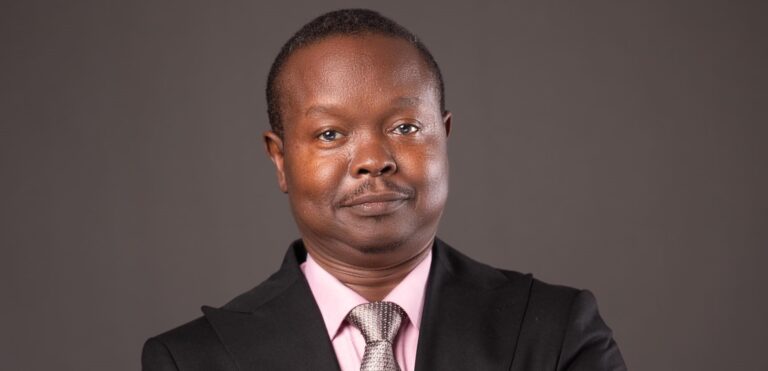
Letter four of seven letters to the South Sudanese people
Fellow South Sudanese,
In South Sudan, a leader can break a ceasefire, a peace agreement or a promise and keep his office. A mother deciding whether to take her children back to the village she fled must live with the risk. So must the trader who passes armed men on the way to market and the family burying a son after the guns were supposed to fall silent.
Within weeks of the December 2017 ceasefire, the United Nations was recording repeated violations. When talks resumed in Addis Ababa in February 2018, youth representative Emmily Koiti asked the signatories why they had already broken it. Her question still confronts anyone proposing a national dialogue. What is a leader’s promise worth if breaking it costs him nothing?1
In my last letter, I argued that our communities have long judged leaders by whether they protect people. That tradition sets a standard. Enforcing it against a commander who puts staying in power before peace takes more than custom.
Sceptics have watched leaders sign agreements, return to fighting and retain their offices, commands and wealth. Citizens may be invited after decisions have been made. Survivors may be urged to forgive while investigations are put off. The UN Commission on Human Rights in South Sudan has documented how politically connected elites diverted public revenue while essential services went short. Giving citizens real influence threatens those advantages. We should expect those who benefit to try to control who takes part and what they can discuss.2
After so many broken promises and so many deaths, scepticism is warranted. A credible dialogue starts with communities speaking to one another about what has divided them and deciding how they want to live together and govern themselves. In that process, new leaders can earn their communities’ trust and answer to the people who gave it.
We are equal as citizens, but we have unequal means to act. A commander can order a unit to clear a road. A minister can lift restrictions on meetings. An official can release funds for a health centre. A mother in a displacement site can do none of these things. The greater the power, the greater the duty to act and show what has been done. Commanders in government and opposition must end attacks on civilians, open roads and allow aid through. Their duties to civilians apply whatever the other side does.
Decisions about who exercises public power and how it is restrained belong to all of us. The Citizens’ Assembly on South Sudan’s Future that I have proposed needs independent conveners and citizens free to choose their representatives and raise their own concerns. Political and military leaders may present their views. The Assembly’s agenda belongs to its citizens. Those who hold power owe us three things before asking for our trust.
The first is safety. In 2017, the parties agreed to stop fighting, protect civilians and allow humanitarian aid through. On 10 November 2026, the UN Mission in South Sudan again called for civilian protection and humanitarian access.3 Those who control territory must allow people to participate safely. Consultations can begin where conditions permit while efforts to stop the fighting and protect civilians continue.
South Sudanese can begin speaking to one another without travelling to Juba. Independent facilitators trusted by the communities they consult can hold community meetings and smaller gatherings, or use other accessible means, inside the country, at displacement sites, in refugee settlements across our borders and in the wider diaspora. Where access is denied or participation would expose people to harm, facilitators should find safer ways to hear from those communities while work continues elsewhere. They should document, compare and bring together what they hear so the Assembly’s decisions reflect the views of South Sudanese wherever they live.
The second is an answer. South Sudanese women organised across their differences during the talks that led to the 2018 agreement. The agreement reaffirmed the commitment to 35 per cent representation for women in the executive, yet women’s groups still had to challenge appointments that fell short. Their experience shows why citizens must be able to follow a commitment through to its implementation.4
The National Dialogue that concluded in 2020 produced recommendations, and South Sudanese have held many other conversations inside and outside the country. The Assembly should start from what people have already said, revisit unresolved questions and show how citizens’ proposals shape decisions they can own together.4
The third is justice. The 2018 agreement provides for the Commission for Truth, Reconciliation and Healing, the Hybrid Court for South Sudan and the Compensation and Reparation Authority. In September 2026, eight years after the agreement, the UN Commission was still calling for the court to be established and the other two bodies to become fully operational. It had also reported that survivor representatives and others seeking to observe interviews for the truth commission were excluded. For a family searching for someone who disappeared, another year of delay means another year without answers.5
Some fear that pursuing justice will drive leaders from the negotiating table. Anyone who lays down arms is entitled to lawful treatment and protection. The agreement also provides that pardons, immunities and amnesties cannot impede the Hybrid Court.6 Negotiations can continue while evidence is preserved and witnesses are protected. Survivors decide for themselves whether to speak publicly.
Colombia offers a practical example. Sixty victims addressed government and FARC guerrilla negotiators in Havana. The peace accord created a separate jurisdiction for conflict-related crimes, which issued a first-instance judgment in a FARC kidnapping case in 2025. Colombia’s experience shows that survivors can be heard during talks and justice can proceed independently.7
When an officer abuses public authority, the Republic itself must answer for the harm attributable to it. That obligation survives a change of government. Survivors should be able to obtain reparations without first securing a criminal conviction. The state should acknowledge the wrong, apologise and provide effective, enforceable reparations for as long as the harm requires. These can include healthcare, education, housing and help to restore lost livelihoods. The Assembly should debate how long reparations should last, how to finance them and who should oversee them independently. Survivors retain their rights, and individuals responsible for serious crimes must still answer for them.
Before any national meeting opens, citizens should be able to ask three questions. Who will protect those who speak, and who can verify that protection? Who must answer citizens’ proposals, and by when? Who owes the next step on truth, justice and reparations? Conveners should make the answers public, with names and dates we can check. Where they cannot secure answers, they should identify who is blocking progress and keep safe channels open. That is how the process earns our trust.
Koiti asked leaders to account for a promise they had broken. A woman returning to the village she fled has the same right. She should be able to find out who is responsible for the road, what they have done to make it safe and where she can turn if they fail her. She also has the right to ask where the money for the road and the health centre went. That is where I will take the argument in my next letter.
Yours,
Dr. Remember Miamingi
The author is a South Sudanese human rights lawyer and governance specialist.
Sources
1. Esther Soma, Our Search for Peace, Oxfam, 2020, p. 38 and notes 252–253, on Koiti’s intervention. Oxfam study · UN Secretary-General, S/2018/143, para. 7, on violations. UN report · UN Commission on Human Rights in South Sudan, A/HRC/40/CRP.1, para. 51, on the February talks. Commission findings
2. UN Commission on Human Rights in South Sudan, A/HRC/61/25, paras. 104–105, on the diversion of public resources and its effect on public services. Commission report
3. Agreement on Cessation of Hostilities, Protection of Civilians and Humanitarian Access, 21 December 2017. Signed agreement · UN Mission in South Sudan, press release, 10 November 2026. Release · 2018 Revitalised Agreement, §§2.4, 7.6 and 7.9–7.11, on ceasefire monitoring, corrective action and the reporting and referral of serious violations. Signed agreement
4. Soma, Our Search for Peace, pp. 37–40, on coalition advocacy and appointments. Oxfam study · 2018 Revitalised Agreement, §1.4.4. Agreement · UN Development Programme, 17 November 2020, on the National Dialogue’s recommendations. Process account
5. 2018 Revitalised Agreement, §§5.1.1–5.1.2 and 5.3.1.1, on the Chapter V institutions. Agreement · UN Commission on Human Rights in South Sudan, A/HRC/61/25, paras. 95–103, on selection and resourcing. Commission report · UN Commission on Human Rights in South Sudan, statement of 10 September 2026, on the status of Chapter V. UN statement
6. 2018 Revitalised Agreement, §§5.3.4–5.3.6, on rights, criminal responsibility and evidence. Agreement 7. Government of Colombia, CCPR/C/COL/Q/7/Add.1, para. 46. Report to the UN Human Rights Committee · Colombia’s 2016 Final Agreement, point 5. Agreement · Special Jurisdiction for Peace, Case 01, 16 September 2025. Judgment summary in Spanish

 and then