



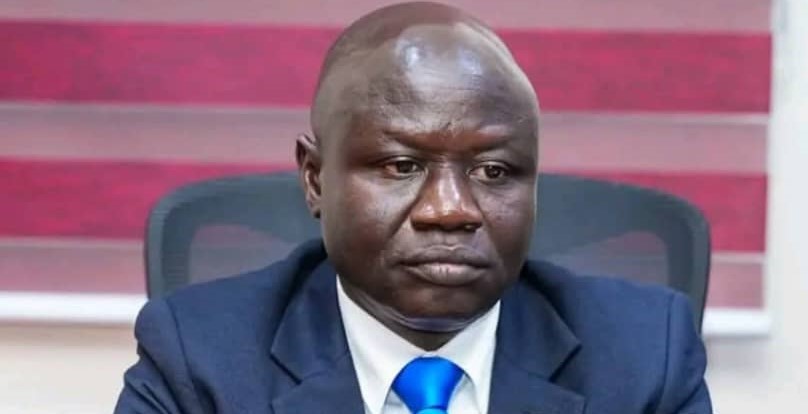
Central Equatoria State’s education minister on Wednesday warned private schools operating below required standards that they could be shut down if they fail to comply with government regulations, as authorities prepare to step up inspections across the state.
Speaking at an emergency meeting with owners and administrators of private schools in Juba County, Minister of General Education and Instruction Lupai Satimon Andrew said the government would enforce education standards more rigorously as part of efforts to improve the quality of learning.
He said the ministry was developing a strategic plan to raise standards across public, private, faith-based, community and technical schools.
“We need to move together,” Satimon said. “Private schools, faith-based schools, community schools, public schools and technical schools all have a role to play if we are to improve education performance.”
The minister said inspectors and quality assurance officers would soon visit schools to assess compliance with government regulations, curriculum requirements and infrastructure standards.
He expressed concern about schools operating in what he described as inadequate facilities, saying institutions that fail to meet minimum requirements risk losing their licences.
Satimon said registration and licence renewals would be linked to compliance with legal requirements, including adequate land, sanitation facilities and learning infrastructure.
“Our team will reach your school to inspect and ensure that everything required by law is in place before licences are renewed,” he said.
Schools that fail to comply would be given time to address deficiencies, but persistent violations could result in closure, he added.
The minister also addressed concerns raised by school operators over tax collection and interference by security personnel.
He said schools should refer officials seeking to collect revenue directly from educational institutions to the state Ministry of Education, adding that education providers should not be subjected to arbitrary disruptions.
Satimon said he convened the meeting after receiving reports that some schools had been closed or visited by revenue officials, criminal investigators and members of the organised forces.
He urged security agencies not to interrupt teaching by entering schools to inspect visas and other documents belonging to foreign teachers, warning that such actions could negatively affect students.
“If they are looking for relevant documents, they are not supposed to go to schools and interrupt teachers while lessons are taking place,” he said.
The minister also criticised incidents in which individuals allegedly ordered the closure of schools without following legal procedures, saying any such cases should be referred to the ministry.
Despite the concerns, Satimon praised private schools for helping expand access to education in areas where government schools are unavailable, particularly in newly established residential neighbourhoods around Juba.
However, he stressed that private institutions are required to operate within the law and comply with national education standards.
“Being a private school does not mean you are operating outside the law,” he said.
Representatives of private schools welcomed the meeting but called for stricter enforcement of registration requirements.
Kim Chris, a representative of private schools in Munuki Payam, criticised the licensing of institutions that fail to meet minimum standards and urged authorities to ensure only compliant schools are allowed to operate.

 and then