



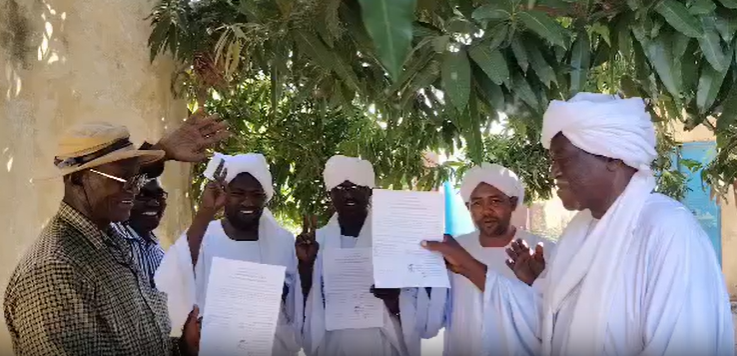
Communities along the Sudan-Central African Republic (CAR) border have agreed to reopen cross-border routes to pastoralists and traders following the payment of compensation to families of people killed in armed clashes between the communities in 2025.
The agreement was reached on Tuesday during a joint meeting between Sudanese tribal leaders and representatives of communities from the CAR in the border town of Um Dafuq, South Darfur State. The meeting focused on strengthening relations between neighbouring communities and implementing resolutions adopted at a peace conference in October 2025.
Pastoralists from the Ta’aisha, Salamat, Beni Halba and Misseriya tribes had complained that access to grazing routes had remained restricted since October, forcing their livestock to congregate in increasingly limited grazing areas.
Sheikh Jumaa Abdelkarim, deputy head of the Ta’aisha Native Administration, told Radio Tamazuj on Tuesday that communities on both sides of the border had agreed to strengthen peaceful coexistence and promote mutual economic benefits following the payment of compensation.
He said the meeting discussed ways to improve social relations and ensure that both sides benefited from closer cooperation. It also addressed arrangements for reopening the Um Dafuq crossing to pastoralists and commercial activities.
Abdelkarim said all outstanding blood compensation payments had been handed over during the meeting, which was attended by the overall leader of the Ta’aisha, Nazir Mahmoud Abdelrahman Al-Sanousi.
The compensation agreements were formally endorsed on behalf of the Ta’aisha by community leaders Hamad Al-Hussein and Badr al-Din Hassan Mohammed. Representing the CAR communities, Dr. Mahmoud Kamtir, head of the peace committee for the Anja area, and Yousuf Abdallah Ramadan, head of the committee for the Birau area, signed the agreements.
Communities on the CAR side of the border include the Kara, Sara, Gula, Runga and Yulu, which share the frontier with Sudan’s Ta’aisha, Beni Halba and Salamat tribes.
Relations between the neighbouring communities have periodically been strained by security tensions and armed clashes, prompting the closure of cross-border routes and restricting the movement of pastoralists and traders.
The latest agreement is intended to restore cross-border movement, ease pressure on grazing areas and revive commercial activities while strengthening social and economic ties between communities on both sides of the border.

 and then