



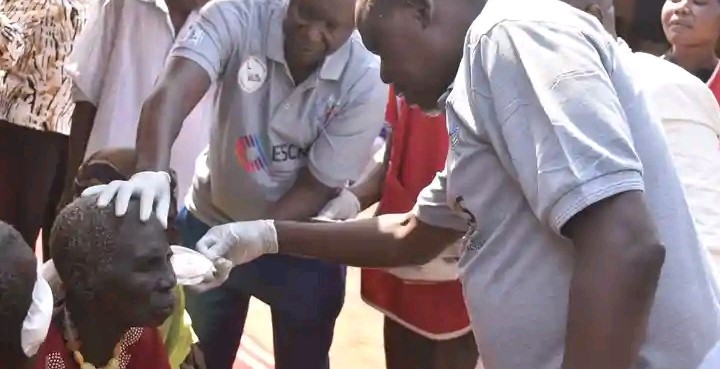
The Catholic Diocese of Wau has restored sight to more than 3,000 people through an eye care campaign conducted in Wau, Kuajok and Tonj, the diocese’s Health Department said.
The 2026 campaign, conducted in collaboration with national and state health authorities, provided treatment for people with cataracts and raised awareness of eye health in local communities.
Speaking at the closing ceremony on Friday, Tatiana Gerber, health adviser to the Catholic Diocese of Wau, thanked the bishop for his leadership and support in organising the campaign.
She said the initiative also reached vulnerable groups, including prison inmates and 25 people from the Agok area.
“Our specialist team successfully operated on more than 3,000 people in Kuajok, Tonj and Wau,” Gerber said.
Some beneficiaries who regained their sight thanked the diocese for providing treatment and called for continued support for people with visual impairments.
“I am very happy. They have helped us a lot because we can now see again,” one beneficiary said.
Western Bahr el Ghazal State’s caretaker health minister, Joseph Moses Ugudo, commended the Catholic Church for its contribution to healthcare delivery and community development.
He said the church had consistently supported communities through various initiatives, including the eye care campaign.
“We, the government of Western Bahr el Ghazal State, thank the Catholic Church for its strong support. Today, it has taken a major step towards restoring sight to our people,” Ugudo said.
He pledged continued cooperation with the church and humanitarian organisations to improve healthcare services.
“As a government, we will continue to provide security and health services to our people,” he said.
Bishop Matthew Remijio Adam of the Catholic Diocese of Wau praised the diocese’s Health Department for organising the campaign, saying restored eyesight would enable beneficiaries to participate more fully in family and community life.
He said people with visual impairments faced additional difficulties earning a living and supporting their families amid the country’s economic challenges.
“Eyesight is more important than money and food. Without sight, one cannot work or sustain a livelihood,” Adam said.
He urged beneficiaries to follow medical advice and doctors’ instructions after surgery to protect their eyesight.

 and then