



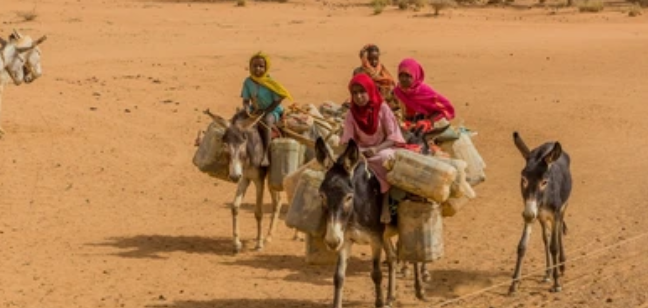
Residents of At-Tadamun and Bau localities in Sudan’s Blue Nile region have faced a severe drinking water shortage for more than three months, forcing some to walk more than five kilometres in search of water as local reservoirs dry up.
Speaking to Radio Tamazuj on Tuesday, residents said they had been forced to rely on potentially unsafe water sources, raising concerns about the risk of waterborne diseases. Women and children have been particularly affected by the long journeys required to collect water.
Um Al-Hassan Salim, a resident of Bak area, said local hafirs (rainwater harvesting reservoirs) had dried up, leaving residents struggling to obtain drinking water.
“The water situation here is very bad. The water reservoirs have dried up, and we have to walk long distances just to get a jerrycan of water,” she said.
She appealed to government authorities and humanitarian organisations to intervene urgently and provide safe drinking water.
Sadiya Abdallah, a resident of Al-Ahmar area, said the only water reservoir serving her community had dried up completely.
“I appeal for help to resolve this problem,” she said.
Tarig Al-Hadi, an engineer and civil society activist, attributed the shortage in At-Tadamun and Bau to inadequate rainfall and a lack of regular maintenance and rehabilitation of hafirs and dams.
He warned that conditions could deteriorate further by January, proposing water deliveries by tanker trucks as an immediate measure and the extension of a pipeline from Agdi to the affected areas as a longer-term solution.
Al-Hadi urged international humanitarian organisations and local civil society groups to intervene, warning that failure to address the shortage could lead to a humanitarian crisis.
The water shortage comes as Blue Nile remains affected by fighting between the Sudanese army and the paramilitary Rapid Support Forces (RSF), alongside their respective allied forces, including the Sudan People’s Liberation Movement-North (SPLM-N). Clashes have been reported in areas near the Ethiopian border.

 and then