



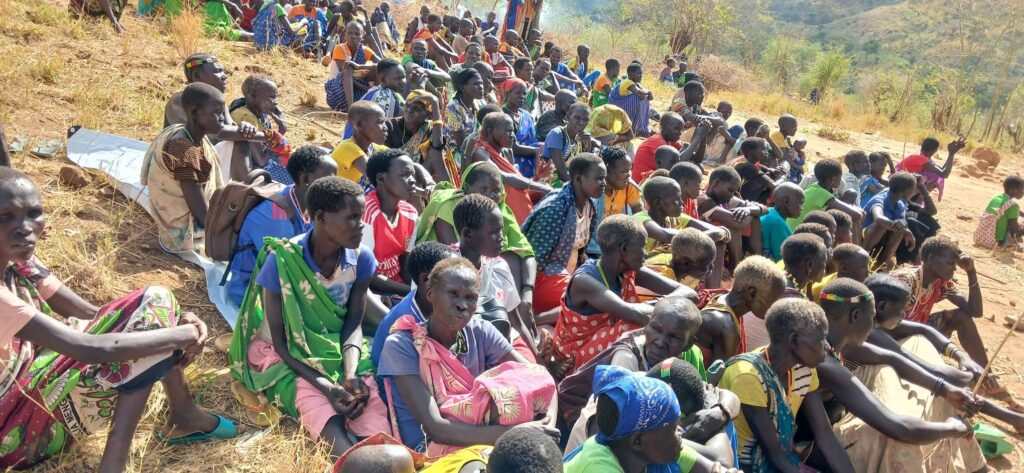
Residents of Ngauro Administrative Area in Eastern Equatoria State are facing growing food shortages after nearly two weeks of restricted movement along the main road linking the area to Kapoeta, local officials and community leaders said.
They say shops are running out of food, fuel and other basic commodities, with traders unable to transport supplies into the area because of the road closure.
Lopoyok Augustine Jervase, chief administrator of Ngauro Administrative Area, told Radio Tamazuj on Tuesday that most shops had run out of essential goods and warned that remaining stocks could be exhausted within days.
“Almost all the shops are empty. In the next two or three days, there may be no food, no water, no soda and nothing available for the people,” he said.
Jervase said Kapoeta was the area’s main supply route, while alternative roads through Lopala and Namurunyang were also reportedly inaccessible.
He said residents had limited information about the security situation along the affected routes following reports of fighting in the Nakeke area.
“We don’t know exactly what is happening on the other side. We don’t even know whether there is any dialogue going on between the government and the local communities,” he said.
Jervase called on the government and affected communities to open talks to resolve the dispute and restore movement along the roads.
“My appeal is for people to sit down, dialogue, and find a peaceful way of solving these problems so that we can serve our people. All these issues are manageable and can be resolved politically if both sides are willing to talk,” he added.
Rose Apulle, a women’s leader in the administrative area, said families are struggling to find food and increasingly relying on wild vegetables and fruits to survive.
“We are suffering because we no longer have salt, food, rice and other basic necessities. People are slowly dying of hunger, and children are the most affected,” she said.
Apulle said drought had also damaged agricultural production, leaving households with few alternatives as market supplies dwindled.
“We cultivated our farms, but nothing yielded because of the drought. The government should come in, ensure that the road is opened and bring the two sides together for dialogue. We need peace, and the fighting must stop,” she said.
Youth leader David Lino Lochungai said the absence of vehicles and essential supplies had worsened conditions in local markets, leaving families struggling to obtain food.
“The situation on the ground has become very bad. People are really suffering. There are no vehicles moving, and even when families go to the shops looking for food, they cannot find anything. The markets are almost empty,” he said.
Lochungai warned that if the disruption continued for another two or three weeks, residents could die from hunger, particularly children and other vulnerable people.
He also cited the lack of rainfall as a further threat to local farming and food supplies.
Lochungai urged the government to engage civilians and parties involved in the conflict to restore peace and reopen the roads, saying unrestricted movement is essential for traders to replenish supplies and residents to resume normal activities.

 and then