



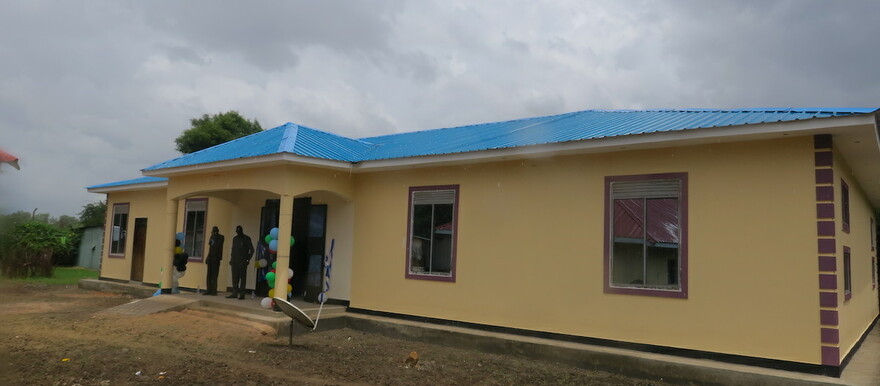
The legislative assembly in South Sudan’s Jonglei State has remained closed for 18 months after going into recess in 2024, with lawmakers blaming political disputes, insecurity and a lack of funding for the prolonged shutdown.
Several members of the Jonglei State Legislative Assembly told Radio Tamazuj they had not been recalled from recess since November 2024, leaving the legislature unable to perform its constitutional oversight role or address concerns raised by constituents.
The closure reflects broader governance challenges across South Sudan, where some state legislatures have struggled to function amid economic hardship and delays in implementing key provisions of the 2018 peace agreement.
“We went into recess during the governorship of Mahjoub Biel Turuk in 2024. After three months, we were supposed to return to parliament, but that did not happen because the former governor was removed,” lawmaker Gatluak Reat of the ruling Sudan People’s Liberation Movement (SPLM) said.
“The current governor is not opening the parliament,” he added.
Reat said the continued closure had left lawmakers sidelined at a time when parts of Jonglei were facing insecurity and humanitarian challenges.
“We are not being consulted as MPs even during the ongoing conflict in the northern part of the state, which requires our involvement with communities,” he said. “As we speak, I have been in Juba for months because there is nothing to be done in the state.”
He said lawmakers had gone for months without salaries or allowances and many had been forced to pursue private activities to support themselves and their families.
Reat also questioned the appointment of a new speaker by President Salva Kiir following a recent reshuffle in the state government.
“This new speaker has yet to take the oath of office and is not a member of parliament,” he said. “Procedurally, he was supposed to be appointed first as an MP before becoming speaker.”
Another lawmaker, Deng Bol, said the prolonged shutdown had deprived residents of representation and weakened accountability within the state government.
“This means the voices of the people have been shut down because we cannot table the complaints of our people,” he said.
Bol said a combination of economic hardship, insecurity in northern Jonglei and disputes between the former speaker and Governor Riek Gai Kok had contributed to the prolonged closure.
“We cannot abandon our constituencies because we came through the peace agreement to represent them,” he said. “But the economic crisis and insecurity have made it difficult for lawmakers to operate.”
He said some legislators were unable to travel to their constituencies because of insecurity, while others lacked the financial means to remain active in public affairs.
On the appointment of the new speaker, Bol offered a different interpretation from Reat, saying the appointee was already a member of parliament and would take the oath of office in accordance with the presidential decree.
“However, according to assembly procedures, speakers are normally nominated in parliament before appointment,” he said.
Jonglei Deputy Governor Wilson Awuol Gajang said authorities were taking steps to resume parliamentary sessions.
“After the holiday, the new speaker will be sworn in for the parliament to be reopened,” he said.
Awuol, who previously served as the SPLM chief whip in the assembly, acknowledged that tensions between the former speaker and the governor had contributed to the impasse.
“The closure has taken too long,” he said, adding that lawmakers would soon return to work.
Kenya Mach, a civil society activist, welcomed plans to reopen the state legislative assembly, saying the assembly was needed to address pressing social and economic issues facing residents.
“We want parliament reopened. Exorbitant commodity prices, inter-communal fighting over fishing grounds and maternal deaths amid shortages of medicines cannot be addressed without parliament,” she said.
“As civil society, we have been pushing for the parliament to be reopened. We want lawmakers to resume work immediately.”
Mach warned that continued closure of the assembly risked eroding public confidence in state institutions and weakening government accountability.
South Sudan is governed under a 2018 peace agreement that ended a five-year civil war and established a transitional government. Implementation of the deal has repeatedly been delayed by political disputes, insecurity and funding shortages, slowing reforms at both national and state levels.

 and then