



Every morning, millions of South Sudanese tune in to radio broadcasts, browse credible news websites and social media, or wait for the evening news to learn what is happening in their communities. They seek updates on floods, disease outbreaks, peace initiatives, elections, the rising cost of living, governance and accountability, among other issues. The information they receive often shapes the decisions they make.
Behind every news report, however, lies a broader question: who stands to benefit when the media grows stronger?
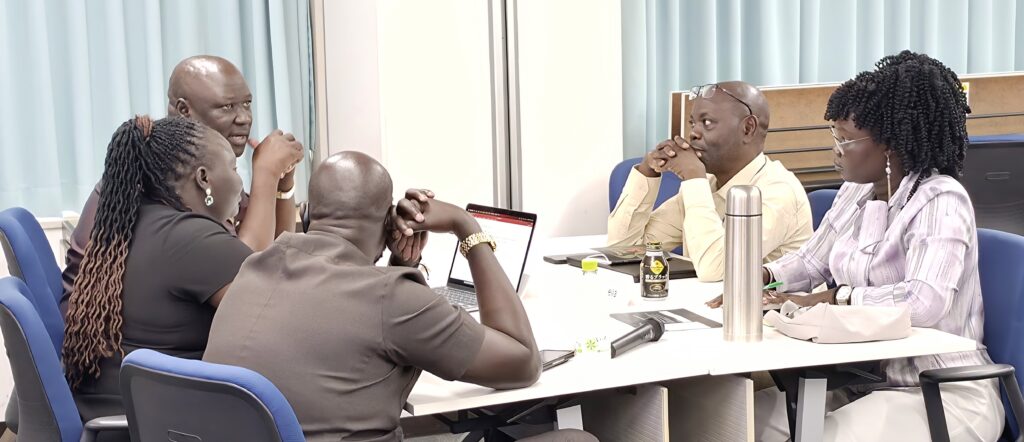
For a group of South Sudanese journalists, government officials and media regulators who recently spent two weeks in Japan discussing the future of the country’s media sector, the answer extends far beyond the newsroom.
“The ordinary people of South Sudan are the biggest beneficiaries,” said Dr. Hashimoto, a senior adviser at the Japan International Cooperation Agency (JICA).
Hashimoto said JICA had launched a three-year partnership aimed at promoting freedom of expression, improving access to information and supporting the establishment of an independent self-regulatory body for journalists.
The initiative seeks to identify obstacles to a healthier media environment while encouraging dialogue between government institutions and media stakeholders.
Its objective, he said, is not only to strengthen journalism but also to ensure citizens have access to reliable news and information, particularly as South Sudan prepares for future elections.
“A strong media is the key for democracy,” Hashimoto said, adding that informed citizens can only make meaningful decisions when they have access to accurate, balanced reporting.
Trust must be earned
One theme emerged repeatedly during discussions in Tokyo: public trust is journalism’s most valuable asset.
Hiroshi Yamamoto, project manager at the NHK Foundation and a former journalist, said freedom of expression has little value if audiences no longer believe the information they receive.
“Without public trust, you can’t do anything,” he said.
In an era when misinformation and online rumours can spread more quickly than verified facts, Yamamoto said professional journalism must distinguish itself through accuracy, independence and consistency.
“Ethics is not number two—always number one,” he said.
Rebuilding trust after mistakes takes time, he added, but begins with journalists consistently putting the public interest first.
Responsibility extends beyond journalists
Participants also challenged the notion that improving the media landscape is solely the responsibility of journalists.
Oyet Patrick Charles, president of the Union of Journalists of South Sudan, said lasting reform requires cooperation among government institutions, media organisations, regulators and journalists.
“In order to improve the media landscape in the country, you need all stakeholders to be on the same page,” he said.
Oyet said the partnership aims to expand access to information outside the capital by establishing community listening groups and viewing centres, improving media infrastructure in the states and supporting an independent self-regulatory mechanism to strengthen ethical journalism.
Winning back public confidence
For Koang Pal Chang, chief editor and station manager at Eye Radio, one of the most pressing challenges facing South Sudan’s media is misinformation.
The rapid growth of social media has increasingly blurred the distinction between speculation, rumour and verified reporting, making it harder for audiences to separate fact from fiction.
Journalists also continue to face intimidation, weak implementation of media laws, limited opportunities for professional development and financial pressures that affect news organisations.
Despite those challenges, Koang believes the solution is straightforward.
“Accuracy, fairness, independence and accountability are the most effective way to restore public confidence,” he said.
Strong journalism requires sustainable newsrooms
Building public trust also depends on financially sustainable media organisations.
Many South Sudanese media outlets struggle not because journalists lack commitment, but because they have limited capacity in fundraising, proposal writing, marketing and business management.
Ayaa Iren, executive director of the Association for Media Development in South Sudan (AMDISS), said strengthening those skills is becoming as important as improving editorial capacity.
She also advocated a national training-of-trainers programme, allowing experienced journalists to mentor younger colleagues and ensure lessons from international exchanges such as the Japan programme reach newsrooms across South Sudan.
Sustainability, she said, cannot be separated from credibility.
“When journalists consistently publish accurate and reliable information,” Iren said, “they gradually earn the trust of the communities they serve.”
Reform begins in the newsroom
For Chuol Jany, chairperson of the National Editors Forum, the visit to Japan broadened his understanding of what media reform entails.
He said he had initially viewed reform largely through the lens of legal protections for journalists but left convinced that it begins inside the newsroom.
“Media reform is not only about laws and policies,” he said. “It is also about improving journalistic professionalism, newsroom ethics, editorial independence, fact-checking, digital innovation and public trust.”
He said the long-held race to publish first should never come at the expense of accuracy and verification.
According to surveys by Fondation Hirondelle and USAID, radio remains the country’s most widely used and trusted source of information.
Since the signing of the 2005 Comprehensive Peace Agreement, more than 30 FM radio stations have been established across South Sudan.
Jany said responsible journalism can help citizens participate more meaningfully in elections, reduce tensions during conflict, disseminate life-saving information during floods and disease outbreaks, and strengthen public accountability.
Beyond the newsroom
After two weeks of discussions in Tokyo, participants left with a shared conclusion.
A stronger media sector is not an end in itself. Rather, it is a foundation for better-informed citizens, more accountable institutions and communities able to make decisions based on verified information instead of rumours.
If that vision is realised, the greatest beneficiaries will not be the journalists who travelled to Japan, but the millions of South Sudanese who rely every day on trusted information to navigate their lives.

 and then