



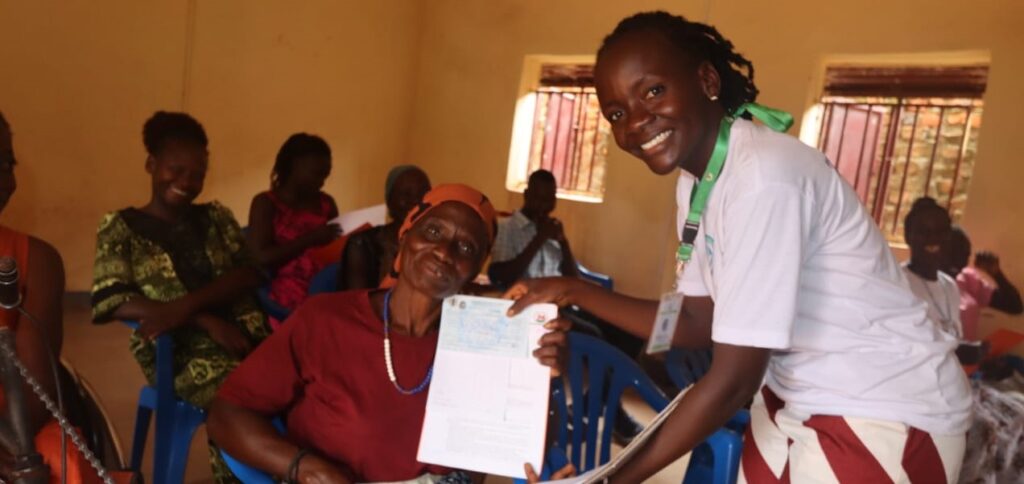
Thirteen vulnerable families in Western Equatoria State have received legal land ownership documents through a project supported by Norwegian People’s Aid (NPA), helping to protect them from land grabbing, forced evictions and ownership disputes.
The land leases were handed over in Yambio under a programme implemented by the Grassroots Women Network. The beneficiaries include widows, orphans and persons with disabilities, whom local officials and rights groups say are among those most vulnerable to land-related conflicts.
George Nicolas, an orphan who received a land lease, told Radio Tamazuj that he had struggled to secure legal ownership of his family’s land after losing key documents following his father’s death.
“I am an orphan, and I never imagined that one day I would have legal documents for our family land because of the economic challenges we faced,” Nicolas said. “I am grateful to the Grassroots Women Network for making this possible.”
Another beneficiary, Nako Joyce, said the legal assistance enabled her to recover land she had lost.
“When my land was taken away, I felt helpless and hopeless. Through the support of the Grassroots Women Network, I was able to recover my land and obtain a land lease,” Joyce said.
Sunday Moga, Executive Director of the Grassroots Women Network, said the project sought to ensure that vulnerable people were able to secure their land rights regardless of their financial circumstances.
“With support from Norwegian People’s Aid, we have successfully processed 13 land leases for vulnerable families in Yambio. These documents provide legal protection and guarantee their ownership rights,” Moga said.
Beneficiaries said the land leases represented more than legal documentation, describing them as a safeguard against future disputes and a source of security for their families.
Land disputes remain a persistent challenge in parts of Western Equatoria State, where cases of land grabbing, forced evictions and competing ownership claims have affected residents. Civil society groups have called for stronger enforcement of land laws and greater protection for vulnerable groups, including women, children and persons with disabilities.

 and then