



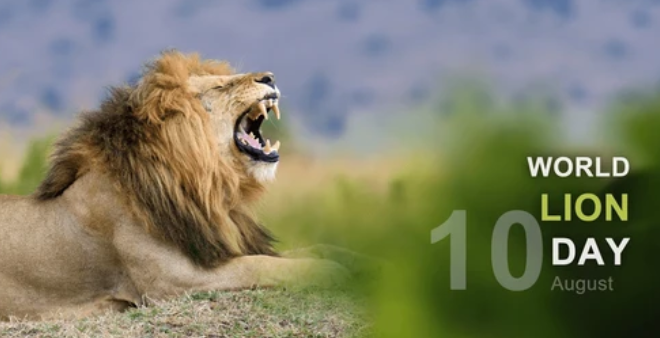
As the world marked World Lion Day on 10 August, South Sudan should use the occasion to reflect on one of its most valuable but often overlooked natural assets: its wildlife.
For a young nation like South Sudan, World Lion Day should be more than an international commemoration. It should be an opportunity to ask important questions about the country’s wildlife heritage. Do lions still live in South Sudan? Where are they found? What is being done to protect them? And how can the government, communities and conservation organizations such as African Parks do more to ensure that these animals survive for future generations?
The answer to the first question is yes. South Sudan still has lions. Recent conservation work in the country has confirmed the presence of lions in the Boma-Badingilo Migratory Landscape, one of the most remarkable wildlife areas in Africa. African Parks identifies the landscape as supporting populations of the northern lion, alongside elephants, giraffes, cheetahs and large numbers of migrating antelope.
This is significant because South Sudan is not simply a country with scattered wildlife. It possesses an enormous and relatively intact ecosystem that supports wildlife on a scale that is increasingly rare across Africa.
The Boma and Badingilo national parks are at the heart of what is now known as the Great Nile Migration Landscape. Recent aerial surveys estimated that approximately six million antelope move through the wider landscape each year, including white-eared Kob, Tiang, Mongalla Gazelle and Bohor Reedbuck. This has been described as the largest land mammal migration on Earth.
That extraordinary natural heritage should make every South Sudanese proud.
Why should lions matter to South Sudan?
Lions are more than a symbol of strength and courage. They are an important part of the ecological balance of the natural environment. As apex predators, they contribute to the functioning of healthy ecosystems.
For South Sudan, protecting lions also means protecting the wider landscapes in which they live. A lion cannot survive in isolation. It needs prey, water, secure habitat and functioning ecosystems. Protecting lions therefore requires protecting antelope populations, wetlands, grasslands, forests and wildlife corridors.
This is why the presence of lions in South Sudan should be viewed as an opportunity rather than simply a conservation responsibility.
Wildlife can become part of the country’s economic future. Properly managed national parks can support tourism, create employment, generate income for local communities and attract international conservation investment. They can also provide opportunities for young South Sudanese to work as rangers, researchers, guides, conservation educators and tourism professionals.
South Sudan’s wildlife therefore has both ecological and economic value. A country rich in wildlife but facing serious challenges, South Sudan’s wildlife has survived decades of conflict, displacement and limited conservation infrastructure. While this difficult history has affected communities enormously, it has also left many wildlife areas relatively undeveloped compared with protected areas in other parts of Africa. That situation presents both an opportunity and a danger.
The opportunity is that South Sudan still possesses large landscapes where wildlife can survive and migrate freely. The danger is that increasing human activity, commercial poaching, habitat destruction, unregulated resource use and climate pressures could threaten this natural heritage if effective protection is not strengthened.
African Parks has reported that much of the range used by migrating antelope extends beyond protected areas, exposing wildlife to threats including unsustainable bushmeat harvesting. The organization has also highlighted declines in some sedentary wildlife species and the need for stronger law enforcement, monitoring and landscape-wide conservation.
This means that protecting the lion cannot stop at the boundaries of a national park.
What role can African Parks play?
The partnership between the Government of South Sudan and African Parks provides an important foundation. In August 2022, the government signed a 10-year renewable management agreement with African Parks for Boma and Badingilo national parks and the surrounding wildlife corridors.
This partnership should be strengthened and expanded through transparent cooperation between the government, African Parks, local communities, researchers, conservation organizations and international partners.
African Parks has already undertaken wildlife surveys, animal collaring, community engagement and conservation law enforcement in the Boma-Badingilo landscape. Its wildlife monitoring program has included lions among the species being tracked.
But much more can be done.
First, South Sudan needs better information about its lion population. We need reliable data on how many lions are in the country, where they move, what threats they face, and how their populations are changing. Without good data, conservation planning becomes difficult.
Second, wildlife protection must be strengthened. Rangers need adequate training, equipment, transportation, and logistical support to combat poaching and monitor vast areas of wilderness.
Third, local communities must be placed at the center of conservation. People living around national parks should not see wildlife protection as a restriction imposed from outside. They should understand how conservation can improve their livelihoods. African Parks is already working with communities through education, sustainable enterprises and engagement programs, including beekeeping and other income-generating activities.
Fourth, South Sudan should invest more seriously in wildlife education. Schools, universities, media organizations and civil society can help build a new generation that understands that wildlife is a national asset.
Children should grow up knowing that a lion in Boma or Badingilo is not simply an animal living in the bush. It is part of South Sudan’s national heritage.
World Lion Day should become a national conversation
World Lion Day allows South Sudan to change the way the country talks about wildlife.
Too often, national discussions focus almost entirely on politics, conflict and economic difficulties. These issues are important, but they should not make us forget that South Sudan also possesses extraordinary natural resources that could contribute to the country’s future.
The recent recognition of the Boma-Badingilo Migratory Landscape as South Sudan’s first UNESCO World Heritage Site demonstrates the international importance of the country’s natural heritage. The designation covers approximately 12 million hectares and recognizes the extraordinary ecological importance of the landscape and its wildlife migration.
This recognition should not remain a matter for government officials and conservation organizations alone. It should become a source of national pride.
South Sudanese should be asking: How do we protect this heritage? How do we make our wildlife benefit local communities? How do we develop responsible tourism? How do we ensure that our children and grandchildren will still see lions, elephants, giraffes and the great antelope migrations?
Finally, World Lion Day is ultimately a reminder that the survival of the lion depends on the survival of the ecosystem around it.
For South Sudan, the message is even more important. We are a young country, but we possess an ancient natural heritage. Our vast savannas, wetlands, forests, rivers and wildlife are part of what makes South Sudan unique.
Yes, South Sudan has lions. More importantly, it has the landscapes and wildlife populations that can support them if they are properly protected.
The responsibility should not rest with African Parks alone. The Government of South Sudan must provide strong leadership and resources. Conservation organizations must bring expertise and accountability. Local communities must be partners and beneficiaries. International organizations and donors should continue supporting conservation. And the media and schools should help educate the public about the value of wildlife.
The lion is often called the king of the jungle. But in South Sudan, its future will depend not on its strength, but on our willingness to protect the land it calls home.
This World Lion Day, South Sudan should therefore celebrate not only the lion, but the entire natural heritage that surrounds it. Protecting our lions means protecting our land, our biodiversity, our communities and a potentially important part of the country’s future.
The writer is a media specialist and development practitioner. He can be reached via leek2daniel@gmail.com.
The views expressed in ‘opinion’ articles published by Radio Tamazuj are solely those of the writer. The veracity of any claims made is the responsibility of the author, not Radio Tamazuj.

 and then